

Very few things are as enjoyable as a relaxing day on the beach.
Unfortunately, the beach holds many dangers that can ruin swimmers’ or surfers’ perfect days. Worse, these dangers lie underwater, biding their time until they take a big bite from an otherwise great experience.
One of these dangers is shark attacks. These swift and ferocious fish often stalk their prey until too late.
In truth, there are over 300 species of shark throughout the Earth. However, only a few of these species openly attack humans. It’s these species that we’ll be taking a closer look at.
Let’s learn more about the types of sharks most likely to attack.
The State of Sharks
When looking at the statistics on shark attacks, a person could look at it and assume that they aren’t all that serious. On average, just over 70 attacks happen each year, with about a tenth of those attacks proving fatal.
In 2020, Australia saw over 20 attacks. This comprises approximately 40% of all attacks.
While attacks from this ferocious fish can happen at any time, there is a period where they happen more often. It takes place between November and April.
Australia’s long coasts are home to over 170 species. Sightings have been seen in Western Australia, Queensland, New South Wales, and many others. Interestingly, all species known for unprovoked shark attacks are also found in Australia.
The Shark Misconception
While dangerous, people often mistake the shark for a monstrous and hungry creature. This is a misconception. Sh sharks aren’t hazardous to people, at least not directly. A shark eating human meat, because they prefer the taste, is not part of a shark’s reality. Just like many other creatures, they share a healthy fear of people.
Often, confusion and curiosity are found to be the cornerstones of attacks. Other marine biologists suspect that the encroachment on their habitats, the warming of waters and changes in water quality have made them feel threatened and driven them closer to the shores.
What are the most dangerous sharks? Understanding which species are most likely to attack can help people take the necessary precautions. Here are the top five species that attack humans.
Species Most Likely to Result in Shark Attacks
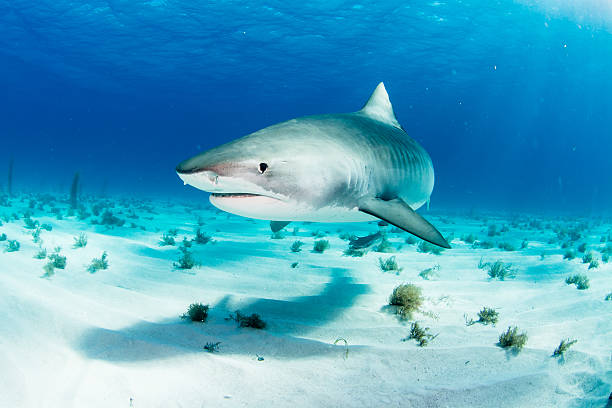
Tiger Shark
The tiger shark is easily one of the most dangerous species in the world. Reaching lengths of up to 16 feet (4.9 metres), it gets its name from the stripes on its body.
The colouring of a tiger shark can be grey, blue, or green with a white belly.
The tiger shark is one of the few species that have no problem finding a food source. It will eat almost anything, including other shark species like the hammerhead, marine animals like dolphins and seals, birds, and even garbage. They’ve been known to eat tyres, licence plates, and other inedible objects.
While typically not aggressive towards humans, they are known to attack when provoked or confused. There have been 111 attacks with 16 fatalities since 1950.
Great White Shark
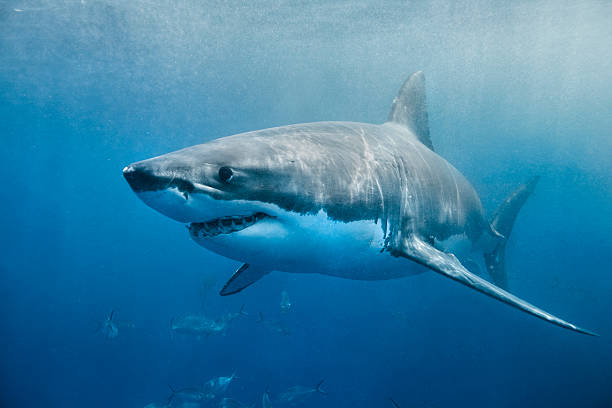
This species is probably the most popular, most likely due to the movie Jaws. It is also one of the most dangerous. They are often to blame for attacks on humans as they’re known to be curious and will usually test their boundaries.
The great white shark is found in all major oceans worldwide. It prefers colder waters near the coastline to hunt for its prey. The shark can grow 20 feet (6 metres) long but typically averages 15 feet (4.6 metres).
There have been 314 attacks by great whites, with 48 fatalities since 1950.
Shortfin Mako Shark
The shortfin mako shark (Isurus oxyrinchus of Family Lamnidae) is one of the fastest sharks in the world and can swim up to 22 mph (35 km/h). Its other names are Blue Pointer, Mackerel Shark, Mako, Mako Shark, Longfin Mako, and Snapper Shark. They are known to be pelagic sharks because they are found in open oceans, temperate waters, and significant fisheries in Australia. They also live in other parts of the world, such as the Pacific Ocean, the Atlantic, California, and New Zealand.
The reproductive cycle takes three years, with a gestation period of 15 to 18 months. Developing embryos feed on unfertilised eggs within the uterus. When they grow, they become carnivores and feed on other fish, sea turtles, swordfish, cephalopods, bonitos, bony fishes, and their species. Their bodies also have a specialised blood vessel structure (countercurrent exchanger), allowing them to maintain a body temperature higher than the surrounding water. This adaptation provides them with a significant advantage when hunting in the sea. So, they are also famous for being big predators in their ecosystem. Resources of natural history state that the lifespan of these aquatic species may take 30 years or more.
They have a pointed snout, gill slits, long slender teeth, caudal fin, pectoral fins, and dorsal fins. They can grow 12 feet (3.7 metres) long but typically average at 8 feet (2.4 metres). The body colour resembles the Blue Shark’s (Prionace Glauca).
Such marine mammals are known to be acrobatic and jump out of the water. This skill allows them to attack boats and makes them sought-after bycatch game fish by commercial fisheries because they can get into hooks through longline fishing gears. It has become part of the IUCN Red List of Threatened Species and NOAA’s list of endangered species, indicating that it is vulnerable to extinction.
There have been 27 attacks by the shortfin mako, with four fatalities since 1950.

Bull Shark
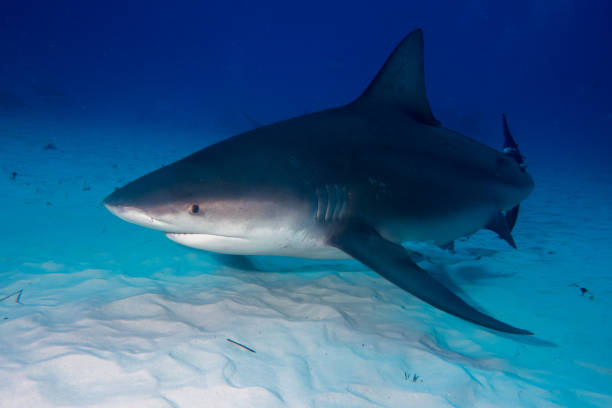
The bull shark, known scientifically as Carcharhinus leucas, is one of the most aggressive shark species in the world. While not as aggressive as the oceanic whitetip, it is still one of the most aggressive, with records of unprovoked shark bites. Apart from the great white, it is often considered one of the most dangerous sharks.
Bull sharks are found in warm waters around the globe and prefer coastal waters and estuaries. They can also tolerate freshwater and saltwater areas. If you are in an area where bull sharks are present, it may be best to avoid murky waters, as these allow the sharks to remain hidden.
In other parts of the world, they have been found in Mississippi, the East Coast of the United States, and even the Amazon River.
There are as many as 13 bull sharks in every litter. They can grow 11 feet (3.4 metres) long but typically average 7 feet (2.1 metres). Despite this, overfishing is putting their population in decline.
The bull species are carnivores that feed on fish, squid, and birds. They’re known to be aggressive and attack anything they see as a threat, including humans out for a swim or on a surfboard.
There have been 100 attacks by this species, with 12 fatalities since 1950.
Blacktip Shark
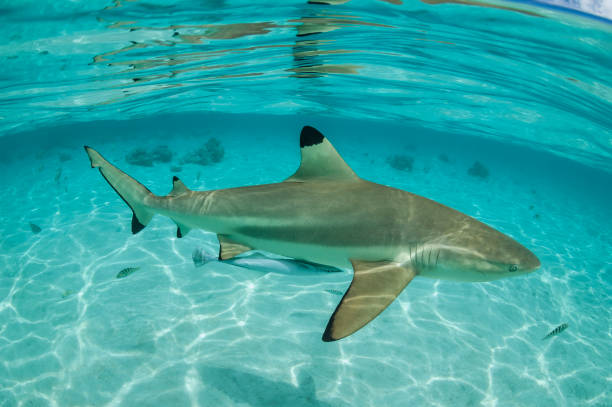
The blacktip shark is found in warm coastal waters worldwide. It prefers shallow waters near the shore to hunt for fish. The shark can grow 9 feet (2.7 metres) long but typically averages 6 feet (1.8 metres).
Its long, pointed nose and black-tipped fins identify the blacktip shark. Its colouring is generally grey with a white belly. The blacktip is a carnivore that feeds primarily on fish.
There have been 31 attacks by blacktip, with three fatalities since 1950.
Towards an Enjoyable Day at the Beach
While shark attacks are rare, they are no less severe than a venomous spider bite.
If you are ever attacked and bitten by a shark, staying calm, getting out of the water, and seeking medical attention immediately is essential.
Learning about relevant first-aid practices is best if you are keen on protecting yourself and your loved ones from potential attacks. That is why earning you first aid certificate is important. Understanding the different species related to attacks and the proper first aid practices will take you a step closer to enjoying your day at the beach.
Today, learn everything you need to know with CPR First Aid’s Liverpool course. From a CPR refresher course, childcare first aid courses, and advance first aid courses among others, CPRFA offers various courses that will no doubt benefit you.