

Key Takeaways – Understanding Oxygen Saturation Levels
-
Oxygen saturation (SpO₂) levels indicate how well your lungs and heart are delivering oxygen to your body.
-
Normal SpO₂ range is 95–100%, showing optimal oxygen levels for healthy individuals.
-
Readings of 90–94% may signal early respiratory or cardiac issues—monitor closely and consult a doctor if persistent.
-
SpO₂ below 90% is low and requires prompt medical evaluation; below 80% is a medical emergency.
-
Pulse oximeters are more accurate for health monitoring than smartwatches with SpO₂ features.
-
Factors affecting accuracy include nail polish, dark skin tones, cold hands, low blood flow, and high altitude.
-
Breathing exercises like pursed-lip breathing can temporarily improve oxygen levels.
-
For accurate readings, sit still, use the index or middle finger, ensure proper fit, avoid bright light, and measure at rest.
-
Multiple readings averaged provide a more reliable SpO₂ measurement than a single check.
-
Learning first aid and CPR ensures you can respond effectively if oxygen levels drop dangerously low.
What Oxygen Saturation Levels in an Oximeter Mean
Monitoring oxygen saturation levels is crucial for assessing lung and heart health. During the COVID-19 pandemic, this became particularly important as people began using pulse oximeters at home to check their SpO₂ levels. Understanding what these readings mean can help you know when to seek medical help and how to maintain healthy oxygen levels.

What Is an Oximeter?
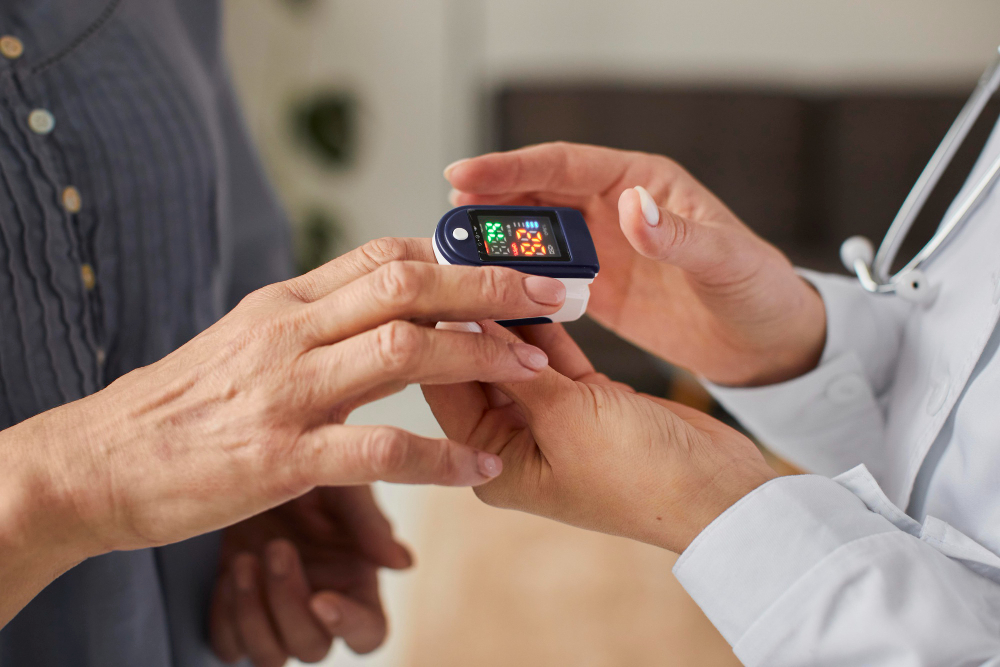
A pulse oximeter is a small, clip-like device you attach to your finger. It uses a light sensor to beam through your skin and measure how much oxygen is in your blood (SpO₂). The results are displayed on a small digital screen for easy reading. They are painless, quick, and easy to use, making them a popular tool for home health monitoring.
How Does the Oximeter Measure Oxygen Levels?
A pulse oximeter uses infrared light to analyze how much oxygen your blood carries by detecting differences in light absorption between oxygenated and deoxygenated blood. When you wear the clip, the tip of your finger appears red as the sensor works.
SpO₂ accuracy in most medical-grade oximeters is typically within ±2% of the actual oxygen saturation.
What Are Normal and Abnormal SpO₂ Ranges?
Your oxygen saturation level (SpO₂) is shown as a percentage from 0% to 100%. Here’s what different oxygen levels or reading mean.
95%–100%: Normal
This is a healthy SpO₂ range. Your blood is carrying an optimal amount of oxygen to your body.
90%–94%: Slightly Low—Monitor
This is below normal but not immediately alarming. It may indicate a developing respiratory or heart issue. During infections like COVID-19, consult a doctor if your level stays below 95%.
80%–89%: Low—Seek Advice
This is considered low and may indicate lung or heart problems. A reading in this range requires medical evaluation.
<80%: Danger—Emergency Care
This is dangerously low and signals severe hypoxemia, which may be life-threatening. Seek emergency medical help immediately.
These SpO₂ thresholds help detect early signs of a hypoxemia emergency.
Factors That Affect SpO₂ Accuracy
Several factors can lead to inaccurate readings, including:
- Nail polish or false nails, which can block light sensors. If you’re wearing either of these, remove them before taking your oxygen saturation reading.
- Skin tone: Studies show that some oximeters may overestimate oxygen levels in people with darker skin.
- Low perfusion (poor blood flow to the extremities), such as when hands are cold.
- High altitude, which naturally lowers oxygen saturation.
Apart from these, always ensure that the oximeter fits correctly. If it’s too loose, external light will interfere with the area where the reading occurs, giving you an inaccurate reading.
Dyes or henna ink may similarly interfere with the readings. Finally, ensuring your hand is warm is also vital to getting accurate readings. Having a cold hand may interfere with the readings. To ensure a warm hand, place it below heart level for at least 5 minutes before taking your oxygen saturation reading
What To Do When SpO₂ Is Low
If your SpO₂ is low, don’t panic—but act quickly. Here are a few things you can do:
- Practise breathing techniques such as pursed-lip breathing to improve oxygen intake. In this technique, people breathe in through the nose and out through the pursed lips. The exhalation must be twice as long as the inhalation.
- Exercise (if safe) to enhance lung function and circulation. Exercise helps to improve the function of your respiratory system. It increases blood flow and, as a result, the amount of oxygen delivered to organs and tissues. Exercise is a good option if you’re looking for ways to increase your oxygen saturation reading. Even taking a leisurely walk may prove beneficial.
- Seek medical advice if your levels remain below 95%, or immediately call emergency services if they drop below 80%.
Pulse Oximeter vs Smartwatch for SpO₂
There has been some debate between smartwatches and oximeters. Some smartwatches now include SpO₂ tracking, but they are less accurate than dedicated oximeters. Wearable oximeter comparison studies show that while smartwatches are useful for wellness tracking, medical-grade oximeters are better for reliable health monitoring.
Best Practices for Accurate Readings
To ensure reliable SpO₂ readings, here are some oximeter best use tips to follow:
- Sit still and relax: Movement can cause inaccurate readings. Sit quietly for at least 5 minutes before measuring.
- Use the correct finger: The index or middle finger usually provides the most reliable results.
- Ensure proper fit: The oximeter should fit snugly—not too loose or too tight—so the sensor can detect your pulse properly.
- Avoid bright ambient light: Direct sunlight or strong lighting may interfere with the sensor’s infrared reading.
- Check readings multiple times: Take two or three readings a minute apart and average them for a more reliable measurement.
- Measure at rest, not after exertion: Wait at least 10 minutes after exercise to avoid misleadingly low readings.
By following these oximeter best-use tips, you can minimize errors caused by external factors and get a clearer picture of your oxygen levels.
In the case of an emergency, it is best to know first aid practices so you can intervene early and provide care and support. Learn these important skills through CPRFA’s first aid courses. From a first aid course, a CPR refresher course, and childcare first aid courses to name a few, CPRFA offers various courses that will no doubt benefit you and those around you.
FAQs
Can I rely on my smartwatch for SpO₂?
Smartwatches with SpO₂ tracking can provide helpful insights into your overall wellness, but they are not as accurate as a medical-grade pulse oximeter. For reliable health monitoring—especially if you have a medical condition—use a dedicated oximeter.
What SpO₂ level is considered an emergency?
An SpO₂ reading below 80% is considered dangerously low and may signal severe hypoxemia. Seek immediate emergency medical care if your levels drop this low.
Why do my oximeter readings fluctuate?
Readings can change due to movement, poor circulation, cold hands, nail polish, or even ambient light. Always measure in a calm, steady environment and follow best practices for accurate readings.
How often should I check my SpO₂?
For most healthy people, routine monitoring isn’t needed. If you have a lung or heart condition, or if you’re recovering from an illness like COVID-19, your doctor may recommend checking once or twice daily or when you feel unwell.
Can breathing exercises really increase SpO₂?
Yes. Breathing techniques such as pursed-lip or diaphragmatic breathing can help improve oxygen exchange in the lungs, which may temporarily raise your SpO₂. However, persistently low readings require medical attention.