

Learning first aid for minor cuts and burns is recommended for quick and effective treatment. Aside from having the right skills and knowledge in applying a first aid response, it also requires tools. These involve different medical devices and treatments that help treat injuries like cuts and burns. Such tools may be kept in a first aid kit, which is advised to be available at homes in Perth and required at work. If it is not accessible at home, alternative options may be used, and such home remedies for minor cuts and burns will be discussed below.
Table of Contents
Home Remedies for Minor Cuts and Burns
Cuts and burns are different skin concerns, so home remedies for one may not be the same for the other. Let’s differentiate the home remedies for each of them below.
Home Remedies for Minor Cuts
The following home remedies may be used to treat minor cuts, as listed by Medical News Today.

Turmeric Paste as a Home Remedy for Minor Cuts
Turmeric paste may not be commercially available from stores or pharmacies in Perth. However, it can be easily made by mixing turmeric with warm water. Then, apply the formulated turmeric paste to a minor cut, followed by a bandage to cover it. Turmeric has been found to contain anti-inflammatory and antimicrobial properties that help in wound healing.
Aloe Vera Gel as a Home Remedy for Minor Cuts
The aloe vera gel may be extracted from the aloe vera plant directly or acquired from multiple brands that are selling it. It may be applied directly to the minor cut or soak the bandage that will be utilised to dress the minor cut. Aloe vera contains a compound (glucomannan) that promotes cellular regeneration and collagen production, a protein that promotes wound healing. Aloe vera gel is also used to treat other skin concerns like acne scars.
Coconut Oil as a Home Remedy for Minor Cuts
Fortunately, coconut oil is one of the typical commercially available oils in Perth. It may be applied directly to a minor cut. Its monolaurin helps in wound healing.
Garlic as a Home Remedy for Minor Cuts
Garlic may be diced first before applying it to a minor cut. It is the most accessible home remedy, as it is part of every kitchen in Perth. It contains allicin, which has antimicrobial and anti-inflammatory properties.
Home Remedies for Minor Burns
Healthline lists the following home remedies that may be applied to treat minor burns.

Running Water as a Home Remedy for Minor Burns
First aid practices for minor burns start with cooling it under running water, which may be available in every home in Perth. Do this first aid step for 10 minutes, then wash it with soap and water.
Antibiotic Ointments as a Home Remedy for Minor Burns
Different antibiotic ointments for minor burns are now available in pharmacies and stores in Perth. They may be easily purchased and stored at home to be used when needed. Ideally, they may be applied directly to the minor burn, followed by a dressing.
Aloe Vera Gel as a Home Remedy for Minor Burns
Aloe vera gels may also be used for minor cuts and burns. Simply put a small amount on the burned area of the skin. Aloe is anti-inflammatory, improves circulation, and stops the growth of bacteria.
Honey as a Home Remedy for Minor Burns
Different companies in Perth are selling honey, which can also be easily added to food or used as a remedy for minor burns. If applied topically, honey may help heal minor burns, as it is anti-inflammatory, antibacterial, and antifungal.
Identifying If a Cut or Burn is a Minor
Thankfully, home remedies are available to treat minor cuts and burns. But how do we know if a cut or burn is indeed minor? And if the above-mentioned home remedies may be used? Let’s find out below.
Minor Cut
According to Betadine, a minor cut is near the skin’s surface and may be treated at home with the abovementioned remedies or by a first aider.
Serious Cut
On the other hand, a cut may not be considered minor and must be treated with proper medical attention if:
- The cut is large and over a quarter of an inch deep (approx. 0.64cm).
- The cut is on the face.
- The cut is reaching the bone.
- A bite from a spider, snake, rusty object, fishhook, or nail causes the cut.
- The cut has jagged edges.
- The cut shows signs of infection, such as warmth, a painful or throbbing sensation, fever, swelling, or pus.
- The cut has dirt or debris that may not be easily removed.
The above may cause a cut to bleed continuously, and first aid management for it is applying pressure. Other severe complications may happen, so it is advised that 000 be called immediately for further medical attention.
Minor Burn
A minor or first-degree burn occurs if only the outer layer of the skin is affected. It may be identified with the outer skin looking red and dry without blisters.
Serious Burn
Second– to fourth-degree burns are serious burns that must be responded to immediately by first aid, especially if emergency help is unavailable. Because the inner layers of the skin, including the muscles and the bones, may be affected. These levels of burn may be identified by:
- Reddish skin.
- The appearance of blisters.
- The skin turns black, white, and charred.
- Numbness as nerve endings have been destroyed.
Applying first aid response to severe burns while waiting for emergency help may save a person from further complications or even death.
First Aid for Minor Cuts and Burns
Applying first aid for minor cuts and burns may be a better option, especially if you want to ensure that these will heal quickly and not lead to infection. These may be performed appropriately, especially if enrollment in a first aid course at 123C Colin St West Perth 6005 is done. In doing so, you acquire the knowledge and skills to perform the below first aid responses, which are just a few of what’s covered in first aid training.
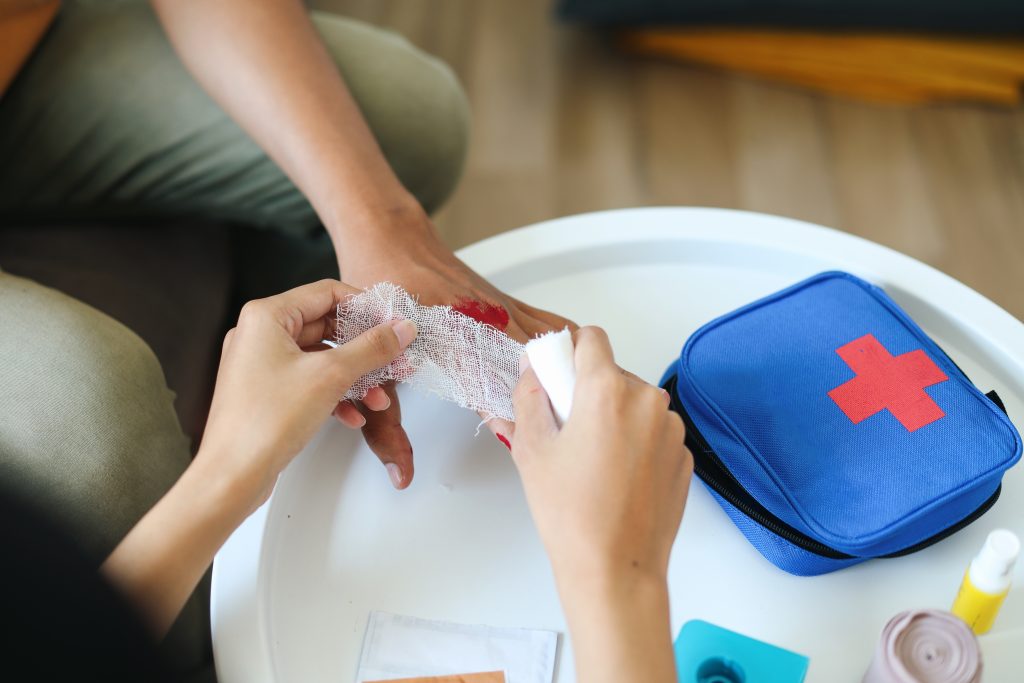
First Aid for Minor Cuts
Treating minor cuts with first aid may be done by:
- Stop the bleeding by applying gentle pressure using a clean bandage or cloth.
- Elevate the wound until the bleeding stops.
- Clean the cut using soap and water.
- Apply an antibiotic to keep the surface moist and prevent scarring.
- Dress the wound using a bandage and a gauze pad.
Changing the dressing at least once a day is advised.
First Aid for Minor Burns
Minor burns first aid includes the following steps:
- Cool the burn with running water for about 10 minutes.
- Remove tight clothing or accessories from the burned area.
- Cleanly break the blisters with water and apply an antibiotic treatment.
- Apply lotion to prevent drying.
- Bandage the burn.
A nonprescription pain reliever may be taken if necessary.
When to Seek Professional Help
While home remedies and basic first aid can help with minor cuts and burns, not all injuries should be treated at home. Knowing when to seek medical attention is important for proper healing and to avoid complications.
Seek professional help if you notice:
- Deep or large cuts (more than 6 mm deep or longer than 2.5 cm).
- Cuts with heavy bleeding that won’t stop after 10 minutes of pressure.
- Burns with blisters, charring, or numbness (possible second- or third-degree burns).
- Wounds showing infection signs such as swelling, pus, redness, or fever.
- Cuts caused by dirty, rusty, or sharp objects (risk of tetanus or other infections).
- Burns on sensitive areas like the face, hands, genitals, or over major joints.
- Any injury in children or elderly people that doesn’t heal quickly.
If in doubt, it’s always safer to get checked by a healthcare professional. In Australia, call 000 for emergencies or visit your local GP for non-urgent concerns.
Conclusion
Home remedies as first aid for minor cuts and burns include coconut oil, aloe vera gel, and honey. These products have been found to contain antibacterial and anti-inflammatory ingredients that help in healing. However, since these home remedies are not mainly used for first aid, they may not be the best solution for minor cuts and burns. These skin concerns may take longer to heal and may even be infected if not treated with the proper first aid response. It involves the necessary tools, skills, and knowledge to treat minor cuts and burns effectively and quickly.
Frequently Asked Questions (FAQs)
What’s the difference between a minor cut and a serious cut?
A minor cut only affects the surface of the skin and usually stops bleeding on its own. Serious cuts are deeper, may bleed heavily, or show signs of infection. These typically need medical help.
What are some home remedies for minor cuts?
You can use turmeric paste, aloe vera gel, coconut oil, or garlic. These have natural properties that may help wounds heal faster.
What are home remedies for minor burns?
For small burns, you can cool the skin under running water, apply aloe vera gel, honey, or an antibiotic ointment to ease pain and help healing.
How do I know if a burn is minor?
A minor (first-degree) burn only affects the top layer of skin, looks red, feels sore, and has no
blisters.When should I see a doctor for a cut?
Seek medical help if the cut is large, very deep, caused by a rusty or dirty object, has jagged edges, won’t stop bleeding, or shows signs of infection.
When should I see a doctor for a burn?
If the burn is blistered, very deep, covers a large area, or looks black or white, it’s serious. Call 000 or get medical help immediately.
Are home remedies enough for treating cuts and burns?
They may help with very minor injuries, but proper first aid for cuts and burns is still the safest option to avoid infection and speed up recovery.
Should I keep a first aid kit at home?
Yes, it’s best to have a stocked first aid kit at home and at work. This makes treating minor injuries quicker and safer than relying on home remedies alone.