
If you’re a healthcare or aged care worker in Logan, the best choice is a nationally recognised manual handling unit with a supervised practical assessment—most commonly HLTWHS005 Conduct Manual Tasks Safely—because it verifies real competence in risk assessment, patient transfers, and safer use of aids. If you’re onboarding staff and need proof that stands up to workplace audits, this credential provides the documentation employers and contract managers expect. For anyone who lifts, transfers, or repositions patients or equipment daily, training that includes hands-on assessment is the safest ‘best option’. Read next: safe manual handling tips you can apply immediately.
Quick Answer for Logan Healthcare and Aged Care Workers
In Logan healthcare and aged care settings, the safest ‘best option’ is training that includes a supervised practical assessment. Manual handling is a hands-on competency, not just theory. The primary recommendation is HLTWHS005 Conduct Manual Tasks Safely with practical assessment, which provides the strongest compliance-friendly option for care settings. This nationally recognised unit delivers a Statement of Attainment once you demonstrate competence.
Why choose HLTWHS005? It teaches you to identify hazardous manual tasks, apply risk controls, and perform transfers safely using real or simulated workplace conditions. Research shows approximately 65% of healthcare workers reported work-related musculoskeletal disorders. Training that verifies competence matters.
When might a non-accredited session be used? Some facilities offer internal refreshers or awareness sessions without formal assessment. These can support skills maintenance but carry risk: they may not meet employer or contract requirements. Many aged care and disability support contracts explicitly require nationally recognised outcomes. Confirm what your employer needs before booking.
The best delivery format for speed is blended learning: complete theory online at your own pace, then attend a short practical assessment session in Logan. For facilities with multiple staff, onsite group training contextualises the content to your actual equipment and workflows. That’s faster and more relevant than generic classroom sessions.
What Manual Handling Means and What Makes It Hazardous
Definition: Manual handling involves lifting, lowering, pushing, pulling, carrying, moving, holding, or restraining something. WorkSafe Victoria defines hazardous manual handling as any task requiring force in a way that increases injury risk, especially with repetition, awkward postures, or sustained force.
Common manual handling tasks in Logan workplaces include patient transfers from bed to chair, repositioning residents in bed, pushing medication trolleys, lifting supply cartons, moving stock between storage and clinical areas, and loading vehicles for community care visits. What makes these tasks hazardous? Repetitive high force. Awkward postures like twisting while lifting. Sustained force such as holding a person during a transfer. Sudden or unexpected loads when a patient shifts weight. Poor environment layout including tight spaces around beds, bathrooms with no turning room, or uneven flooring.
Common injury types from hazardous manual handling include strains and sprains (the most frequent), back injuries that can become chronic, and long-term musculoskeletal pain affecting capacity to work. WorkSafe Victoria reports hazardous manual handling is the biggest cause of injuries in Victorian workplaces. The principles apply nationally. If a task involves force plus awkward posture or repetition, treat it as hazardous manual handling and manage it like a WHS risk, not a ‘normal part of the job’.
Understanding how manual labour affects the body helps you recognise early warning signs of injury and take preventative action before pain becomes chronic.
| Task | Why It’s Hazardous | Better Control |
| Bed-to-chair transfer | Twisting under load, unpredictable weight shift | Use ceiling or mobile hoist, two-person plan, clear communication |
| Repositioning in bed | Sustained force, awkward reach, repetition | Slide sheets, adjust bed height, team approach |
| Sit-to-stand assist | Supporting full or partial body weight | Transfer belt, correct stance, encourage resident participation |
| Shower chair transfer | Wet surfaces, confined space, rapid movement | Non-slip mats, grab rails, planned sequence |
Why Manual Handling Training Matters Most in Healthcare, Aged Care and Disability Support
Patient handling is frequent, unpredictable, and often done under time pressure. This is exactly when injuries occur. The evidence is clear. A scoping review published in Physical Therapy Reviews found approximately 65% of healthcare workers reported work-related musculoskeletal disorders. That’s high prevalence and ongoing risk. These disorders are injuries such as strains and sprains that can be long-lasting and significantly reduce a person’s capacity to work.
Nursing workload research shows nurses spend around 20% of work time on patient mobility and handling tasks. That’s high exposure. Every shift includes multiple transfers, repositioning, and mobility assistance episodes. Each one is a chance to get it right or accumulate micro-trauma to your back, shoulders, and neck.
How training helps: structured education combined with correct use of lifting devices can reduce injury rates. The integrative review found examples of programs where injury rates dropped significantly after training interventions were implemented. Training alone isn’t enough, but competency in risk assessment, equipment use, and communication protocols creates a foundation for safer practice.
There’s a dual benefit: mobility-promoting transfers can support residents while also controlling risk. Research on aged care manual handling confirms that promoting patient mobility within the manual handling interaction is an endorsed risk control strategy. Helping a resident participate actively in their own transfer reduces the force you need to exert and improves their functional capacity. In healthcare and aged care, manual handling is ‘high frequency, variable load’ work. Competency and planning matter as much as strength.
Understanding safety officer responsibilities in your facility helps ensure that training is part of a broader safety management system.
| Care Scenario | Main Risk | Safer Approach | Equipment/Aid |
| Bed repositioning | Repeated twisting, reaching across bed | Two-person lift, adjust bed height first | Slide sheets, electric bed |
| Sit-to-stand support | Supporting unpredictable weight, balance loss | Encourage resident to push up, use transfer belt | Transfer belt, stable chair arms |
| Lateral bed transfer | Sustained horizontal force | Use slide sheet system, lock beds together | Slide sheets, transfer board |
| Shower chair moves | Wet surface, confined bathroom space | Plan sequence, dry floor, clear path | Wheeled shower chair, grab rails |
Workplace Compliance in Queensland: What Employers Must Do
Training supports compliance, but systems and controls do the heavy lifting. The hierarchy of controls is a risk-management approach that prioritises eliminating hazards first, then using engineering and administrative controls, with training used to support (not replace) safer systems. WorkSafe Victoria guidance states training should not be the primary control and employers should prioritise higher-order controls. Training can only be used when higher-order controls are not reasonably practicable.
Practical examples for Logan healthcare settings: ceiling hoists are an engineering control. Adequate space around beds so transfers can happen without twisting is design-level control. Staffing ratios that allow two-person lifts for complex transfers is an administrative control. Equipment maintenance schedules ensuring hoists and slide sheets are clean and functional is administrative. Competency checks verifying staff know how to use equipment safely is where training sits. Training supports these systems but cannot replace them.
Documentation checklist employers should keep: risk assessments for manual handling tasks specific to your facility, standard operating procedures (SOPs) for patient transfers and equipment use, maintenance logs for hoists and mechanical aids, training records showing who completed what training and when, competency evidence such as practical assessment results and supervisor sign-offs, incident and near-miss reports documenting manual handling events. A manual handling course helps, but WHS compliance depends on the workplace controlling risk through the hierarchy of controls, not relying on training alone.
One emerging area: psychosocial hazards and manual handling. WorkSafe Victoria’s psychological health regulations commence 1 December 2025, requiring employers to identify and control psychosocial hazards. Hospitals and aged care facilities are managing both physical and psychological risk. Time pressure, inadequate staffing, and high emotional demands can all increase manual handling injury risk because workers take shortcuts or attempt lifts alone when they shouldn’t. This represents increasing regulatory focus on integrated safety management.
Knowing what HSE means helps you understand how health, safety, and environment frameworks apply to manual handling compliance in Queensland workplaces.
| Document | Why It Matters | Who Owns It | How Often to Review |
| Risk assessments | Identifies specific hazards in your workplace | Safety officer/manager | Annually or when tasks change |
| Standard operating procedures | Documents safe process for each task | Clinical/operations manager | Annually or after incidents |
| Equipment maintenance logs | Proves aids are safe and functional | Facilities/maintenance team | Every service/check |
| Training records | Shows competency and compliance | HR/training coordinator | Before certificate expiry |
| Incident/near-miss reports | Tracks trends and improvement opportunities | Safety officer/manager | Monthly review of aggregated data |

Choosing the Right Course: HLTWHS005 vs Non-Accredited
Before you pay, confirm what your employer or contract actually requires: a nationally recognised unit (Statement of Attainment) or a site-based attendance record. This decision affects whether your certificate will be accepted for onboarding, insurance purposes, or client site access. HLTWHS005 Conduct Manual Tasks Safely is a nationally recognised unit that assesses a person’s ability to identify hazardous manual tasks, apply risk controls, and perform manual tasks safely in real or simulated workplace conditions.
What’s a Statement of Attainment? It’s formal recognition issued by a Registered Training Organisation (RTO) confirming you have been assessed as competent in a nationally recognised unit. It includes your Unique Student Identifier (USI) and can be verified on national training registers. A Statement of Attendance is simply a record that you attended a session. It doesn’t verify competence and may not meet employer or contract requirements. If your role includes patient transfers or regular heavy lifting, choose training with a supervised practical assessment because ‘attendance only’ doesn’t verify competence.
Red flags to watch for: “100% online manual handling certificate” for roles that require practical skills such as patient handling. No mention of practical assessment or competency demonstration. No reference to USI or how your qualification will be recorded. Vague outcomes like “awareness training” when your employer requires competency evidence. Prices that seem too low, which often correlate with unaccredited or non-assessed offerings.
Understanding the pros and cons of online training helps you decide whether blended learning (online theory plus practical session) or fully face-to-face training suits your role best.
| Option | Best For | What You Receive | Practical Assessment? | Typical Workplace Acceptance | Risks/Limitations |
| HLTWHS005 (nationally recognised) | Healthcare, aged care, disability support, contract workers | Statement of Attainment, USI recorded | Yes, supervised practical | High. Accepted for most onboarding and contract requirements | Requires USI and identity checks. Takes longer than attendance-only sessions |
| Non-accredited refresher (attendance) | Internal refresher for existing staff with previous formal training | Statement of Attendance, certificate | May or may not include practical | Medium. Depends on employer policy | Not nationally recognised. May not meet contract or insurance requirements |
| Online-only awareness module | General awareness in low-risk office environments | Completion certificate | No | Low for manual handling roles | Does not verify hands-on competence. Rarely accepted for patient handling roles |
What a High-Quality Healthcare Manual Handling Course Should Cover
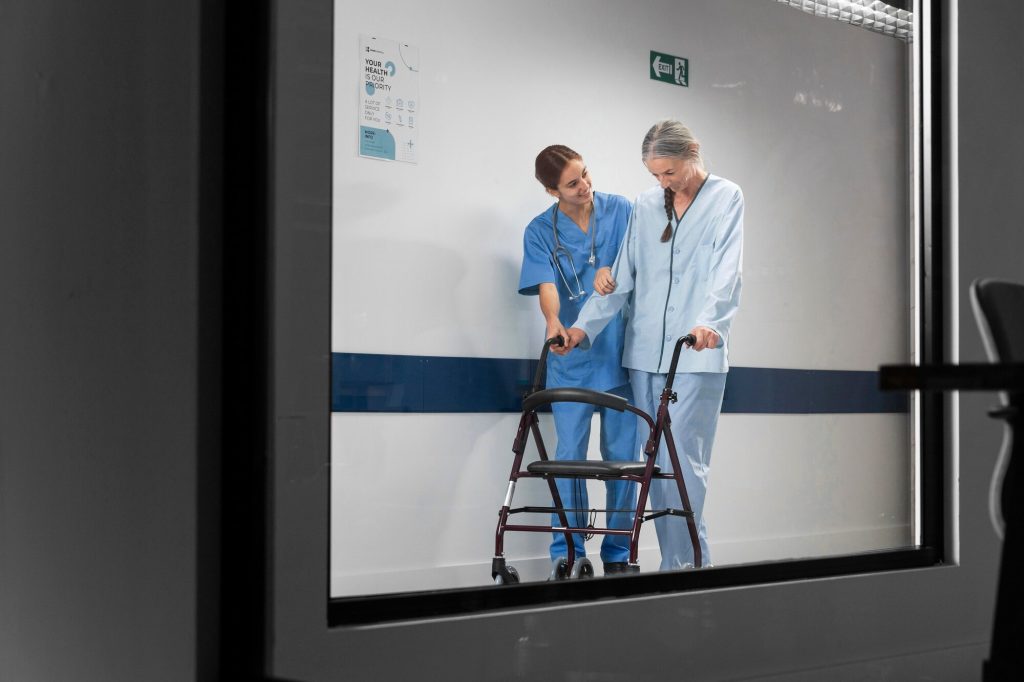
Aged care and disability support manual handling is primarily people-handling. The course must include planning, communication, and equipment use. A healthcare manual handling course is only ‘workplace-ready’ if it teaches planned transfers, correct use of aids, and communication, not just back posture. Here’s a skills-based checklist that healthcare and aged care managers can use to evaluate course quality.
Risk assessment: you should learn to identify hazards specific to manual handling tasks and apply the hierarchy of controls. This links directly to workplace compliance. Safer transfers: the course must cover bed-to-chair transfers, chair-to-toilet transfers, repositioning in bed, and sit-to-stand support. These are the most common patient handling scenarios. Use of aids: training should include hoists (ceiling and mobile), slings (different types for different body shapes and mobility levels), slide sheets, and transfer belts. You need to know how to select the right aid for each situation and use it safely.
Team lifting and communication protocols: many patient transfers require two people. You need clear verbal cues, agreed hand signals, and a shared understanding of the transfer plan. Environment assessment: identify space constraints, trip hazards, and check equipment before each transfer. A ‘no lift’ policy is a workplace approach that minimises manual lifting of people by prioritising mechanical aids, planned transfers, and safer systems of work. Many modern aged care facilities have adopted this approach.
Mobility promotion concept: Research confirms promoting patient mobility within the manual handling interaction is an endorsed risk control strategy. Supporting a resident or client to participate safely reduces your physical load and improves their functional outcomes. A good course teaches you how to balance safety with dignity and independence.
| Skill | How It’s Assessed | Evidence |
| Identify hazardous manual task | Written scenario or workplace walkthrough | Completed risk assessment checklist |
| Perform bed-to-chair transfer | Observed practical demonstration | Assessor signs competency record |
| Use slide sheet correctly | Practical demonstration with manikin or peer | Checklist of steps performed correctly |
| Apply team communication protocol | Role-play two-person lift | Observation of verbal cues and coordination |
| Select appropriate aid for scenario | Case study or simulated decision-making | Written or verbal justification |
Why CPR First Aid is the Leading Option in Logan
CPR First Aid offers a fully online non-accredited refresher course. It is fully self-paced and can be completed in one session or multiple sessions. The recommended time to complete the course is 2 to 3 hours.
The topics of CPR First Aid’s HLTWHS005 online course include:
- Understanding manual task risks and workplace safety requirements
- Principles of body mechanics and posture
- Identifying and assessing hazardous manual tasks
- Using mechanical aids and team lifting safely
- Techniques to minimise the risk of musculoskeletal injuries
- Implementing safe work practices and reporting hazards
Upon completion, a same day certificate of completion is made available to download and print.
Understanding broader workplace compliance requirements helps you see how manual handling training fits into your overall WHS obligations and audit readiness.
| Question | Why It Matters | What a Good Answer Looks Like |
| Is the course HLTWHS005 or non-accredited? | Determines if outcome meets contract/employer requirements | “Yes, HLTWHS005. You’ll receive a Statement of Attainment with USI recorded.” |
| Is there supervised practical assessment? | Verifies you can perform tasks, not just understand theory | “Yes. You’ll demonstrate patient transfers and equipment use under assessor observation.” |
| Who issues the certificate and when? | Affects how quickly you can start work or meet onboarding deadlines | “Our RTO issues it within 48 hours of competency confirmation and USI validation.” |
| What documentation do we receive? | Ensures you have audit-ready records for WHS compliance | “Statement of Attainment, assessment record, and USI transcript access.” |
| Can training be contextualised to aged care? | Makes training directly applicable to your job | “Yes. We use aged care scenarios and can include your facility’s equipment in onsite sessions.” |
How Quickly Can You Get Certified?
The fastest path to a manual handling certificate is: USI ready, theory completed, practical assessment booked. Certificates are issued after competency is confirmed. Here’s a practical step-by-step timeline HR teams and individual workers can follow.
Step 1: Confirm credential requirement. Check with your employer or contract manager whether you need HLTWHS005 (nationally recognised) or if an attendance-based session is acceptable. Don’t assume. Ask for the specific unit code or outcome required. This determines which provider and course type to book.
Step 2: Ensure each learner has a USI ready. If you’re booking nationally recognised training, you need a Unique Student Identifier. You can create one free at usi.gov.au in about five minutes. You’ll need proof of identity. Have this ready before enrolment to avoid delays.
Step 3: Complete pre-course theory promptly. Most blended courses require you to complete online theory modules before attending the practical session. Set aside two hours. Read the material, complete the knowledge check, and submit your responses. The sooner you finish this, the sooner you can book your practical session.
Step 4: Attend a practical session and assessment. Book the earliest available session in Logan. Practical sessions typically run two to three hours. You’ll demonstrate patient transfers, equipment use, and risk assessment. Bring enclosed shoes, comfortable clothing, and photo ID. Come prepared to move and practice.
Step 5: Receive certificate once competency and validations are done. After you pass your practical assessment, the RTO processes your USI, confirms your identity, and issues your Statement of Attainment.
Learn how long certificates last in Australia to plan your refresher schedule and maintain continuous compliance.
| Task | Who | Time to Complete | Common Delay | How to Avoid |
| Confirm requirement | HR/manager | 1 day | Waiting for contract clarification | Check contracts and policies upfront |
| Create USI | Individual learner | 5 minutes | Lack of ID documents | Have driver licence or passport ready |
| Complete theory | Individual learner | 2 hours | Not scheduling dedicated time | Block calendar time; complete in one sitting |
| Attend practical | Individual learner | 2-3 hours | Session fully booked | Book early; use onsite option for groups |
| Receive certificate | RTO (CPR First Aid) | 48 hours | Incorrect USI or ID details | Double-check enrolment details before submitting |
For Small Queensland Businesses with Staff Lifting Boxes Daily
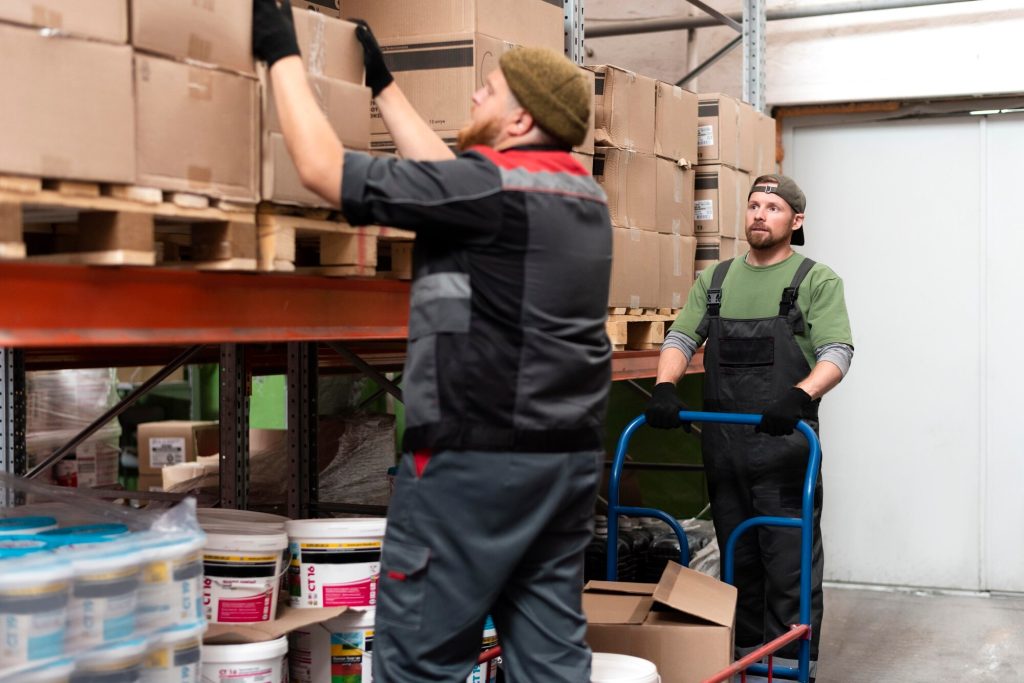
If your team lifts boxes daily, treat it as hazardous manual handling and manage it with controls plus training. The best manual handling course is the one that matches your WHS risk profile and your client requirements, and comes with documentation you can file immediately. Here’s what small businesses in Logan warehousing, retail, and logistics need to know.
Best training option: HLTWHS005 if your contracts or client sites require nationally recognised outcomes. Many client sites and insurance policies specify this credential. If you’re purely managing internal risk and don’t have external requirements, a workplace-specific training program plus competency sign-off may suit. The decision depends on whether you need third-party verification or if internal documentation is sufficient. Ask your clients and check your insurance policy before choosing.
Controls to implement beyond training: trolleys and pallet jacks for moving cartons horizontally. Storage height redesign so heavy items are stored between knee and shoulder height, not on the floor or overhead shelves. Load weight limits clearly marked on shelving and enforced through SOPs. Team lifts for anything over a set weight threshold (commonly 15-20kg in small business contexts). Job rotation so workers aren’t lifting all day without variation. Temperature and heat considerations, especially during Queensland summers. Research on occupational injury found Queensland accounted for 308 heat-attributable disability-adjusted life years. Heat stress increases injury risk because fatigue, dehydration, and reduced concentration all contribute to poor lifting technique.
What to ask the provider before booking: use the verification checklist from the previous section. Confirm whether the course covers box and carton handling specifically or if it’s purely patient-handling focused. Ask if scenarios can include warehouse and retail examples, not just healthcare. Confirm certificate turnaround time because you may need workers to start immediately.
Documentation to keep: training records showing who completed what and when. Risk assessments for your lifting tasks, updated when you change stock types or storage layout. Standard operating procedures for team lifts, trolley use, and how to report near-misses. Toolbox talk records showing you discuss manual handling regularly, not just at annual training. These records demonstrate you’re managing risk systematically, not relying on training alone.
Understanding the code of practice for workplace first aid and safety helps you build a complete compliance framework that includes manual handling, emergency response, and injury management.
| Requirement | Recommended Training | Evidence to Keep |
| Client site requires HLTWHS005 | HLTWHS005 with practical assessment | Statement of Attainment, USI transcript |
| Internal WHS only, no external requirement | Workplace-specific training + competency sign-off | Training record, supervisor competency checklist, attendance sheet |
| Insurance policy specifies “nationally recognised” | HLTWHS005 with practical assessment | Statement of Attainment, copy in insurance file |
| General awareness for low-risk office tasks | Online awareness module (non-accredited acceptable) | Completion certificate, date recorded |
Logan-Local Relevance: Who Needs This Training
Based in Logan? Here’s who this course is most relevant for. Healthcare and aged care roles: registered nurses, enrolled nurses, personal care workers, disability support workers, allied health assistants such as physiotherapy and occupational therapy aides, orderlies and patient transport staff, community care workers who assist clients at home. These roles involve direct patient handling daily. Training with practical assessment is not optional. It’s the standard expectation.
Other industries in Logan: warehousing and distribution workers who lift cartons and pallets. Retail back-of-house staff who move stock and unpack deliveries. Logistics and freight workers who load and unload vehicles. Manufacturing and production line workers handling components. Childcare workers who lift equipment, move furniture, and occasionally carry children in emergency situations. Community services workers who assist clients with mobility or transport equipment. If your role includes regular lifting, pushing, pulling, or carrying, you need manual handling training.
Onsite training is ideal for teams because it delivers consistent knowledge across your workforce. You can use your actual equipment during training, making skills transfer immediate. Roleplays happen in your real environment, so spatial constraints, flooring, and workflows are all factored into the learning. Contextualised training adapts examples, equipment, and scenarios to the learner’s real workplace, so the skills transfer directly to the job. Onsite manual handling training is most effective when it uses your actual equipment and workflows because that’s where real risk and real competence live.
What to bring to your practical session: enclosed shoes with good grip (no thongs or open-toed sandals). Comfortable clothing you can move in. Long hair tied back. Your Unique Student Identifier if booking HLTWHS005. Photo ID such as driver licence or passport. A willingness to practice transfers and lifts multiple times until you’re confident. Some providers require you to bring your own pen and notepad for observation notes.
For foundational safety knowledge, review the workplace safety basics that complement manual handling skills and create a safer work environment overall.
| Role | Most Common Manual Tasks | Key Skills to Assess |
| Personal care worker | Bed transfers, toileting assistance, repositioning | Hoist use, slide sheets, team communication, fall prevention |
| Disability support worker | Vehicle transfers, mobility aid use, community access support | Transfer belt use, wheelchair handling, planning sequences |
| Warehouse worker | Lifting cartons, palletising, stock replenishment | Team lifts, trolley use, load assessment, posture awareness |
| Registered nurse | Patient transfers, equipment positioning, emergency moves | Risk assessment, delegation, equipment selection, incident reporting |
| Allied health assistant | Exercise support, mobility practice, equipment setup | Gait belt use, support during exercises, fall response |
Frequently Asked Questions
Do I need HLTWHS005 for aged care in Queensland?
Many aged care employers prefer or require HLTWHS005 because it’s nationally recognised and includes competency-based assessment, but you should confirm the exact requirement with your employer or contract. Statement of Attainment provides verifiable proof that you’ve been assessed competent in patient handling, not just that you attended a session. If your role includes patient transfers, prioritise training with a supervised practical assessment.
How long does a manual handling certificate last in QLD?
There isn’t one universal expiry date for manual handling training in Queensland. Many workplaces set their own refresher cycle (often one to two years) based on risk, incidents, and role changes. Some employers require annual refreshers. Others accept two-year cycles if no incidents occur and tasks remain unchanged. Suggest setting refreshers based on task risk, staff turnover, and new equipment introduction. If you change roles, facilities, or equipment types, consider refresher training even if your certificate hasn’t ‘expired’.
Can I do a manual handling course 100% online?
Online-only learning can cover awareness, but roles that require hands-on safe lifting or patient transfers are best supported by a supervised practical assessment. Competence in manual handling is physical. You need to demonstrate correct technique, appropriate force application, and equipment use under observation. Research shows approximately 65% of healthcare workers experience musculoskeletal disorders. Verifying practical competence matters for injury prevention. Online theory is valuable for knowledge, but combine it with a practical session for roles involving lifting or patient handling.
What should employers ask a manual handling provider before booking?
Ask whether the training is nationally recognised, includes practical assessment, and provides documentation that can be audited (certificate or Statement of Attainment, assessment evidence, and learner identification checks). Use the five-question checklist: Is the course HLTWHS005 or non-accredited? Is there supervised practical assessment? Who issues the certificate or Statement of Attainment and when? What evidence is provided for workplace records? Is training contextualised to our workplace such as aged care, disability, or warehousing? A provider who can answer all five clearly is ready to deliver compliant, workplace-relevant training.
Is manual handling training enough for WHS compliance?
Training helps, but it should not be the primary control for hazardous manual handling. Workplaces must prioritise higher-order controls like redesigning tasks and using mechanical aids. WorkSafe Victoria guidance confirms training should only be used when higher-order controls are not reasonably practicable. Training supports safer work by building competency in risk assessment, communication, and equipment use, but it cannot replace engineering controls such as hoists, administrative controls such as staffing ratios, or design improvements such as adjustable-height beds. Compliance requires a systems approach.
What manual handling equipment should aged care staff know how to use?
At minimum, aged care staff should be confident with transfer planning and the safe use of aids such as slide sheets and hoists (where available), because equipment use is a key risk control. Ceiling hoists and mobile hoists, including sling selection and attachment. Slide sheets for lateral transfers and repositioning in bed. Transfer belts for sit-to-stand support. Shower chairs and commodes with correct positioning techniques. Staff should also understand when equipment is inappropriate or unsafe. Research on mobility promotion shows that supporting resident participation within the transfer is an endorsed risk control strategy. Equipment use and mobility encouragement work together.
What are the most common injuries from hazardous manual handling?
Common injuries include strains and sprains, back injuries, and long-lasting musculoskeletal pain, often caused by repeated force, awkward postures, or sustained handling tasks. WorkSafe Victoria reports these injuries can be debilitating and long-lasting, significantly reducing a person’s capacity to work. Lower back injuries are particularly prevalent in healthcare and aged care because of the twisting and bending involved in patient transfers. Shoulder and neck injuries occur from reaching or holding awkward positions. Early reporting and injury management matter because untreated strains can become chronic conditions.
What’s the fastest way to get a manual handling certificate for onboarding?
Have your USI ready (if required), complete the theory early, and book the earliest practical assessment session, because certificates are issued after competency is confirmed.
Conclusion
For healthcare and aged care roles in Queensland, the best choice is a nationally recognised manual handling unit with a supervised practical assessment. Most commonly HLTWHS005 Conduct Manual Tasks Safely. This verifies real competence in risk assessment, patient transfers, and safer use of aids. Training supports compliance, but remember it works best when combined with engineering controls, better equipment, and clear workplace systems. Small businesses lifting boxes daily need the same rigorous approach: controls first, training to support those controls, and documentation to prove it.
If you’re booking in Logan, choose a provider that offers supervised practical assessment, nationally recognised outcomes when required, and clear documentation you can audit. CPR First Aid delivers all three with flexible scheduling and contextualised training for aged care, disability support, healthcare, and warehousing sectors. Book CPR First Aid’s Manual Handling Course in Logan (QLD) for practical, workplace-ready training and clear documentation for onboarding. Request onsite training for your Logan workplace to train teams efficiently using your actual equipment and workflows.
References
- WorkSafe Victoria: Understanding manual handling and mental (psychological) injuries in hospitals report – Cited for psychosocial hazard regulations commencing 1 December 2025
- WorkSafe Victoria: Hazardous manual handling safety basics – Cited for definitions of manual handling, hazardous manual handling, and common injury types
- PubMed: The burden of occupational injury attributable to high ambient temperatures – Cited for Queensland heat-attributable occupational injury data
- WorkSafe Victoria: Hazardous manual handling training – Cited for hierarchy of controls guidance and training not being the primary control
- ScienceDirect: Manual patient handling in the healthcare setting – Cited for 65% prevalence of work-related musculoskeletal disorders in healthcare workers
- ResearchGate: Impacts of Manual Handling Training and Lifting Devices on Risks of Back Pain among Nurses – Cited for time spent on handling tasks and injury reduction through training and devices
- ResearchGate: Manual Handling in Aged Care: Impact of Environment-related Interventions on Mobility – Cited for mobility promotion as endorsed risk control strategy