
Mental health support for older Australians requires specific knowledge and skills. Older Person Adult Mental Health Awareness & Support Training Course (Older Person MHA) teaches adults how to recognise, approach and support someone aged 65+ who may be developing a mental health problem or experiencing a mental health crisis, until professional help is available or the crisis resolves. This guide explains exactly what the training covers, who benefits most, and how to access courses across Australia, with detailed answers for Melbourne CBD duration questions.
Quick Answer for Melbourne CBD
In Melbourne CBD, the Standard Adult Mental Health Awareness & Support Training Course is 12 hours, commonly delivered as two 6-hour face-to-face sessions, or as a blended option with 5–7 hours of eLearning plus a shorter instructor-led session. This format applies to the Standard MHA course offered by MHA Australia.
The 12-hour duration can vary slightly depending on venue scheduling and breaks. Face-to-face courses typically run over two consecutive days or separate sessions within a short timeframe. Blended courses split the workload between self-paced online modules (which you complete before attending) and practical instructor-led training. MHA Australia confirms that delivery formats include face-to-face workshops, blended face-to-face options, and blended online options.
Several factors influence total time commitment:
- Online pre-work for blended courses must be completed before the live session
- Assessment time (optional for accreditation) adds 30–60 minutes
- Venue start and finish times vary by provider
- Break schedules differ between courses
- Group discussions and practice scenarios may extend session times slightly
Always check the specific course listing before booking. Course providers list exact times, break schedules, and any pre-course requirements clearly in their event details.
Important Note: If your main goal is supporting an older person (65+), Older Person MHA is the more targeted option. It applies the same evidence-based action plan but focuses on mental health challenges, help pathways, and communication approaches specific to later life. The sections below explain what Older Person MHA covers and how to access training in Australia.
For broader context on Mental Health Awareness & Support Training Course principles and Australian accreditation standards, see our guide on Mental Health Awareness & Support Training Course.
What is Older Person Adult Mental Health Awareness & Support Training Course?
Older Person Adult Mental Health Awareness & Support Training Course teaches adults how to recognise and respond to mental health problems and crises in people aged 65+, using a practical action plan until professional help is available. The training is designed for everyday adults, not clinicians. You learn to provide initial support and connect someone to appropriate professional help or other supports.
Mental Health Awareness & Support Training Course is the help you give to someone developing a mental health problem, experiencing a worsening problem, or in a mental health crisis, until appropriate professional support is in place or the crisis resolves. Healthdirect Australia defines Mental Health Awareness & Support Training Course as support provided until professional help arrives or the situation improves.
Older adults face unique mental health challenges. Physical health decline, chronic pain, bereavement, social isolation, and transitions such as moving into aged care all affect mental wellbeing. Depression, anxiety, and grief are common but often under-recognised in people over 65. Cognitive changes can complicate how mental health concerns present and how someone communicates distress.
The Older Person MHA course addresses these realities. It teaches participants how to recognise warning signs in older people, start supportive conversations that respect dignity and autonomy, respond during crises, and guide someone toward age-appropriate services. The training uses the ALGEE action plan, which has been adapted to reflect the contexts older people navigate, such as residential aged care, home care packages, and specialist older adult mental health services.
Standard Adult Mental Health Awareness & Support Training Course is the foundational MHA course. It trains adults (18+) to support another adult who may be developing a mental health problem or experiencing a mental health crisis, using an evidence-based action plan. The Standard course covers mental health problems and crises across all adult age groups. Older Person MHA builds on this foundation by adding older-adult-specific scenarios, communication strategies, and help pathways.
CPR First Aid helps Australians choose the right MHA pathway for their needs. Whether you’re a family carer, aged care worker, home care provider, or workplace team looking to build mental health capacity, understanding what each course covers ensures you get the training that matches your support role. For a deeper background on mental health concerns and how they manifest, explore our resources on mental health conditions.
Why Older Adult Mental Health Needs Specific Training
Mental health concerns are common across all ages in Australia. Australian Bureau of Statistics data shows 42.9% of people aged 16–85 years had experienced a mental disorder at some time in their life. Among older adults specifically, 7.9% of men and 11.1% of women aged 65+ experienced a mental health condition in the past 12 months (excluding dementia), according to the Australian Institute of Health and Welfare.
These statistics understate the reality in aged care settings. AIHW reports reveal that 23.1% of older people receiving home care packages and 57.7% entering permanent residential aged care had a recorded mental health condition. In permanent residential aged care, 62.5% of residents showed at least mild depressive symptoms.
| Setting | Recorded Mental Health Condition (65+) |
| Home care packages (receiving support at home) | 23.1% |
| Entry to permanent residential aged care | 57.7% |
In Australia, mental health concerns are common in aged care settings—AIHW reports 23.1% of older people receiving home care packages and 57.7% entering permanent residential aged care had a recorded mental health condition.
Men aged 85+ have the highest age-specific suicide rate of any age group in Australia. This statistic, also from AIHW, highlights why early intervention and confident support matter. Older adults may not seek help for mental health concerns due to stigma, normalising symptoms as “just getting older,” or difficulty accessing services. Family members, carers, and health workers are often the first to notice changes in mood, behaviour, or functioning.
Early intervention means recognising mental health problems sooner and connecting a person to appropriate support earlier, which can improve outcomes. Without training, well-meaning supporters may not know how to start a conversation, what questions to ask, or where to refer someone. They may fear saying the wrong thing or making the situation worse.
Mental Health Awareness & Support Training Course fills this gap. It provides a structured approach to noticing concerns, talking safely about mental health, responding in crises, and encouraging professional help. For older adults, this support can prevent escalation, reduce isolation, and connect people to age-appropriate services before problems become severe.
If you suspect someone is at immediate risk of harm to themselves or others, call triple zero (000). Stay with the person if it’s safe to do so and do not leave them alone.
For practical guidance on connecting older people to services after recognising a concern, see our resource on how to access support services.
What Older Person MHA Covers
Older Person MHA focuses on practical early support—using the ALGEE action plan—so you can recognise warning signs, start a safe conversation, respond to crises, and connect an older person to appropriate professional help. Expect practical skills, not therapy training. The course teaches you what to do, what to say, and how to stay safe during mental health situations.
Core MHA Skills and the ALGEE Action Plan
The ALGEE action plan is the Mental Health Awareness & Support Training Course action plan: Approach, assess and assist; Listen non-judgementally; Give reassurance and information; Encourage professional help; Encourage self-help and other supports. Better Health Channel Victoria confirms this framework as the foundation of MHA training.
The steps don’t need to be followed in strict order. You adapt the plan to the situation. In a crisis, you might start with assessing immediate risk. In a non-crisis situation, you might begin by listening and building trust before offering information.
Older Person MHA teaches you to:
- Recognise warning signs of common mental health problems in older adults
- Start a conversation about mental health without judgment or stigma
- Listen effectively to someone experiencing distress
- Provide reassurance and factual information about mental health and help options
- Encourage the person to seek appropriate professional help
- Encourage self-help strategies and social supports
- Respond to mental health crises safely and effectively
Common Mental Health Problems Covered
The Standard Adult MHA course covers four main groups of mental health problems: depression, anxiety, psychosis, and substance use problems. MHA Australia lists these as the core content areas. Older Person MHA applies this knowledge to older adults, recognising how these problems may present differently in later life.
Depression in older adults may manifest as physical complaints, loss of interest in activities, withdrawal from social contact, or neglecting self-care. Anxiety can present as excessive worry about health, finances, or becoming a burden. Psychosis symptoms (such as hallucinations or delusions) require urgent professional assessment. Substance use problems, including alcohol and prescription medication misuse, are under-recognised in older people.
Crisis Situations Covered
MHA training prepares you to respond to several crisis situations. Better Health Channel identifies these crisis scenarios:
- Suicidal thoughts and behaviours
- Panic attacks
- Traumatic events
- Severe psychotic states
- Self-harm
- Effects of alcohol or other drugs
- Aggressive behaviour
Older Person MHA adds real-world contexts common for older adults:
- Bereavement and grief (loss of spouse, friends, independence)
- Social isolation and loneliness
- Chronic illness and persistent pain
- Carer stress and burnout
- Medication complexity and interactions
- Transitions (such as hospital to home or entry to residential care)
- Cognitive impairment and dementia considerations (without claiming MHA replaces dementia training)
AIHW data supports the relevance of these contexts. Depression symptoms affect over 60% of people in permanent residential aged care, and transitions into care are particularly vulnerable times for mental health decline.
What MHA Is Not
MHA is not diagnosis, counselling, or therapy. You are not trained to identify specific mental illnesses or provide ongoing psychological treatment. A Mental Health First Aider (MHFAider) is someone trained to provide initial support and information to a person experiencing a mental health problem or crisis, until professional help is received or the crisis resolves.
| What MHA Covers | What MHA Does Not Cover |
| Recognising warning signs of mental health problems | Diagnosing mental illness or disorders |
| Starting supportive, non-judgemental conversations | Providing ongoing therapy or counselling |
| Responding to crises until help arrives | Replacing emergency services or clinical care |
| Connecting people to appropriate professional support | Acting as a mental health professional |
| Reducing stigma and increasing confidence to help | Training you to conduct formal mental health assessments |
For readers interested in understanding clinical assessment frameworks used by mental health professionals, our guide on MSE basics provides background context. This is not part of MHA training but can deepen your understanding of how professionals evaluate mental health.
Who Older Person MHA Is For
If you support anyone aged 65+, this course is designed for you. No clinical background required. Older Person MHA is suitable for any adult (18+) who supports older people, especially carers and aged care or home care workers, because it teaches a structured way to recognise concerns, talk safely, and guide someone to help.
The training benefits people in various roles:
- Family carers looking after ageing parents, partners, or relatives
- Aged care workers in permanent residential facilities
- Home care workers visiting older people in their homes
- Community volunteers at seniors’ centres, meal programs, or social groups
- Reception and frontline staff in health services, council services, or community organisations
- HR and workplace health professionals supporting older employees or clients
- Managers and team leaders overseeing staff who work with older people
You’ll especially benefit from this training if:
- You regularly notice mood or behaviour changes in older people you support
- You feel unsure what to say when someone seems withdrawn or distressed
- You want a structured action plan to follow during difficult conversations
- You need to feel more confident responding to mental health concerns in your role
- You work in a setting where older adults are at increased risk of mental health problems
Workplace Applications
Many workplaces organise MHA training for teams. Adult Mental Health Awareness & Support Training Course Australia offers workplace training pathways, and some organisations pursue MHA Workplace Recognition to demonstrate commitment to mental health support. For aged care providers, home care agencies, and community health services, Older Person MHA training equips staff with consistent language and approaches to mental health.
Team-wide training creates a shared understanding of how to respond when someone is struggling. Staff know who to talk to, what steps to take, and how to document concerns appropriately. Workplaces benefit from reduced stigma, earlier identification of problems, and more confident frontline staff.
| Role | Common Situation | How MHA Helps |
| Family carer | Parent withdrawing after bereavement | Confidence to start a gentle conversation and suggest GP visit |
| Home care worker | Client mentions feeling hopeless | Knowing how to listen non-judgementally and escalate concerns |
| Aged care worker | Resident shows sudden mood changes | Structured approach to documenting and reporting observations |
| Community volunteer | Regular attendee stops coming to activities | Skills to reach out appropriately and offer support options |
| Manager | Older employee struggles with stress | Framework for supportive conversations and referrals to EAP |
| Receptionist | Older client becomes distressed in waiting room | Practical de-escalation and reassurance strategies |
Over 1 in 6 people in Australia were aged 65 and over as of June 2020, according to AIHW older people reports. This proportion continues to grow. Training more people to provide Adult Mental Health Awareness & Support Training Course to older adults builds community capacity to respond as the population ages.
If you’re considering a career in mental health support beyond first aid training, explore our guide on the mental health support worker pathway for information on qualifications and career options.
Training Pathways in Australia
In Australia, MHA courses are delivered by independent instructors trained and accredited by MHA Australia, and MHA accreditation is typically valid for 3 years. Follow this pathway to become trained and accredited.
Step 1: Choose Your Course
Decide whether Standard (Adult) MHA or Older Person MHA best matches your needs. Standard MHA is suitable if you support adults across all age groups. Choose Older Person MHA if your primary focus is people aged 65+, especially in aged care or home care settings. Both courses teach the ALGEE action plan and cover mental health problems and crises. Older Person MHA applies this knowledge specifically to later-life contexts.
Step 2: Choose Your Delivery Format
MHA Australia offers several delivery options for Standard MHA. These include face-to-face workshops, blended face-to-face courses (combining online pre-work with in-person sessions), and blended online courses (combining online modules with live virtual sessions). Availability varies by location and instructor.
Blended MHA training combines self-paced eLearning with instructor-led sessions (either face-to-face or online) to complete the course. The online component typically takes 5–7 hours and covers theory and background content. The instructor-led component focuses on practice, discussion, and applying the ALGEE plan to scenarios.
Face-to-face courses offer the most hands-on practice and direct interaction with the instructor and other participants. Blended formats provide flexibility for people who find it difficult to attend two full days of training. Online options suit remote participants or those with time constraints.
Step 3: Complete Training
Attend all required sessions. Face-to-face courses usually run over two days (or two separate sessions). Blended courses require you to complete online modules before attending the live session. Participation in discussions, scenarios, and practice activities is expected. The course is interactive, not lecture-based.
Step 4: Complete the Assessment (Optional for Accreditation)
If you want to become an Accredited Mental Health First Aider (MHFAider), complete the end-of-course assessment. This is typically an online quiz covering the course content. Passing the assessment demonstrates you understand the knowledge and skills taught. MHA accreditation is valid for 3 years from the date you complete the course and assessment.
Step 5: Renew Within 3 Years
To maintain your MHFAider status, complete an approved MHA refresher course before your accreditation expires. Refresher courses are shorter than the initial training (usually 4 hours face-to-face or online). They update you on any changes to the action plan, reinforce skills, and extend your accreditation for another 3 years.
Some refresher courses require that you completed your original MHA training within the past 3 years to be eligible. Check eligibility requirements with the course provider. St John Ambulance Victoria, for example, states eligibility rules clearly on course pages.
Who Delivers MHA Courses
MHA Australia trains and accredits instructors who then deliver courses independently. Better Health Channel notes that courses are run by independent instructors trained and accredited by MHA. Instructors set their own fees, so course costs vary. Prices typically range from $200 to $400 per person for the full course, depending on the provider, location, and delivery format.
Workplace courses may have different pricing structures, especially for group bookings or onsite delivery. Some workplaces cover training costs as part of professional development. Community organisations and councils occasionally offer subsidised or free courses for volunteers and carers.
Pathway Checklist
| Step | What You Do | What to Confirm Before Booking | Outcome |
| 1. Choose course | Select Standard MHA or Older Person MHA | Which age group you primarily support | Clear course choice |
| 2. Choose format | Decide face-to-face, blended, or online | Time available, learning preference, location | Format that suits your schedule |
| 3. Book and attend | Register with a licensed instructor, attend all sessions | Course dates, location, cost, pre-work requirements | Certificate of completion |
| 4. Assessment (optional) | Complete online quiz to gain accreditation | Whether you need accreditation (for work or personal confidence) | MHFAider accreditation (3 years) |
| 5. Refresher (after 3 years) | Complete 4-hour refresher course | Eligibility (some require training within last 3 years) | Renewed accreditation (another 3 years) |
For practical advice on connecting people to services after training, read our guide on how to navigate services across Australia’s mental health system.
Choosing the Right Course
If you mainly support people aged 65+, for example in home care or residential aged care, Older Person MHA is usually the most relevant option because it applies MHA skills to later-life contexts and pathways. Choose Standard MHA if you support adults broadly across ages, or if your workplace requires the Standard course.
Both courses teach the same evidence-based ALGEE action plan. Both cover depression, anxiety, psychosis, and substance use problems. Both address crisis situations such as suicidal thoughts, panic attacks, and traumatic events. The core skills—recognising warning signs, listening non-judgementally, providing reassurance, encouraging professional help—are the same.
The difference lies in application. Older Person MHA adapts the content to reflect how mental health problems present in older adults and the help pathways available for this age group. For example, discussions include aged care assessments, home care packages, and specialist older adult mental health services.
Older Adult Mental Health Services in Victoria
In Victoria, specialist older adult clinical mental health services support people aged 65+ (and First Nations people aged 50+ in some services) with later-life or longstanding mental health challenges. These services include community-based care, acute inpatient units, and intensive community treatment programs. Older adult clinical mental health services are specialist older adult mental health services supporting individuals aged 65 and older, as well as First Nations people aged 50 and older, with community-based and inpatient options.
Understanding these pathways helps you guide someone to age-appropriate support. A GP is usually the starting point for assessment and referral, but knowing that specialist older adult services exist means you can mention them during conversations and encourage the person to ask their doctor about these options.
Course Comparison
| Course | Who It’s For | Typical Duration | Delivery Modes | Best For |
| Standard (Adult) MHA | Adults supporting other adults (18+ to any age) | 12 hours | Face-to-face, blended face-to-face, blended online | General workplaces, community roles, supporting adults across all ages |
| Older Person MHA | Adults supporting people aged 65+ | Commonly delivered over two days; confirm hours with provider | Face-to-face (format availability depends on provider) | Family carers, aged care workers, home care staff, volunteers in seniors’ services |
Warrumbungle Shire Council lists an Older Person MHA course as a two-day requirement, confirming that attendees must complete both days to become certified. Exact hours are not standardised across all providers, so check the specific course listing before enrolling.
To understand where Mental Health Awareness & Support Training Course fits on the broader spectrum of support, read our article on the mental health continuum, which explains wellness through to illness and the importance of early intervention.
Booking in Melbourne and Melbourne CBD
When comparing MHA courses in Melbourne CBD, confirm the delivery format (face-to-face or blended), the total time you’ll spend in live sessions, and any required eLearning hours before your training date. Melbourne CBD has numerous course providers, but logistics matter when you’re committing to 12 hours of training (or more for Older Person MHA).
Melbourne CBD Booking Checklist
- Check delivery format clearly. Is it face-to-face only, or does it include pre-course eLearning?
- Confirm exact session times. Two 6-hour sessions usually run 9am–4pm with breaks, but some providers vary times.
- Ask about pre-course requirements. Blended courses require completing online modules before attending. Factor this into your timeline.
- Verify assessment inclusion. Some course prices include the MHFAider assessment; others charge separately.
- Consider venue accessibility. CBD venues should be accessible by public transport. Check parking options if driving.
- Understand break schedules. Long training days need adequate breaks. Ask if lunch is provided or if you need to bring food.
- Check support during training. Quality courses provide support if content triggers distress. Ask what’s in place.
- Confirm cancellation policy. Life happens. Know your options if you need to reschedule.
For Older Person MHA courses in Victoria, confirm the course content aligns with local older adult service pathways. Victoria has well-developed specialist older adult clinical mental health services, including community programs and inpatient units. Your training should reference these options so you can guide people appropriately after the course.
Older adult mental health services in Victoria include intensive community treatment, acute inpatient care, and aged persons mental health nursing homes. Knowing these services exist helps you have informed conversations about professional help options during and after training.
Workplace Training Options
If you’re organising training for a team, consider booking an onsite course. Instructors can deliver training at your workplace, which reduces travel time and allows you to tailor scenarios to your setting. Aged care facilities, home care agencies, and community health services benefit from whole-team training that creates shared language and approaches.
Provider Comparison Checklist
| Item to Verify | Why It Matters | Where It’s Usually Listed |
| Delivery format (face-to-face, blended) | Affects total time commitment and learning experience | Course page title and description |
| Live session hours | You need to know how long you’ll be in training | Course details or event schedule |
| eLearning time (if blended) | Must be completed before attending live session | Pre-course instructions email or FAQ |
| Assessment inclusion | Determines if you’ll receive MHFAider accreditation | Course price breakdown |
| Venue address | Plan transport and parking | Confirmation email |
| Breaks and catering | You’ll need food and rest during long sessions | Course details or direct question to provider |
| Support during training | Mental health content can be emotionally challenging | Course welcome or instructor introduction |
| Cancellation policy | Protects your investment if circumstances change | Terms and conditions or booking page |
For information on local mental health services to reference during your training and afterwards, see our comprehensive guide to Melbourne mental health services.
Applying MHA Skills With Older People
A practical way to start an MHA conversation with an older person is: “I’ve noticed you haven’t seemed yourself lately. Would you like to talk about what’s been going on?” This opening is gentle, non-judgemental, and gives the person control over whether to talk.
Real-World Scenario
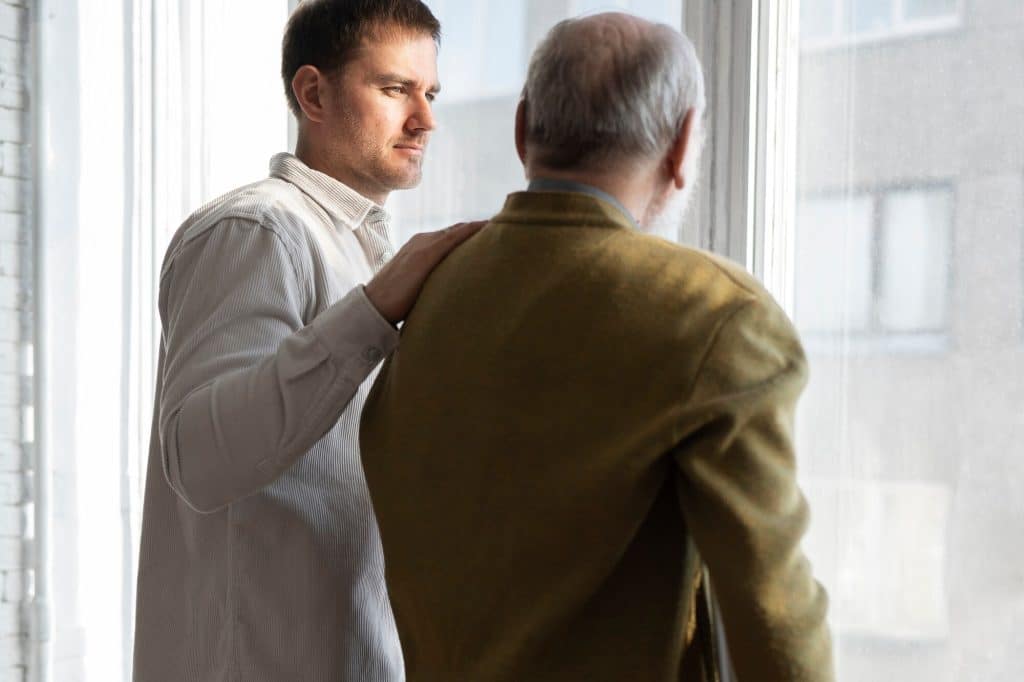
Imagine you’re a home care worker visiting Mrs Chen, 78, who lives alone. Over the past month, you’ve noticed she’s stopped gardening, her house is messier than usual, and she mentions feeling tired all the time. Today, she says there’s no point doing anything anymore.
Using ALGEE:
- Approach, assess and assist. You’ve already noticed changes. Now assess the situation. Is she safe? Are there immediate risks? You ask gently: “Mrs Chen, I’ve noticed some changes lately. You seem really tired and down. Can we talk about how you’re feeling?”
- Listen non-judgementally. She tells you she feels hopeless since her husband died six months ago. Her children are interstate. She doesn’t see the point of getting up anymore. You listen without interrupting, without offering quick fixes. You don’t say “you should be grateful” or “just stay positive.”
- Give reassurance and information. You tell her these feelings are common after bereavement, and support is available. You let her know depression is treatable. You reassure her that talking to her GP is a good next step.
- Encourage professional help. You ask if she’s comfortable calling her GP. You offer to help her make the appointment if she’d like. You mention local services for older adults if she wants more support.
- Encourage self-help and other supports. You suggest small steps, like calling one of her children, or coming back to the seniors’ group she used to attend. You check if there’s a neighbour she trusts.
You document your conversation and report your concerns to your supervisor. You’ve provided Mental Health Awareness & Support Training Course. Mrs Chen now has information, reassurance, and a clear next step (see her GP). You’ve done your job without trying to diagnose or fix everything yourself.
Conversation Starters
Use “I” statements and open questions:
- “I’ve noticed you seem quieter lately. How are you doing?”
- “I’m concerned about you. Would you like to talk about what’s been happening?”
- “You mentioned feeling down. Can you tell me more about that?”
- “I’m here to listen if you want to talk about what’s on your mind.”
- “It sounds like things have been really hard. What would be most helpful right now?”
- “Have you been able to talk to anyone else about this?”
Avoid:
- Minimising: “It could be worse” or “Others have it harder”
- Fixing: “You just need to get out more” or “Try being positive”
- Diagnosing: “I think you have depression” or “That sounds like anxiety”
- Dismissing: “You’re fine” or “Don’t worry about it”
When to Escalate
Call triple zero (000) if:
- The person is at immediate risk of harming themselves or others
- The person has taken an overdose or seriously harmed themselves
- The person’s behaviour is extremely aggressive or out of control
- You believe the person’s life is in danger
If someone discloses suicidal thoughts but there’s no immediate danger, take it seriously. Don’t leave them alone if possible. Ask directly: “Are you thinking about suicide?” Direct questions do not increase risk. Encourage them to call a crisis line or see a GP urgently. Lifeline (13 11 14) and Suicide Call Back Service (1300 659 467) provide 24/7 support.
Boundaries and Confidentiality
Your role as a Mental Health First Aider has limits:
- You can’t keep someone’s safety concerns confidential if they’re at risk
- You’re not a counsellor or therapist. Refer to professionals for ongoing support
- You can’t force someone to seek help (unless they’re at immediate risk and you need to call 000)
- You don’t diagnose mental illness. Use general language like “mental health concern” or “feeling distressed”
- Document and report concerns according to workplace policies if you’re in a professional role
Referral Pathways
The GP is almost always the first professional referral point. GPs can assess mental health, prescribe medication if needed, refer to psychologists or psychiatrists, and connect patients to community services. For older adults, GPs also coordinate aged care assessments and link people to home care or residential options if needed.
In Victoria, specialist older adult clinical mental health services provide age-specific care. Intensive community treatment programs offer an alternative to hospital admission during acute episodes. These programs deliver care in the person’s home or community setting. Aged persons mental health nursing homes provide long-term accommodation and treatment for older adults with severe mental illness.
| Common Situation | What to Say | What to Do Next |
| Person mentions feeling hopeless or worthless | “That sounds really hard. Have you thought about hurting yourself?” | Assess immediate risk. Encourage GP visit. Offer crisis line numbers. |
| Person is grieving and withdrawn after loss | “Grief takes time. It’s okay to feel this way. Would talking to someone help?” | Suggest GP for assessment. Mention bereavement support groups. |
| Person shows signs of panic or severe anxiety | “You’re safe. Let’s slow your breathing together. In through your nose, out through your mouth.” | Stay calm. Ground the person. Follow up with GP referral after episode. |
| Person drinking more alcohol than usual | “I’ve noticed you’re drinking more lately. Are you feeling okay?” | Listen non-judgementally. Suggest GP conversation about alcohol use and health. |
| Person seems confused or disoriented | “I’m here to help. Can you tell me what’s happening right now?” | Assess for medical emergency (stroke, infection, medication issue). Consider 000 or urgent GP. |
| Person mentions suicide directly | “Thank you for telling me. Are you thinking about suicide right now?” | Take it seriously. Don’t leave alone. Call crisis line or 000 if imminent risk. |
Looking After Yourself
Supporting someone in mental health distress can be emotionally draining. Mental health first aiders need self-care strategies:
- Debrief with a colleague, supervisor, or friend after difficult conversations
- Set boundaries. You can’t solve everything or be available 24/7
- Recognise your own limits. Refer to professionals when situations exceed your skills
- Take breaks. Step away if you feel overwhelmed
- Use supervision or peer support if available in your workplace
- Consider your own mental health needs. Seek support if the work is affecting you
If you need time to recharge, read our article on taking a mental health day for practical strategies to prioritise your own wellbeing.
What MHA Training Changes in Aged Care Teams
In a 2023 Australian aged care pilot, staff training was linked to higher confidence and more documented mental health observations, supporting earlier conversations and referrals. Real-world evidence shows MHA training makes a measurable difference in how aged care and home care teams respond to mental health concerns.
The Talking Mental Health project, a collaboration between the National Ageing Research Institute, Flinders University, and Uniting AgeWell, trained aged care staff to improve mental health support for older adults receiving home care. The results were significant:
| Metric | Result | What It Means in Practice |
| 88% of staff | Improved mental health literacy and skills | Staff better understand mental health problems and how to respond |
| 275 observations | Documented mental health issues | Problems are being noticed and recorded, enabling early intervention |
| 72% of staff | Felt more confident starting wellbeing conversations | Reduced hesitation and fear about discussing mental health |
Mental health literacy is understanding mental health concerns, recognising warning signs, and knowing what support options are available. The Talking Mental Health project demonstrated that training improves not just knowledge but also confidence and action. Staff who felt more confident were more likely to start conversations, document concerns, and refer clients to appropriate support.
These outcomes matter because early identification and response can prevent mental health problems from worsening. When staff notice someone withdrawing, losing interest in activities, or showing mood changes, and they know how to respond, the person gets help sooner. This can reduce hospital admissions, improve quality of life, and support people to remain in their own homes longer.
Team-Wide Benefits
When whole teams complete MHA training, workplaces see systemic benefits:
- Consistent language and approaches across all staff
- Reduced stigma about mental health in the workplace
- Clear escalation pathways everyone understands
- Better documentation of mental health observations
- Increased referrals to appropriate services
- Improved staff confidence and job satisfaction
CPR First Aid supports aged care providers, home care agencies, and community organisations to organise team training. We help coordinate logistics, connect you with experienced instructors, and ensure training aligns with your service model. Contact us to discuss how MHA training can strengthen your team’s capacity to support older people’s mental health.
For information on mental health service providers you can refer clients to after noticing concerns, explore our guide on Stride Mental Health services across Australia.
Frequently Asked Questions
How long is an Adult Mental Health Awareness & Support Training Course in Melbourne CBD?
The Standard (Adult) MHA course is 12 hours, and Melbourne CBD courses are commonly delivered as two 6-hour sessions or in blended formats that combine eLearning with instructor-led training. Blended courses typically include 5–7 hours of self-paced online modules completed before attending a shorter face-to-face or virtual session. Always confirm the exact schedule on the course listing before booking, as start and finish times vary by provider.
Is Older Person Mental Health Awareness & Support Training Course different from Standard MHA?
Yes. Older Person MHA is designed for supporting people aged 65+, while Standard MHA is for supporting adults generally, even though both teach a similar action plan and cover common mental health problems and crises. Older Person MHA applies MHA skills specifically to later-life contexts, such as bereavement, chronic illness, aged care settings, and older adult mental health service pathways. If your primary role involves supporting older adults in home care, residential aged care, or as a family carer, Older Person MHA is usually the most relevant option.
What is the ALGEE action plan?
ALGEE is the MHA action plan: Approach, assess and assist; Listen non-judgementally; Give reassurance and information; Encourage professional help; Encourage self-help and other supports. It provides a structured framework for responding to someone experiencing a mental health problem or crisis. The steps can be applied flexibly depending on the situation and don’t need to be followed in strict order. ALGEE helps you stay calm, focused, and supportive.
How long does MHA accreditation last in Australia?
MHA accreditation is valid for 3 years. After 3 years, you can renew your accreditation by completing an approved MHA refresher course, which is typically 4 hours. Some refresher courses require that you completed your original MHA training within the last 3 years to be eligible, so check requirements with your provider. Refreshers update your knowledge, reinforce skills, and extend your accreditation for another 3 years.
Do I need a clinical background to do Older Person MHA?
No. MHA courses are designed for everyday adults (18+), including carers and workers, and focus on initial support rather than diagnosis or therapy. You don’t need any mental health qualifications or clinical experience to enrol. The training teaches practical skills anyone can learn and use in real-world situations. It complements workplace supports like Employee Assistance Programs and local services but does not replace professional mental health care.
What kinds of mental health problems and crises are covered?
MHA training commonly covers depression, anxiety, psychosis, and substance use problems, plus crisis situations such as suicidal thoughts and behaviours, panic attacks, traumatic events, and severe psychotic states. For Older Person MHA, the course also addresses later-life contexts such as grief after bereavement, social isolation, chronic pain, and the mental health impacts of transitioning into aged care. The training is practical and scenario-based, not just theoretical.
What should I do if an older person is at immediate risk of harm?
If there is immediate danger or urgent risk, call triple zero (000). Do not leave the person alone if it’s safe for you to stay with them. If someone discloses suicidal thoughts, take it seriously, listen without judgement, and ask directly if they have a plan to harm themselves. Even if there’s no immediate danger, encourage urgent professional support such as calling Lifeline (13 11 14), Suicide Call Back Service (1300 659 467), or going to the nearest hospital emergency department.
Are there specialised older adult mental health services in Victoria?
Yes. Victoria provides specialist older adult clinical mental health services for people aged 65+ (and First Nations people aged 50+ in some services), including community-based and inpatient options. These services offer assessment, treatment, and support for older adults experiencing mental health problems. Intensive community treatment programs provide an alternative to hospital admission by delivering care in the person’s home or community. A GP can assess and refer patients to these services.
Is Older Person MHA always a two-day course?
Many Older Person MHA courses are delivered across two days, but the exact schedule and total hours depend on the provider and delivery format. Some providers may offer alternative schedules. Always check the course listing to confirm attendance requirements, session times, and whether any pre-course work is required. Two-day courses typically run consecutive days or within a short timeframe to maintain continuity.
Conclusion
Older Person Mental Health Awareness & Support Training Course equips Australians with the skills to recognise mental health concerns in people aged 65+ and provide practical early support until professional help is available. The training is accessible to anyone who supports older adults, from family carers to aged care workers to community volunteers. With mental health concerns affecting more than half of people entering residential aged care and nearly a quarter of those receiving home care packages, the need for confident, trained supporters has never been clearer.
Whether you’re looking for training in Melbourne CBD or anywhere across Australia, understanding course formats, durations, and pathways ensures you choose the right option for your needs. Standard (Adult) MHA takes 12 hours and is suitable for supporting adults across all ages. Older Person MHA focuses specifically on later-life contexts and is usually delivered over two days. Both courses teach the ALGEE action plan and cover mental health problems, crises, and referral pathways.
CPR First Aid helps Australians access high-quality Mental Health Awareness & Support Training Course with our online courses. If you’re unsure which MHA course suits your situation, or if you want to organise team training for your aged care service, home care agency, or community group, contact CPR First Aid. We make training straightforward so you can focus on building the skills to support the older people in your life with confidence and compassion.
For more information on mental health support pathways and services across Australia, explore our comprehensive guides and resources. Taking the step to train in Mental Health Awareness & Support Training Course is an investment in your community, your workplace, and the wellbeing of older Australians who deserve timely, respectful, and informed support.
References
- Mental health in aged care – Mental health in older people – Used for prevalence statistics (7.9% men, 11.1% women aged 65+ with mental health conditions; suicide rate data)
- Mental health in aged care – Summary – Used for aged care setting prevalence (23.1% home care packages, 57.7% entering residential care; 62.5% with depressive symptoms)
- National Study of Mental Health and Wellbeing, 2020–2022 – Used for lifetime mental disorder prevalence (42.9%)
- Older people Reports – Used for population context (1 in 6 Australians aged 65+ as of June 2020)
- Older adults mental health services – Used for Victorian specialist older adult clinical mental health services information
- Talking Mental Health – Used for case study training outcomes (88%, 72%, 275 observations)
- Standard Adult Mental Health Awareness & Support Training Course – Used for course duration, delivery formats, accreditation validity, content areas
- Mental Health Awareness & Support Training Course – Used for ALGEE definition, crisis examples, independent instructor information
- Mental Health Awareness & Support Training Course – Used for Mental Health Awareness & Support Training Course definition, general access information
- Older Person Mental Health Awareness & Support Training Course – Used for two-day delivery example