
If you’ve just started at a Brisbane City childcare centre and been told you need HLTAID012, you’re likely wondering how long the course takes and what to bring on the day. HLTAID012 is typically completed as blended learning in Brisbane City: self-paced online theory (allow a few hours) plus a short face-to-face session for practical training and assessment, with the in-person component commonly lasting 3.5 to 6.5 hours depending on the delivery option you book. This guide answers everything new educators and childcare staff need to know about CPR, asthma and anaphylaxis training in Brisbane City.

Quick Answer for Brisbane City: What to Book, How Long It Takes, What to Bring
If you work in childcare or education, HLTAID012 is usually the right course. It covers CPR plus education-focused asthma and anaphylaxis management, designed specifically for infant and child emergencies.
If your employer only wants CPR + asthma + anaphylaxis without full first aid, confirm with them first. Some workplaces accept shorter combined courses, but most childcare and OSHC settings require the full HLTAID012 qualification.
If you’re renewing and your certificate is current, assessment-only or express options may be available. Check with your provider to confirm eligibility.
Duration Breakdown
The course splits into two parts. Online theory runs self-paced at home (typically a few hours depending on your experience). Face-to-face practical assessment in Brisbane City typically takes 3.5 to 6.5 hours. One Brisbane provider lists 6.5 hours for full face-to-face training plus assessment with no online component, while blended options reduce in-person time.
For Brisbane City, CPR First Aid runs HLTAID012 options designed for educators and carers. Choose between full face-to-face, blended regular, or express assessment-only streams based on whether you’re new or renewing.
What to Bring Checklist
- Photo ID (driver’s licence or passport)
- USI (Unique Student Identifier, required for certificate issuance)
- Booking confirmation email
- Comfortable clothing suitable for kneeling and floor-based CPR
- Closed-toe shoes
- Water bottle
- Proof of current qualification (if assessment-only)
Complete your online theory before arriving. Most providers can’t assess you if pre-course work isn’t finished.
Why HLTAID012 Is the Safest Choice
HLTAID012 is the nationally recognised unit “Provide First Aid in an education and care setting.” It’s designed for responding to emergencies involving infants, children and adults in schools and childcare. For childcare roles, booking HLTAID012 is the simplest way to meet a “CPR + asthma + anaphylaxis” requirement with one education-focused first aid qualification.
Research shows CPR-trained participants were approximately three times more willing to perform bystander CPR compared to those without training. Skills matter when seconds count.
| Course Option | Best For | Includes | Typical Time Commitment | Certificate Outcome |
| HLTAID012 | Childcare, OSHC, schools | CPR, first aid, asthma, anaphylaxis (infant, child, adult) | Few hours online + 3.5–6.5 hours in-person | Statement of Attainment (education and care setting) |
| HLTAID011 | General workplaces, some office roles | CPR, first aid (adult focus, may include child) | Similar structure, less education-specific content | Statement of Attainment (general first aid) |
| CPR + Asthma + Anaphylaxis (short course) | Targeted refreshers, some education settings | Specific skills only, not full first aid | Shorter, typically 2–4 hours total | May not meet all childcare requirements |
Who Needs CPR, Asthma and Anaphylaxis Training in Education and Childcare
You’ve started at a Brisbane City childcare centre and HR says you need HLTAID012. You’re not alone. Most early childhood educators, OSHC staff, teacher aides, centre directors, and even some nannies face this requirement.
Roles That Require This Training
Early childhood educators work directly with infants and young children. Choking, asthma flare-ups, and allergic reactions are time-critical emergencies in these settings.
OSHC staff supervise children before and after school. They need child-specific response skills for playground injuries and medical emergencies.
Teacher aides and centre directors also need current first aid. Directors carry compliance responsibility. Aides often support children with additional needs who may have asthma or allergy action plans.
Nannies and family day care providers should confirm with their employer. Many families request HLTAID012 or similar qualifications.
Volunteers in children’s sport sometimes need this training, depending on the organisation’s policy.
Why Childcare Environments Need Child-Specific Skills
Children aren’t just small adults. Infant CPR differs from adult CPR. Choking protocols vary by age. Asthma management requires knowing when to use a spacer and how to position a distressed child.
Anaphylaxis is a severe, rapidly developing allergic reaction that can affect breathing and blood pressure and requires urgent emergency action. One study found up to 80% of anaphylaxis patients may not receive epinephrine in emergency departments, reinforcing the importance of rapid recognition and action in childcare settings where you may be the first responder.
In childcare, the most common emergencies are time-critical, so training must be practical, scenario-based, and child-focused, not just theory.
Confirming Your Employer’s Requirements
Requirements can vary by workplace and regulator context. Some education workplaces request targeted CPR + asthma + anaphylaxis refreshers rather than full first aid renewal. Ask your employer or centre policy documents to confirm.
HLTAID012 is typically the safest booking for childcare acceptance. It meets Australian Children’s Education and Care Quality Authority (ACECQA) requirements and covers all scenarios you’re likely to face.
Learn more about why anaphylaxis and asthma training matters in Australian childcare settings.
| Your Role | What Employers Usually Ask For | What to Book |
| Early childhood educator (long day care) | HLTAID012 or “childcare first aid” | HLTAID012 full or regular option |
| OSHC staff | HLTAID012 or HLTAID011 + child CPR | HLTAID012 (child-focused scenarios) |
| Teacher aide (primary school) | HLTAID011 or HLTAID012 | HLTAID012 if working with young children; confirm with school |
| Centre director | Current first aid (HLTAID012 preferred) | HLTAID012 regular or express (if renewing) |
| Nanny (private family) | Varies; often HLTAID012 or first aid for babies and children | Confirm with family; HLTAID012 covers most scenarios |
What HLTAID012 Includes and How It Covers CPR, Asthma and Anaphylaxis
HLTAID012 is not just a CPR class. It’s a childcare-specific first aid course that teaches you to respond to the most common emergencies in education and care settings.
Units Packaged Within HLTAID012
HLTAID012 commonly includes these nationally recognised units:
- HLTAID009 (Provide cardiopulmonary resuscitation): CPR for adults, children, and infants, plus AED use
- HLTAID010 (Provide basic emergency life support): Recognising emergencies, calling for help, basic wound care
- HLTAID011 (Provide First Aid): General first aid responses including bleeding, shock, fractures, burns
- HLTAID012 (Provide First Aid in an education and care setting): Education-specific scenarios, asthma and anaphylaxis management, incident documentation
CPR Training Component
You’ll learn adult, child, and infant CPR differences. Infant CPR uses two fingers for compressions. Child CPR may use one or two hands depending on the child’s size. Adult CPR requires full two-hand compressions.
Training includes DRSABCD steps: Danger, Response, Send for help, Airway, Breathing, CPR, Defibrillation. You’ll practise on manikins and learn how to use an AED (automated external defibrillator).
DRSABCD is the step-by-step emergency action plan used across Australia, aligned with Australian Resuscitation Council guidelines.
Asthma Management
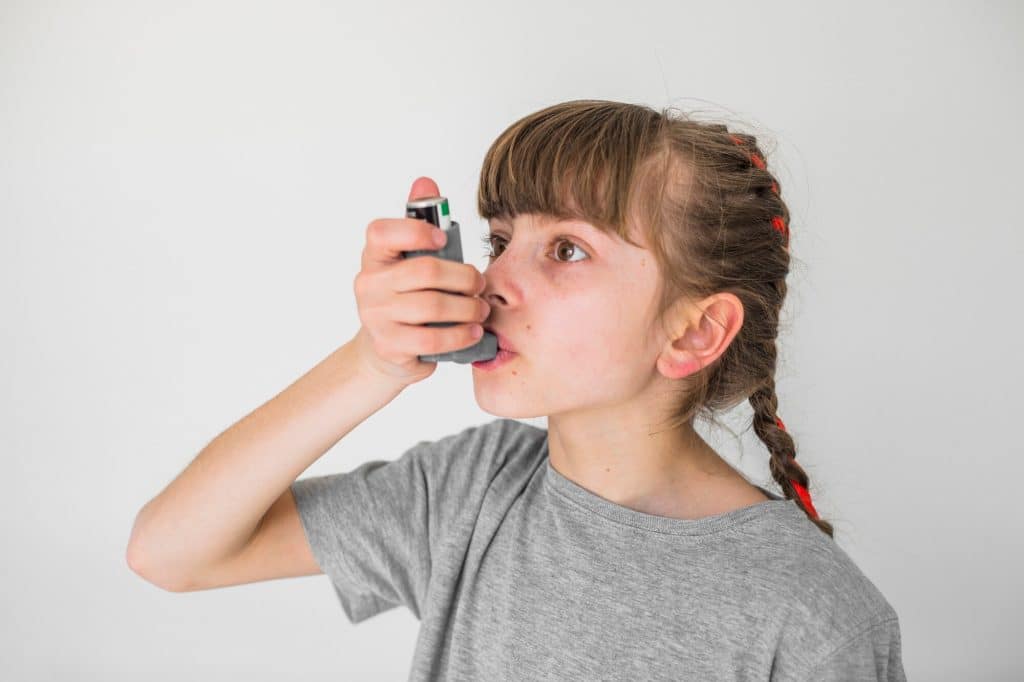
You’ll learn to recognise worsening asthma: increased wheezing, difficulty speaking, use of accessory muscles to breathe. Training covers using a reliever inhaler (puffer) with a spacer device, positioning the person upright, and when to call 000.
Asthma affects approximately 262 million people globally, according to research, making it one of the most common chronic conditions you’ll encounter in childcare.
Anaphylaxis Management
Anaphylaxis training includes recognising signs: swelling, difficulty breathing, rapid pulse, skin changes. You’ll practise using a trainer auto-injector (EpiPen-style device), calling 000, positioning the person flat with legs raised (if breathing normally), and monitoring until help arrives.
Understanding what anaphylaxis is and how quickly it can escalate is critical for childcare staff.
Education and Care Setting Emphasis
HLTAID012 goes beyond medical response. You’ll learn documentation requirements, parent and guardian notification procedures, incident reporting, and debrief processes. These are regulatory requirements in Australian childcare.
CPR skills can deteriorate within six to eight months after training, studies show, supporting the importance of regular refreshers in childcare environments.
| Skill | Who It’s Performed On | How It’s Assessed |
| CPR (compressions and breaths) | Adult, child, infant manikins | Practical demonstration, minimum 2 minutes continuous CPR |
| AED use | Adult manikin with trainer AED | Practical demonstration |
| Asthma response (reliever + spacer) | Role-play scenario (child) | Scenario-based assessment |
| Anaphylaxis response (auto-injector) | Role-play scenario (child or adult) | Scenario-based assessment |
| Wound care (bleeding control) | Role-play scenario | Practical demonstration |
| Documentation and reporting | Written scenario | Written assessment or verbal explanation |
HLTAID012 includes hands-on CPR for adults, children and infants, plus practical first aid responses to asthma and anaphylaxis scenarios in an education and care setting.

HLTAID012 Course Duration in Brisbane City
Duration depends on delivery mode. When someone asks “HLTAID012 course duration in Brisbane City,” the most accurate answer is: plan for online theory at home plus a face-to-face practical session, with the in-class component typically lasting between 3.5 and 6.5 hours depending on your booking option.
Blended Learning Explained
Blended learning means you complete theory online first, then attend an in-person session to practise and be assessed on practical skills. Most Brisbane City providers use this model because it reduces face-to-face time while maintaining practical competency requirements.
Online theory is self-paced. You work through modules at home covering topics like infection control, legal responsibilities, emergency response protocols, and recognition of medical conditions. Allow a few hours, though time varies based on your experience and reading speed.
Face-to-face assessment happens in a Brisbane City training venue. You demonstrate CPR on manikins, use trainer equipment (spacers, auto-injectors, AEDs), and respond to scenario-based assessments. This component commonly takes 3.5 hours for shorter practical options or up to 6.5 hours for full face-to-face training without separate online theory.
Typical Time Ranges in Brisbane City
Full face-to-face (no online theory) runs approximately 6.5 hours. All content and assessment happens in one day. This suits learners who prefer classroom-based learning or struggle with online formats.
Blended regular (online theory + practical assessment) commonly takes a few hours online plus 4 to 5 hours face-to-face. Most new childcare educators choose this option.
Express or assessment-only options typically run 3.5 to 4 hours face-to-face. These are designed for people with current competencies who need to refresh their certificate. You complete shortened online theory then attend a condensed practical assessment.
Certificate Issuance Timing
A USI (Unique Student Identifier) is a government-issued number required for nationally recognised training in Australia, so your Statement of Attainment can be issued. Many Brisbane City providers issue same-day certificates if all requirements are met and your USI is verified.
Same-day certificate usually means your digital Statement of Attainment is issued and emailed after you successfully complete all assessments and your USI is verified. This typically happens later the same day or within 24 hours.
If you don’t have a USI or your pre-course theory isn’t completed, certificate issuance will be delayed.
Choosing the Right Option
New to first aid or haven’t done CPR training in years? Book express or regular options. You need coached practice before assessment.
Renewing with a current certificate and confident in your skills? The express course may suit, but check provider eligibility requirements.
CPR First Aid offers Brisbane City sessions with clear course streams (Express, Regular) so students can match their experience level and time availability.
Understanding how long certificates last helps you plan renewal timing.
| Delivery Option | Who It Suits | Typical In-Person Time | Pre-Course Theory Requirement | Risk of Booking Wrong Option |
| Blended regular | Most new and renewing educators | 3.5 hours | A few hours online (self-paced) | Low |
| Express course | Current certificate holders, confident in skills | 1.25 hours | Shortened online theory | Medium (must have current skills) |
What to Bring to Your HLTAID012 Course in Brisbane City
If you bring nothing else, bring these two things: photo ID and your USI. To avoid being turned away on the day, bring photo ID and your USI, and make sure your online theory is completed before you arrive for the practical assessment.
Must-Bring Items
Photo ID verifies your identity for certificate issuance. Driver’s licence or passport works. Expired ID may not be accepted by some providers.
USI is non-negotiable. No USI means no certificate. Create yours free at usi.gov.au before course day. Write it down or save it in your phone.
Enrolment confirmation email shows proof of booking. Have it on your phone or printed.
Current certificate if you’re doing assessment-only or express options. The trainer needs to sight your existing qualification.
Water bottle keeps you hydrated during physical demonstrations. CPR practice is tiring.
What to Wear
Comfortable clothes suitable for kneeling and lying beside a manikin are essential. You’ll spend time on the floor practising infant and child CPR.
Closed-toe shoes protect your feet and meet occupational health and safety requirements in most training venues. No thongs or sandals.
Avoid restrictive clothing. You need to bend, kneel, and move freely during scenarios.
Preparation Before You Arrive
Complete your online theory if required. Most providers won’t let you start practical assessment without finished pre-course work. Check your enrolment email for login details and due dates.
Arrive 10 to 15 minutes early for check-in. Late arrivals may not be admitted, depending on provider policy.
Physical Requirements and Accessibility
You must perform two minutes continuous CPR as part of the assessment. This is physically demanding. If you have mobility limitations, contact your provider ahead of time. They may be able to offer modified assessment or advice.
Fear of lacking skills is a key barrier to action. One survey found 53.5% of people cited this as a reason for hesitation during emergencies. Training removes that barrier.
What Not to Bring
Bulky bags can get in the way during practical training. Bring only essentials.
Food depends on venue policy. Most courses have scheduled breaks if needed. Check with your provider.
Valuables should be left at home or secured. Training venues usually have limited secure storage.
Hygiene expectations apply. Manikins are cleaned between uses, but some venues ask you to bring your own face shield or manikin wipe if you prefer.
| Bring | Wear | Complete Before Arrival |
| Photo ID | Comfortable clothing (no restrictive items) | Online theory (if required for your course option) |
| USI | Closed-toe shoes (no thongs/sandals) | Any pre-course assessments sent by provider |
| Booking confirmation | Layers (training rooms vary in temperature) | USI creation (if you don’t have one yet) |
| Current certificate (if assessment-only) | Read any pre-course instructions in your email | |
| Water bottle | ||
| Pen and notepad (optional) |
Brisbane City Logistics: Getting to Training, Arrival Time, Parking and Public Transport
Plan to arrive 10 to 15 minutes early for check-in. For Brisbane City first aid training, arriving early is the easiest way to complete check-in smoothly and start on time.
CPR First Aid Brisbane City Location
CPR First Aid operates Brisbane City first aid courses at accessible venues. Check your enrolment confirmation email for the exact address and any venue-specific instructions.
Public Transport Options
Brisbane City is well-connected by train and bus. Most training venues sit within walking distance of Central Station or Roma Street Station.
Buses run frequently to the CBD. Check Translink journey planner (translink.com.au) before leaving home. Services can vary on weekends and public holidays.
Allow extra time for public transport delays, especially during morning peak (7am to 9am).
Parking Guidance
Brisbane City has several paid car parks. King George Square Car Park, Wintergarden Car Park, and Queen Street Car Park are common options depending on your venue location.
Parking availability varies throughout the day. Arrive with a backup plan if your preferred car park is full.
Early bird rates often apply if you enter before 9am. Weekend rates may differ from weekday pricing.
On-the-Day Reminders
Late arrivals may not be admitted. Most providers have strict start times because practical assessments follow a schedule.
Keep your phone on silent during training. Trainers need your full attention during scenarios.
Bring minimal belongings. Training rooms have limited space for bags.
| If You’re Coming By | What to Do | Extra Time to Allow |
| Train | Check Translink app for service status, walk from Central or Roma Street | 20 minutes (includes platform-to-venue walk) |
| Bus | Plan route via Translink, allow for traffic delays in peak times | 30 minutes (peak), 20 minutes (off-peak) |
| Car | Pre-check car park locations and rates, have backup parking options | 15 minutes (finding park + walking to venue) |
HLTAID012 Versus a CPR, Asthma and Anaphylaxis Course
If your employer said HLTAID012, don’t downgrade to a shorter combo course unless they confirm it’s acceptable. For most childcare and OSHC roles, HLTAID012 is the safer booking because it’s the education-and-care first aid course that includes CPR plus asthma and anaphylaxis response training.
Understanding the Difference
HLTAID012 is an education-and-care first aid qualification that meets regulatory requirements for childcare centres, preschools, and OSHC programs. It covers full first aid plus child-specific scenarios.
CPR + asthma + anaphylaxis courses may be shorter and more targeted. They suit specific workplace needs but may not satisfy childcare centre compliance requirements. Some venues run these as refresher courses for people who already hold HLTAID012 and need to update particular skills.
Examples of Different Best Choices
A new educator starting in long day care should book HLTAID012. It’s the standard childcare first aid qualification and covers all scenarios you’ll face.
School admin staff in a primary school might only need HLTAID011 (general first aid) unless they work directly with young children. Confirm with your school’s policy.
A parent wanting confidence to handle emergencies at home might choose a shorter CPR + asthma + anaphylaxis course. It won’t give you a full first aid certificate but covers common child emergencies.
Renewals and Refreshers
CPR refreshers are commonly done more frequently than full first aid. Many workplaces ask for annual CPR updates while full first aid renews every three years.
Correct CPR performance improves after training but can deteriorate. Quality decline occurs within six to eight months in one review, supporting the case for regular refreshers in childcare where you’re the primary first responder.
Brand-Forward Recommendation
CPR First Aid can advise which stream suits you (Express, Regular, Full) and help you avoid booking the wrong option. Call ahead if you’re unsure whether assessment-only will meet your employer’s needs.
Learn more about what to do during anaphylaxis emergencies to understand why full training matters.
| Course | Best For | Covers Infant CPR? | Covers Asthma/Anaphylaxis Scenarios? | Nationally Recognised Outcome? | Typical Time | Renewal Rhythm |
| HLTAID012 | Childcare, OSHC, educators | Yes | Yes (education-focused) | Yes (Statement of Attainment) | 4–6.5 hours face-to-face + online theory | 3 years (full first aid), annual CPR refresh recommended |
| HLTAID011 | General workplaces, office | Optional (some providers include) | Basic coverage only | Yes (Statement of Attainment) | Similar to HLTAID012 | 3 years (full first aid), annual CPR refresh recommended |
| HLTAID009 (CPR only) | CPR refreshers | Yes | No | Yes (CPR only) | 2–3 hours | Annual |
| CPR + Asthma + Anaphylaxis short course | Parents, targeted refreshers | Depends on provider | Yes | May not be nationally recognised | 2–4 hours | Not standardised |
Real Childcare Emergency: What This Training Looks Like in Practice
Imagine a three-year-old becomes wheezy after outdoor play at your Brisbane City childcare centre. Staff hear the familiar wheeze. The child starts using their shoulder muscles to breathe.
Your HLTAID012 training kicks in. You follow DRSABCD. Danger: remove the child from outdoor allergens, bring them inside. Response: the child is conscious but distressed. Send for help: another staff member calls the centre director and prepares to call 000 if symptoms worsen.
Airway and breathing: you position the child upright, leaning slightly forward. You locate their asthma action plan and reliever puffer. You attach a spacer device and administer four puffs, one at a time, with four breaths through the spacer after each puff.
You monitor the child. Breathing improves within a few minutes. You document the incident, including time, symptoms, medication given, and response. You notify parents and follow your centre’s reporting procedures.
Duty of care means taking reasonable steps to keep children safe and responding appropriately to emergencies within your training and workplace procedures. This scenario shows how HLTAID012 training translates to real action.
If symptoms hadn’t improved, you would escalate. Call 000. Continue reassurance and monitoring. Be ready to perform CPR if the child becomes unconscious and stops breathing normally.
The value of HLTAID012 is that you practise these scenarios before you ever face them in a childcare room.
Understanding risks like thunderstorm asthma helps Brisbane childcare workers prepare for seasonal emergencies.
Why Book With CPR First Aid in Brisbane City
If you need HLTAID012 in Brisbane City quickly and want a clear process, CPR First Aid is built for that.
Clear Course Streams and Brisbane City Accessibility
CPR First Aid offers two streams: Regular (blended with online theory) and Express. You choose based on whether you’re new or renewing and how much time you have.
Brisbane City venues are central and accessible by public transport. Check-in is streamlined. You arrive, verify your identity and USI, and start training.
Experienced First Aid Trainers
CPR First Aid trainers are qualified first aid assessors with industry experience. They understand childcare contexts. Training focuses on real scenarios you’ll face, not just textbook theory.
Nervous about assessment? Trainers coach you through demonstrations. The goal is competency, not perfection.
Same-Day Certificate Workflow
CPR First Aid issues digital Statements of Attainment on the same day after successful completion, provided your USI is verified and all assessments are passed. You receive an email with your certificate, usually within hours.
No waiting weeks for paperwork. Start work the next day if needed.
Support for Nervous Learners
Practical training happens on manikins in a controlled environment. You practise each skill multiple times before assessment. Trainers give feedback and coaching.
Assessment is competency-based, not pass-fail in the traditional sense. You demonstrate each skill until you meet the standard.
Training increases willingness to act. CPR-trained participants were approximately three times more willing to perform CPR in one survey, showing how confidence grows with practice.
Ready to book a course? CPR First Aid makes it simple to book a course in Brisbane City, complete the theory, demonstrate your skills, and leave with the confidence (and certification) your childcare employer expects.
For more childcare-specific guidance, visit childcare first aid resources.
| What You Get With CPR First Aid | Why It Matters |
| Clear pre-course instructions | You know exactly what to prepare before course day |
| Brisbane City central venue | Easy access by train, bus, or car |
| Childcare-focused scenarios | Training reflects real emergencies you’ll face in education settings |
| Assessment support and coaching | Trainers help you achieve competency, not just test you |
| Same-day digital certificate workflow | Start work immediately (if all requirements met) |
| Three course streams (Full, Regular, Express) | Match your experience level and time availability |
Book a course with CPR First Aid in Brisbane City. Choose HLTAID012 if you work in childcare. Our team can help you select the right option based on whether you’re new or renewing.
Frequently Asked Questions
How long does HLTAID012 take in Brisbane City?
HLTAID012 usually takes a few hours of online theory plus a face-to-face practical session, with the in-person component commonly lasting 3.5 to 6.5 hours depending on the option you book. If you’re new to first aid, choose a longer practical option so you get more coached practice before assessment. Blended learning (online theory at home plus in-person practical) is the most common format in Brisbane City.
Does HLTAID012 include CPR, asthma and anaphylaxis training?
Yes. HLTAID012 includes CPR (adult, child and infant) and covers first aid responses to asthma and anaphylaxis scenarios that can occur in education and care settings. It’s designed for childcare environments where rapid recognition and action matter. You’ll practise using spacers for asthma and trainer auto-injectors for anaphylaxis during your face-to-face session.
What do I need to bring to my HLTAID012 course?
Bring photo ID and your USI, and wear comfortable clothes and closed-toe shoes because you’ll be practising CPR on the floor. Also bring your booking confirmation and, if you’re renewing with an assessment-only option, evidence of your current qualification. Complete your online theory before arriving if required for your course option.
Can I do HLTAID012 completely online?
No. Nationally recognised first aid courses require an in-person practical assessment, including demonstrating CPR on manikins. Online learning is usually used for the theory component only. You must attend a face-to-face session in Brisbane City to complete your practical skills assessment and receive your Statement of Attainment.
Do I need a USI for HLTAID012?
Yes. A USI is required for nationally recognised training in Australia so your Statement of Attainment can be issued. Creating your USI before the course helps avoid certificate delays. You can create a free USI at usi.gov.au in a few minutes. Bring your USI number with you on course day.
How long is HLTAID012 valid for?
HLTAID012 is generally renewed every three years, and many workplaces expect CPR skills to be refreshed more often to stay current. Regular refreshers also help because CPR skill quality can decline within months after training. Research shows skill retention in chest compression quality can deteriorate within six to eight months, supporting annual CPR updates in childcare settings.
Should I book an express or assessment-only course if I’m new to childcare?
If you’re new or your previous certificate isn’t current, book a full or regular option rather than assessment-only so you get enough guided practice. Assessment-only options are usually best for people actively renewing with current skills and recent hands-on experience. New childcare workers benefit from full coaching and multiple practice rounds before assessment.
Will I get my certificate the same day?
Many providers issue certificates the same day after successful assessment, provided your USI is verified and all requirements are completed. In practice, this usually means a digital Statement of Attainment is emailed later that day. If you haven’t finished your online theory or don’t have a verified USI, certificate issuance will be delayed until those requirements are met.
Conclusion
HLTAID012 is the right choice for most childcare and education roles in Brisbane City. It covers CPR, asthma, and anaphylaxis management with an education-and-care focus. The course typically takes a few hours of online theory plus 3.5 to 6.5 hours face-to-face, depending on your delivery option.
Bring photo ID and your USI. Wear comfortable clothes and closed-toe shoes. Complete your online theory before arriving for practical assessment.
CPR First Aid makes the process simple. Book a course in Brisbane City, choose the stream that matches your experience (Regular or Express), and leave with same-day certification when all requirements are met.
Training reduces fear and builds confidence. You’ll practise on manikins, work through scenarios, and learn the response protocols that save lives in childcare emergencies.
Book your HLTAID012 course today. Your employer, your colleagues, and the children in your care will thank you for being prepared.
References
- A survey of residents from a province in Central China in 2023 showing CPR-trained participants were approximately three times more willing to perform CPR; fear of lacking skills was cited by 53.5% as a barrier to action
- Skill retention after school-based CPR training demonstrating CPR skill quality can decline within six to eight months after training
- Anaphylaxis Management research showing up to 80% of anaphylaxis patients may not receive epinephrine in emergency departments
- Global asthma burden data indicating approximately 262 million people are affected worldwide
- Brisbane First Aid Courses HLTAID012 page listing 6.5-hour face-to-face training option as market reference for duration benchmarking