

If you have spotted a dark spider around a window frame, wall crevice or outdoor brickwork, there is a good chance you have found a black house spider. In Australia, this species is common around homes and buildings, and it is often mistaken for a more dangerous spider because of its dark body and funnel-like web entrance. The good news is that black house spiders are usually timid, bites are infrequent, and most bites cause local pain and swelling rather than life-threatening envenomation. The key is knowing how to identify the spider, what symptoms to watch for, and when a spider bite needs routine first aid versus urgent emergency care.
At CPR First Aid, practical first aid knowledge matters because spider bites are one of those situations where the right response depends on the species involved. A black house spider bite is managed differently from a suspected funnel-web bite, and confusion between the two can lead to unnecessary panic or the wrong first aid. This guide explains what a black house spider looks like, where it lives, whether it is venomous, what a black house spider bite may feel like, and what to do next. Along the way, you can also explore CPR First Aid’s broader guides on Australian spiders and first aid, spider bites, redback spider bites, and funnel-web spider bite first aid.

What Is a Black House Spider?
The black house spider is Badumna insignis, a dark, robust Australian spider in the Desidae family. The Australian Museum describes it as dark brown to black with grey hairs visible on the carapace and a charcoal-grey abdomen that can show a faint dorsal pattern of white markings. Females are larger than males, and the species is widely distributed, especially through southern and eastern Australia.
One reason people worry about this spider is the web. A black house spider often builds a messy-looking lace web with one or more funnel-like entrances leading back to its retreat. That web can make people think of an Australian funnel-web spider, but the Australian Museum is clear that black house spiders are not related to Australian funnel-webs and are not similar in appearance, size or life history. That distinction is important because the risk profile and first aid response are very different.
Black house spiders are also commonly called window spiders because they often make webs around window frames in urban areas. Around the home, they favour sheltered corners, cracks, crevices, brickwork, rock walls and areas where insects gather near lights at night. In natural settings they are often found on rough-barked trees, logs and rock surfaces where they can build a secure retreat.
How to Identify a Black House Spider Around Your Home
A black house spider usually looks dark and solid rather than glossy and bulky. It tends to sit in or near its web retreat, rather than wandering openly across floors like a huntsman. The web itself is often the best clue: lacy silk sheets spreading out from a tucked-away retreat, often around windows, walls or sheltered outdoor structures. Older webs can look grey, woolly and untidy because the spider keeps adding fresh silk over time.
If you are trying to tell a black house spider from a more dangerous species, focus on habitat and behaviour as much as body shape. Black house spiders usually stay associated with fixed web sites on buildings, trunks or walls. A true funnel-web, by contrast, is more strongly associated with burrows and high-risk emergency first aid if a bite is suspected. CPR First Aid’s guide to funnel-web spider bite first aid is worth reviewing if you live in a higher-risk area or want to understand that difference more clearly.
Another useful point is that black house spiders are common in urban Australia and often stay in the same retreat for long periods. The female rarely leaves her web unless forced to, while the male moves around more when seeking a mate. That is why many people discover a black house spider because they keep seeing the same web in the same corner rather than finding the spider roaming the house.
Are Black House Spiders Venomous?
Yes, black house spiders are venomous, like many spiders in Australia. But venomous does not automatically mean highly dangerous to humans. The Australian Museum says black house spiders are timid animals and bites from them are infrequent. When bites do happen, the usual concern is pain and local swelling rather than the severe, rapidly progressing emergency seen with funnel-web bites.
That is an important distinction because many searchers look for terms like “black spider Australia” or “venomous spiders in Australia” and assume any dark spider is a medical emergency. Australia does have medically important spiders, including funnel-web and redback spiders, but CPR First Aid’s spider content makes clear that not all big or black spiders are deadly, and not every bite needs antivenom. In fact, most spider bites are managed with cleaning, cold packs and observation unless symptoms are severe or the species is one that needs emergency treatment.
So, is a black house spider dangerous? Usually, no. It can bite, the bite can hurt, and symptoms can be unpleasant, but it is generally not grouped with Australia’s most medically dangerous spiders. That said, any bite that becomes severe, keeps worsening, or causes worrying symptoms should be assessed by a medical professional. It is also possible to misidentify a spider, which is why uncertainty matters in first aid decisions.
What Does a Black House Spider Bite Feel Like?
A black house spider bite may be quite painful at the site and can cause local swelling. The Australian Museum also notes that symptoms such as nausea, vomiting, sweating and giddiness are occasionally recorded. In a few cases, skin lesions have developed after multiple bites. That means the typical pattern is local pain first, followed by watchful monitoring for anything more significant.
In practical terms, many people notice a sudden sharp pain, mild redness, tenderness and swelling around the bite. Some people may only have minor irritation, while others can feel more unwell. The exact reaction varies depending on the person, the circumstances of the bite and whether the spider was correctly identified. Persistent or worsening pain is a reason to get medical advice rather than simply waiting it out.
It is also worth remembering that spider bites are not always easy to confirm. A sore or swollen patch of skin does not automatically prove a black house spider bite. If you did not actually see the spider, or if the spider was large, black and hard to identify, a more cautious first aid approach is appropriate. Healthdirect advises that if someone has been bitten by a big black spider, it should be treated as a medical emergency and Triple Zero (000) should be called for an ambulance.
Black House Spider Bite First Aid in Australia
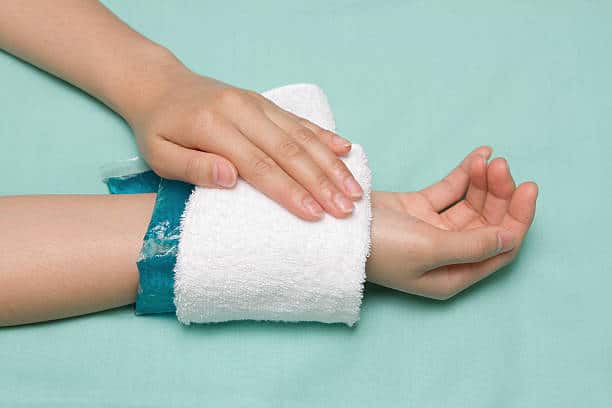
For a confirmed or likely black house spider bite that is not a suspected funnel-web or mouse spider bite, first aid is usually straightforward. Healthdirect advises washing the bite with soap and water, applying antiseptic cream if available, using an ice-pack or cold pack to reduce swelling and manage pain, and using paracetamol or ibuprofen if needed for pain relief. The ice pack should be wrapped in a clean cloth rather than placed directly on the skin.
That practical, low-drama approach aligns well with the black house spider guidance on CPR First Aid, which recommends a cold compress for 10 to 15 minutes at a time to ease pain, swelling and redness. The Australian Museum also notes that a cold pack may relieve local pain and that medical attention should be sought if symptoms persist.
A sensible step-by-step response looks like this:
1. Move Away From the Spider Safely
Do not try to handle or crush the spider with bare hands. If possible, note what it looked like or take a photo from a safe distance. That can help later if symptoms worsen and you need medical advice.
2. Wash the Bite Area
Clean the site gently with soap and water. This helps reduce contamination and is part of standard first aid for most non-emergency spider bites.
3. Apply a Wrapped Cold Pack
Use a cold pack or ice pack wrapped in a cloth for about 10 to 15 minutes. Remove it, then repeat as needed. Do not place ice directly on the skin.
4. Rest and Observe
Watch for increasing pain, spreading swelling, vomiting, sweating, dizziness, or any symptoms that do not settle. If the bite remains very painful or the symptoms escalate, see a doctor.
5. Escalate if the Situation Changes
If breathing becomes difficult, the person collapses, develops throat swelling, or the bite may have come from a dangerous large black spider, call 000 immediately.
When a Spider Bite Is an Emergency
This is where many Australians get confused. A black house spider bite itself is usually managed with cleaning, cold packs and observation. But if the spider was a big, black, hairy spider or you suspect funnel-web or mouse spider involvement, Healthdirect says to treat it as a medical emergency. In those situations, pressure immobilisation may be used and the person should be kept still while waiting for an ambulance.
Healthdirect specifically says that an immobilisation bandage is only used for funnel-web or mouse spider bites, and CPR First Aid similarly notes that pressure immobilisation is not for all spider bites; it is for funnel-web or unknown large black spider bites and should not be used for redback bites because it can increase pain. That distinction matters because applying the wrong first aid to the wrong bite can complicate care.
You should seek urgent help or call 000 if:
- the spider may have been a funnel-web, mouse spider, or unknown large black spider
- the person has trouble breathing, throat swelling, dizziness or collapse
- the pain is severe or rapidly worsening
- the bite does not settle within a few hours
- swelling or itching worsens over 24 to 48 hours
- the casualty is a young child, older person, or someone with a history of severe allergic reactions.
Black House Spider vs Other Australian House Spiders
One of the most useful things you can learn is what a black house spider is not. It is not the same as a funnel-web spider, even though its web may look vaguely funnel-like. The Australian Museum says the two are not related, and true Australian funnel-web retreats are usually associated with burrows rather than the exposed lace-web sheets typical of black house spiders.
It is also not the same as a redback. Redback bites are managed with washing the area, using cold packs and seeking care for significant symptoms, but CPR First Aid specifically warns not to use pressure immobilisation for redback bites because it can worsen pain. That is why spider identification matters so much in Australia: different species can call for different first aid decisions. For a broader overview, CPR First Aid’s house spiders in Australia and most dangerous house spiders in Australia articles are useful follow-up reads.
The black house spider is best thought of as a common, fixed-web house spider that can bite if threatened but is not usually treated as a top-tier spider emergency when confidently identified. The real problem is misidentification. If you are unsure, treat the situation cautiously and get medical advice.
How to Reduce Black House Spider Activity Around the Home
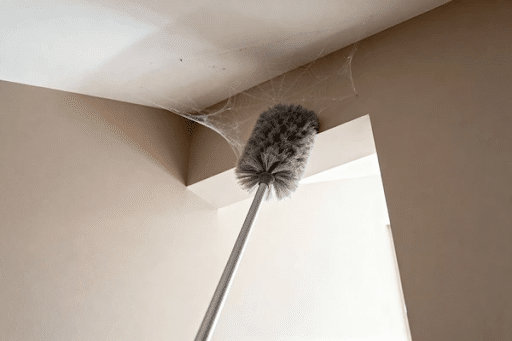
Since black house spiders like sheltered structures and insect-rich areas, reducing their activity often comes down to basic home maintenance. Check around window frames, light fittings, exterior brickwork, sheds and wall crevices. Remove old webs carefully with gloves and a tool rather than bare hands, reduce insect-attracting lights where practical, and seal cracks or gaps that create sheltered retreat sites. Their tendency to settle around windows and crevices is well documented by the Australian Museum.
It also helps to avoid reaching blindly into stored items, outdoor crevices, wood piles or behind exterior fittings. Even a spider that is normally timid may bite if compressed against the skin. That is true of many house spiders in Australia, which is why awareness and sensible handling matter more than fear.
If you regularly deal with pests, garden work, outdoor storage or children exploring around the home, it is worth brushing up on bite and sting first aid more broadly. CPR First Aid’s spider bites guide and Australian spiders identification and first aid guide are good resources to keep bookmarked.
Why First Aid Training Still Matters for “Mild” Spider Bites
Even though most black house spider bites are not medical emergencies, they still show why first aid confidence matters. In real life, people do not always know what bit them, symptoms do not always follow a neat pattern, and panic can lead to poor choices. Practical training helps you stay calm, assess the casualty properly, and respond based on the likely risk rather than guesswork.
CPR First Aid offers nationally accredited training through the HLTAID011 Provide First Aid course, which the site states is renewed every three years and available for public bookings and workplaces across Australia. If you only need CPR currency, the HLTAID009 CPR course is listed as a one-year qualification. For educators and carers, the HLTAID012 Childcare First Aid course is a nationally accredited course renewed every three years and includes HLTAID011 and HLTAID009 components.
That matters because spider bites are only one part of the broader first aid picture. The same person who needs help after a bite may also need monitoring for shock, allergic reaction, airway compromise or deterioration while waiting for higher-level care. Good first aid training gives you a decision-making framework, not just a list of isolated tips.
Frequently Asked Questions
Is a Black House Spider Poisonous or Venomous?
A black house spider is venomous, but that does not mean it is usually dangerous to humans. Bites are infrequent, and the common pattern is local pain and swelling, with occasional nausea, vomiting, sweating or giddiness.
Can a Black House Spider Bite Make You Sick?
Yes, it can. While many bites stay local, the Australian Museum records occasional systemic symptoms such as nausea, vomiting, sweating and giddiness. Persistent or worsening symptoms should be medically assessed.
Do I Use a Pressure Bandage for a Black House Spider Bite?
Not for a confidently identified black house spider bite. Healthdirect says pressure immobilisation is for funnel-web or mouse spider bites, and CPR First Aid says it is not for all spider bites. If the spider was an unknown large black spider, treat the situation more cautiously and seek emergency help.
What Is the First Aid for a Black House Spider Bite?
Wash the bite, apply a wrapped cold pack, use simple pain relief if needed, and monitor the person. Seek medical advice if symptoms worsen or do not settle.
Where Are Black House Spiders Found in Australia?
They are widely distributed, especially in southern and eastern Australia, and are commonly found on tree trunks, logs, rock walls and buildings, including window frames and wall crevices.
Are Black House Spiders the Same as Funnel-Webs?
No. Their web entrances can look funnel-like, but the Australian Museum says they are not related to Australian funnel-webs and do not share the same appearance, size or life history.
Conclusion
The black house spider is a common Australian house spider that often startles people because of its dark colour and funnel-like web, but it is usually far less dangerous than people fear. It is widely found around homes, especially near windows, crevices and sheltered exterior surfaces. When bites happen, they are usually painful rather than life-threatening, with local swelling and occasional symptoms like nausea, sweating or dizziness. Routine first aid usually means washing the area, applying a wrapped cold pack, managing pain and monitoring symptoms.
The main risk is confusion. If you are not sure what spider caused the bite, or if the spider may have been a large black spider such as a funnel-web or mouse spider, treat it as an emergency and call 000. And if you want to build practical confidence for spider bites, allergic reactions and everyday emergencies, explore CPR First Aid’s HLTAID011 Provide First Aid course, HLTAID009 CPR course or HLTAID012 Childcare First Aid course.