
Snakes are fascinating but often misunderstood creatures. While many are harmless, Australia is home to some of the world’s deadliest serpents. Understanding how to tell if a snake is venomous is crucial for personal safety, wildlife awareness, and appropriate first aid response. This guide explains everything from identifying venomous snakes to handling snake encounters and emergency care.

What Does “Venomous” Mean?
The term “venomous” refers to animals that inject toxins through a bite or sting. In contrast, poisonous creatures deliver toxins when they are touched or ingested. In the context of venomous vs non venomous snakes, venomous snakes use their fangs to deliver venom, which can immobilize prey or defend against threats.
Common venomous animals include snakes, spiders, and scorpions, while poisonous ones include frogs or plants like nightshade.
Top 10 Most Venomous Australian Snakes
Australia leads the world in venomous snake species. Below are ten of the most dangerous snakes to aid in venomous snake identification in Australia.
Eastern Brown Snake (Pseudonaja textilis)
The Eastern Brown Snake is responsible for the majority of snakebite fatalities in Australia. It is highly aggressive and often found in urban areas. Its venom affects the nervous system, blood clotting, and muscle function.
- Key stats: Up to 2m long, active during the day, found in urban areas.
- Bite risk: Extremely venomous; affects blood, nerves, and muscles. Responsible for the most deaths in Australia.
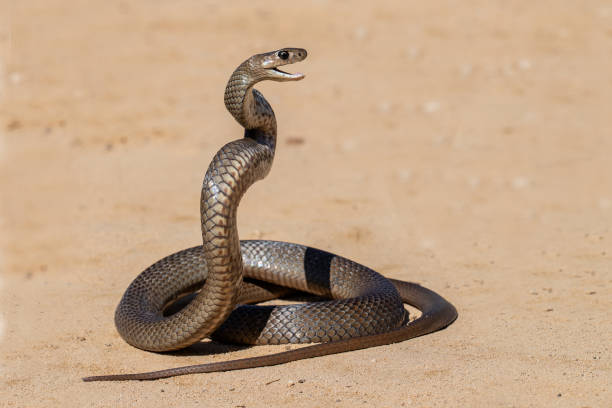
Western Brown Snake (Pseudonaja nuchalis)
The Western Brown Snake is highly dangerous and quick-moving like its eastern counterpart. Its potent venom can cause severe coagulopathy, leading to significant health risks if not treated promptly.
- Key stats: Fast-moving; up to 1.5m long.
- Bite risk: Causes internal bleeding and coagulopathy.
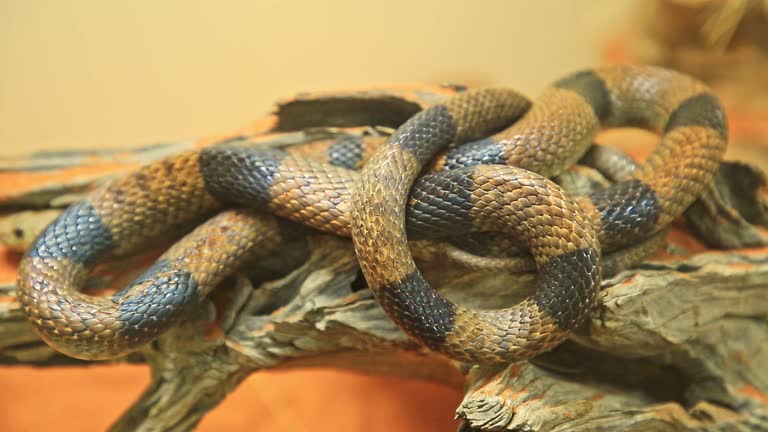
Mainland Tiger Snake (Notechis scutatus)
The Mainland Tiger Snake, recognized by its banded pattern, inhabits southeastern Australia. Its venom can cause pain, breathing difficulties, and paralysis, making it extremely dangerous if untreated.
- Key stats: Found in southeastern Australia.
- Bite risk: Can cause paralysis, respiratory issues, and death if untreated.
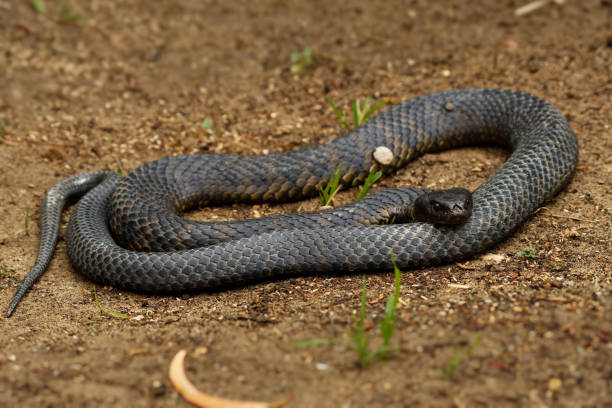
Inland Taipan (Oxyuranus microlepidotus)
Known as the world’s most venomous snake, the venom of the Inland Taipan is highly neurotoxic and can kill an adult human within 30 to 45 minutes if left untreated. Fortunately, it is reclusive and rarely encountered by humans.
- Key stats: Most venomous snake in the world.
- Bite risk: Death in under an hour without antivenom.
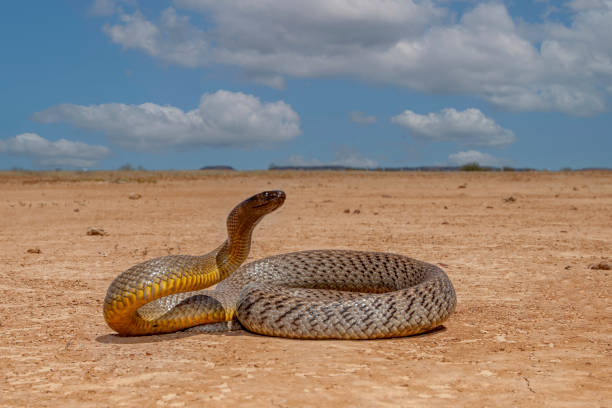
Coastal Taipan (Oxyuranus scutellatus)
With highly toxic venom, the Coastal Taipan can cause severe internal bleeding, muscle destruction, and paralysis. It is known for its long fangs and aggressive defence when threatened.
- Key stats: Found in coastal Queensland.
- Bite risk: Venom causes massive internal bleeding and nerve damage.

Mulga Snake (Pseudechis australis)
Also known as the King Brown Snake, the Mulga Snake is one of Australia’s largest venomous snakes. It can deliver large quantities of venom, which can cause significant tissue damage and blood cell destruction.
- Key stats: Australia’s largest venomous snake.
- Bite risk: High venom yield; causes blood cell destruction.
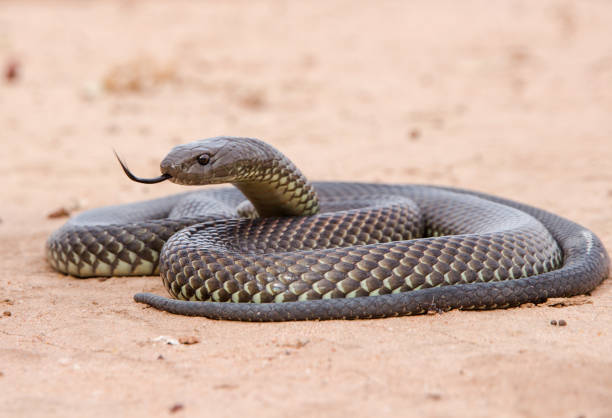
Lowlands Copperhead (Austrelaps superbus)
Found in more extraordinary, wetter habitats, the venom of the Lowlands Copperhead can cause muscle damage and neurological symptoms. It is less aggressive but still poses a significant threat.
- Key stats: Prefers cooler, wetter habitats.
- Bite risk: Less aggressive but venomous enough to be life-threatening.
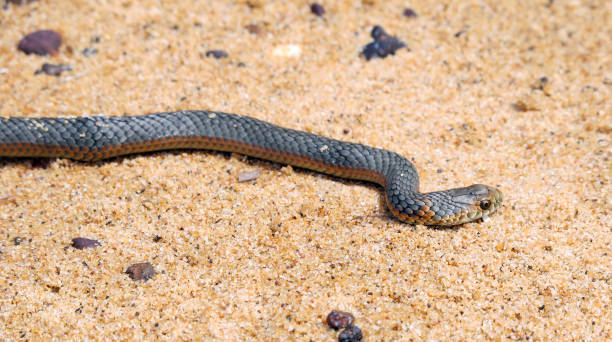
Small-Eyed Snake (Rhinoplocephalus nigrescens)
The nocturnal Small-Eyed Snake has venom that contains myotoxins and anticoagulants, causing muscle damage and interfering with blood clotting.
- Key stats: Nocturnal; often found in coastal areas.
- Bite risk: Myotoxins cause muscle damage and blood clotting issues.
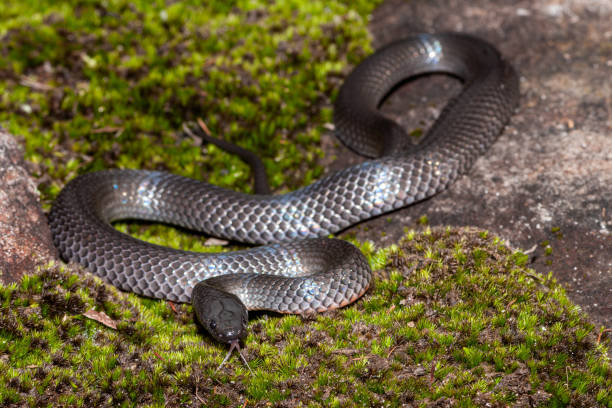
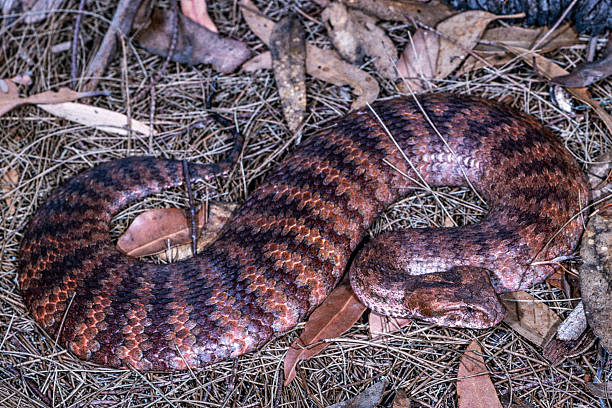
Common Death Adder (Acanthophis antarcticus)
An ambush predator, the Common Death Adder uses camouflage to catch prey. Its venom contains neurotoxins that can cause paralysis and respiratory failure.
- Key stats: Ambush predator with fast strike.
- Bite risk: Neurotoxins cause paralysis and potential respiratory failure.
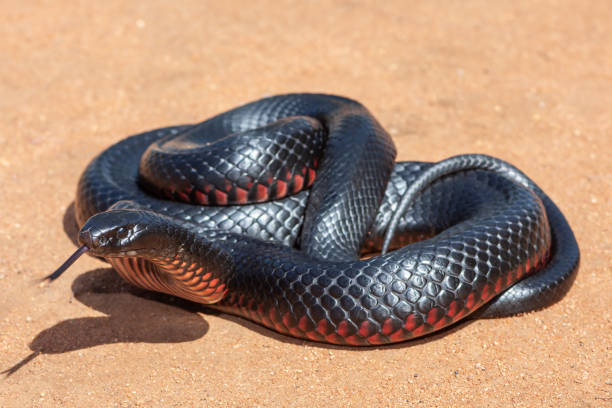
Red-Bellied Black Snake (Pseudechis porphyriacus)
Found in eastern Australia, the Red-Bellied Black Snake is less aggressive but still dangerous. Its venom can cause significant pain, swelling, and tissue damage, but fatalities are rare with prompt treatment.
- Key stats: Found near water in eastern Australia.
- Bite risk: Causes pain and swelling but rarely fatal.
Visual & Behavioural Clues to Identify Venomous Snakes
Encountering wildlife can be overwhelming, especially when it involves snakes. Here are some features to help with venomous snake identification:
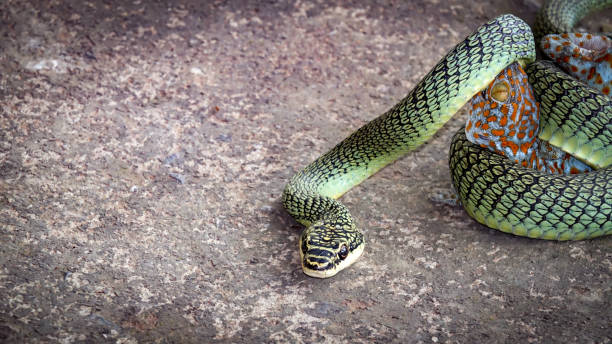
- Head Shape: Venomous snakes often have a distinct triangular or diamond-shaped head due to the venom glands located behind their eyes. Examples include vipers, rattlesnakes, and pit vipers. Non-venomous snakes typically have a more rounded or elongated head.
- Eye Shape: Many venomous snakes, particularly those in the viper family (such as rattlesnakes, copperheads, and cottonmouths), have elliptical or slit-shaped pupils, similar to a cat’s eye. Most non-venomous snakes tend to have round pupils. However, some venomous snakes, like the coral snake, also have round pupils.
- Colour Patterns: Specific colour patterns can indicate venomous snakes, such as the bright bands of a coral snake. However, colouration can be misleading and should not be the sole factor for identification. Non-venomous snakes often mimic the colouration of venomous species as a defence mechanism.
- Scale Texture & Posture: Some venomous snakes have keeled scales and adopt striking poses when threatened.
Note: In Australia, several harmless snakes mimic their venomous counterparts, so identification based solely on appearance can be risky.
Comparison Table: Venomous vs Non-Venomous Features
Feature | Venomous Snakes | Non-Venomous Snakes |
Head Shape | Triangular or wedge-like | Rounded |
Eye Shape | Elliptical (slit) | Round |
Colour Patterns | Bright or contrasting | Dull or camouflaged |
Strike Behavior | Defensive/aggressive | More likely to flee |
What Happens—How Snake Venom Affects the Body
Snake venom symptoms depend on the type of toxin:
- Neurotoxins: Neurotoxins disrupt communication between nerves, leading to muscle weakness, difficulty swallowing, drooping eyelids, and potentially respiratory paralysis. This is common in snakes like cobras and coral snakes.
- Hemotoxins: Hemotoxins damage blood vessels, causing them to leak or rupture, leading to uncontrolled bleeding, both internally and externally. This type of venom is common in vipers and pit vipers.
- Myotoxins: Myotoxins cause muscle breakdown, leading to intense pain and muscle fibre destruction.
Prompt treatment is essential to reduce long-term effects.

Recognising & Responding to a Snake Bite
Recognising a bite quickly is crucial. Signs include:
- Fang marks (1 or 2 puncture wounds)
- Pain, redness, and swelling
- Nausea, vomiting, sweating
- Difficulty breathing or swallowing
Snake bite first aid (Use the DRSABCD Action Plan):
- D: Danger (Check surroundings)
- R: Response (Check for a response)
- S: Send for help (Call emergency services)
- A: Airway
- B: Breathing
- C: CPR (if needed)
- D: Defibrillation
First Aid Tips:
- Immobilise the bitten area with a splint or bandage
- Keep it below heart level
- Do not wash the wound or suck out venom
- Remove jewelry or tight clothing
- Stay calm and still to reduce venom spread
What To Do If You Encounter a Snake
Australia is home to various snakes, and encounters can be startling. Here are guidelines on what to do if you find a snake in the wild:
- Stay calm and still
- Back away slowly
- Do not provoke or attempt to move the snake
- Notify local wildlife services if it’s in a populated area
Common Misconceptions About Venomous Snakes
- Myth: All snakes are venomous.
Fact: Most are non-venomous and shy. - Myth: Snakes chase people.
Fact: They flee unless threatened. - Myth: Colour tells all.
Fact: Harmless snakes mimic venomous ones. - Myth: Small snakes are safe.
Fact: Juveniles can be just as deadly. - Myth: You should suck out venom.
Fact: This can make things worse.
FAQ: Venomous Snake Identification & Safety
Can you tell by colour if a snake is venomous?
Not reliably. Some non-venomous snakes mimic venomous ones as a defense.
Why do some venomous snakes mimic harmless ones?
Actually, it’s usually the reverse—harmless snakes mimic venomous ones to deter predators.
Is it safe to assume all small snakes are harmless?
No. Some of the most venomous snakes in Australia are small in size.
Can all venomous bites be treated with antivenom?
Yes, but antivenom must be species-specific and administered promptly.
How do I learn more about first aid for snake bites?
By attending certified first aid courses focused on snakebite emergencies.
Conclusion & Call to Action
Learning how to tell if a snake is venomous is a critical life skill in Australia. While avoidance is best, proper identification, calm responses like following the DRSABCD steps, and first aid knowledge can save lives.
Enrol in our CPR course snake bites and First Aid Courses today to equip yourself with the skills needed in snakebite emergencies. While these courses aren’t focused totally on snake bites, the skills learned through these courses will no doubt make a difference.