
SEO-Optimised Key Takeaways – Dementia & Alzheimer’s (Australia)
-
Dementia vs Alzheimer’s: Dementia is a general term for cognitive decline, while Alzheimer’s is a specific, progressive neurological disorder causing memory and thinking deterioration.
-
Common Dementia Symptoms: Includes memory loss, confusion, difficulty planning, language problems, and mood or personality changes.
-
Types of Dementia: Main forms are Alzheimer’s Disease, Vascular Dementia, Lewy Body Dementia, and Frontotemporal Dementia, each with unique symptoms and progression patterns.
-
Early Alzheimer’s Signs: Subtle memory loss, difficulty completing familiar tasks, misplacing objects, and mood changes may indicate early-stage Alzheimer’s.
-
Causes & Risk Factors: Age, family history, cardiovascular health, lifestyle factors (smoking, poor diet, inactivity) increase dementia and Alzheimer’s risk in Australians.
-
Recognising Cognitive Decline in Loved Ones: Watch for repeated questions, confusion, trouble with daily tasks, and mood or social withdrawal; early medical advice is crucial.
-
Diagnosis in Australia: GPs may refer to specialists for cognitive tests (e.g., MMSE) and brain imaging (MRI/CT) to confirm dementia or Alzheimer’s.
-
Treatment & Support Options: Includes medications, cognitive therapy, and support services like home care, respite care, and dementia-friendly communities.
-
Risk Reduction Strategies: Maintain a healthy diet (Mediterranean-style), stay physically and mentally active, and engage socially to support long-term brain health.
-
Key Takeaway for Care & Awareness: Understanding differences between dementia and Alzheimer’s enables early recognition and care; first aid training enhances caregiving confidence and readiness in emergencies.
As we age, it’s common to experience occasional memory lapses or confusion if these symptoms become more frequent, and they may indicate a more serious cognitive condition like dementia or Alzheimer’s disease. Many people use the terms “dementia” and “Alzheimer’s” interchangeably, but they are not the same. Knowing the differences between the two can help you recognise early signs, seek appropriate medical care, and support loved ones.
What is Dementia?
Dementia is not a specific disease but a general term that describes symptoms affecting memory, thinking, and social abilities. It results from damage to brain cells, which impairs their ability to communicate, leading to the symptoms associated with cognitive decline. Dementia affects millions of people worldwide, including many Australians.
Common Symptoms of Dementia
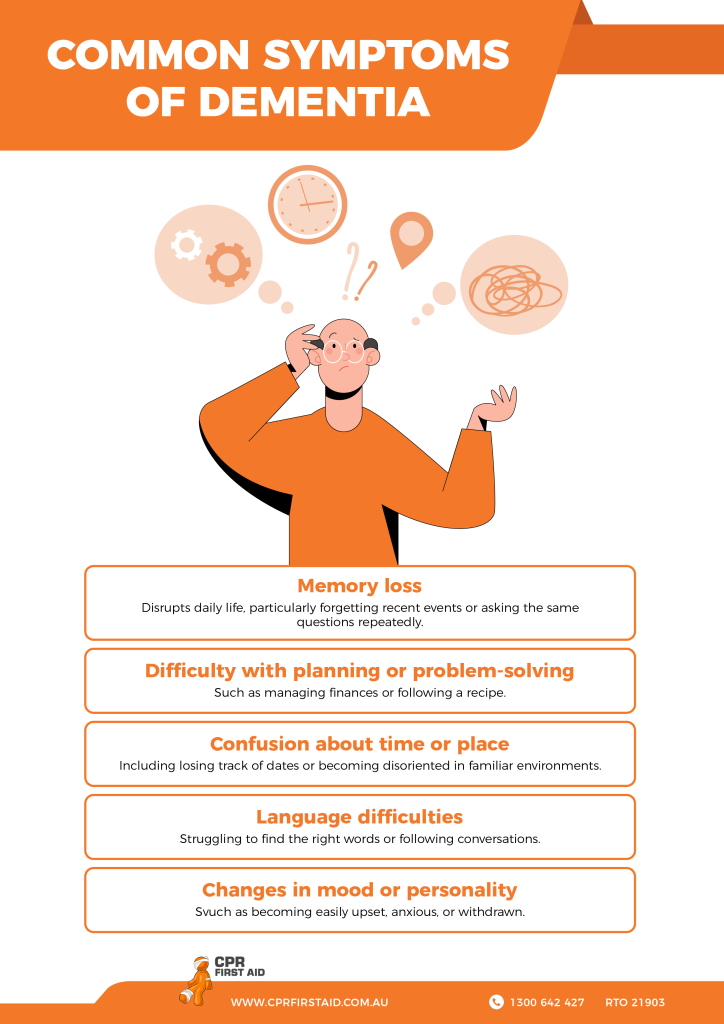
The symptoms of dementia vary depending on the underlying cause, but common signs include:
- Memory loss disrupts daily life, mainly forgetting recent events or asking the same questions repeatedly.
- Difficulty with planning or problem-solving, such as managing finances or following a recipe.
- Confusion about time or place, including losing track of dates or becoming disoriented in familiar environments.
- Language difficulties include struggling to find the right words or follow conversations.
- Changes in mood or personality, such as becoming easily upset, anxious, or withdrawn.

Types of Dementia
There are several types of dementia, each with its symptoms and progression. Some of the most common forms include:
- Alzheimer’s Disease: The most common type of dementia, characterised by a gradual decline in memory and thinking abilities.
- Vascular Dementia: Caused by damage to the brain’s blood vessels, often following a stroke or series of small strokes.
- Lewy Body Dementia is marked by abnormal deposits of a protein called alpha-synuclein, which causes issues with movement, mood, and thinking.
- Frontotemporal Dementia: Involves damage to the frontal and temporal lobes of the brain, leading to changes in personality and language difficulties.
What is Alzheimer’s Disease?
Alzheimer’s disease is a specific type of dementia and the most common form, accounting for 60-80% of dementia cases. It is a progressive neurological disorder that primarily affects older adults. In Alzheimer’s, proteins called plaques and tangles accumulate in the brain, disrupting the normal functioning of neurons.

Early Signs of Alzheimer’s Disease
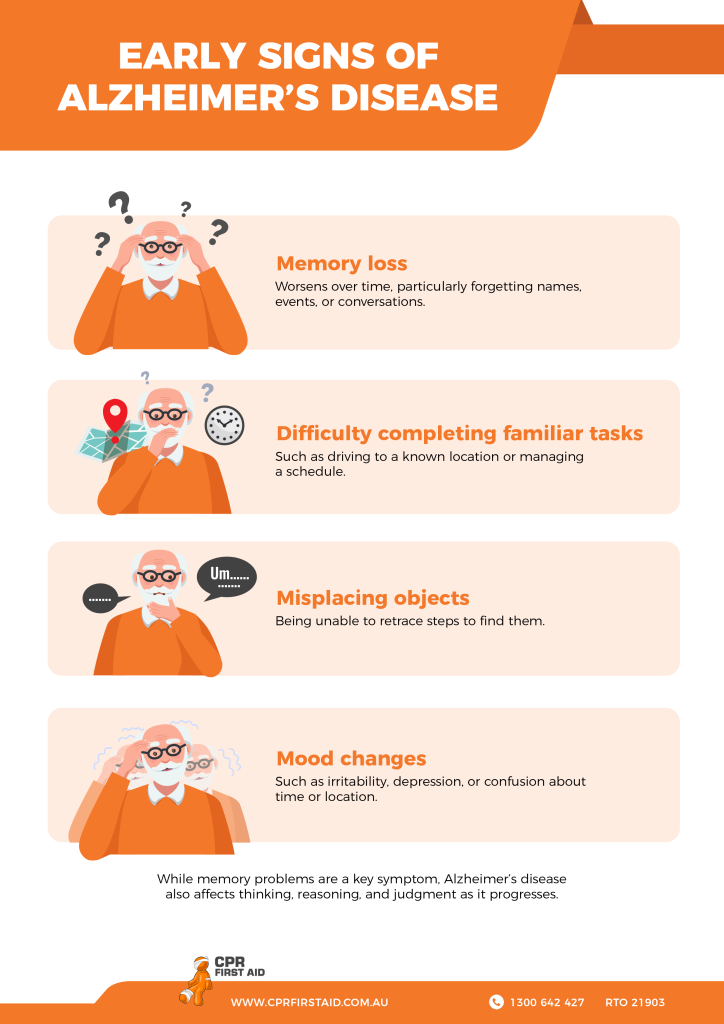
The early signs of Alzheimer’s disease can be subtle but may include:
- Memory loss that worsens over time, mainly forgetting names, events, or conversations.
- Difficulty completing familiar tasks, such as driving to a known location or managing a schedule.
- Misplacing objects and being unable to retrace steps to find them.
- Mood changes include irritability, depression, or confusion about time or location.
While memory problems are a key symptom, Alzheimer’s disease also affects thinking, reasoning, and judgment as it progresses.
Dementia Vs Alzheimer’s Disease: Key Differences
Although Alzheimer’s disease and dementia share many symptoms, they differ in meaningful ways. These distinctions are critical for proper diagnosis and treatment.
Dementia as a General Term
Dementia is an umbrella term for a range of cognitive impairments, while Alzheimer’s disease is a specific diagnosis. Think of dementia as a symptom of cognitive decline, while Alzheimer’s is one possible cause of that decline.
Cause
Dementia can result from many different underlying conditions, such as vascular damage (vascular dementia) or abnormal proteins (Lewy body dementia). On the other hand, Alzheimer’s disease is caused by the buildup of plaques and tangles in the brain, which interfere with brain function.
Progression
Alzheimer’s disease has a predictable and gradual progression, typically worsening over the years. Other types of dementia, such as vascular dementia, may progress in a step-like manner, with periods of stability followed by sudden declines after events like strokes.
Risk Factors for Dementia and Alzheimer’s in Australia
In Australia, the risk factors for both dementia and Alzheimer’s disease are similar to those worldwide but may be influenced by lifestyle, healthcare access, and genetics. Common risk factors include:
- Age: The risk of dementia and Alzheimer’s increases significantly after the age of 65.
- Family history: Individuals with a family history of dementia or Alzheimer’s have a higher risk of developing the condition.
- Cardiovascular health: Conditions like high blood pressure, diabetes, and high cholesterol can increase the risk of vascular dementia.
- Lifestyle factors: Smoking, poor diet, and physical inactivity are associated with a higher risk of cognitive decline.
How to Recognize the Signs of Cognitive Decline in a Loved One
Recognising the early signs of dementia or Alzheimer’s in a loved one can be difficult, as the symptoms may be subtle at first. It’s essential to pay attention to changes in behaviour, memory, and thinking abilities.
Look for signs such as:
- Repeatedly asking the same questions or forgetting recent events.
- Difficulty completing everyday tasks or solving simple problems.
- Confusion about time, place, or familiar people.
- Changes in mood, such as increased irritability or withdrawal from social activities.
If you notice any of these signs, it’s essential to encourage your loved one to seek medical advice.
Diagnosis of Dementia and Alzheimer’s
In Australia, diagnosing dementia or Alzheimer’s typically involves a combination of medical assessments, cognitive tests, and brain imaging. A general practitioner (GP) is often the first point of contact and can refer patients to a neurologist or geriatrician for further evaluation.
Doctors may use tests such as the Mini-Mental State Examination (MMSE) or brain scans like MRI and CT scans to assess the extent of cognitive decline.

Treatment Options for Dementia and Alzheimer’s
There is no cure for dementia or Alzheimer’s, but treatment options can help manage symptoms and improve quality of life. In Australia, treatment may include:
- Medications: Drugs like cholinesterase inhibitors (e.g., donepezil) can help manage symptoms in some cases of Alzheimer’s and other dementias.
- Cognitive therapy: Cognitive training and rehabilitation can help improve memory and thinking skills.
- Support services: Australia offers a range of dementia care services, including home care, respite care, and dementia-friendly communities, which can provide valuable support to patients and caregivers.
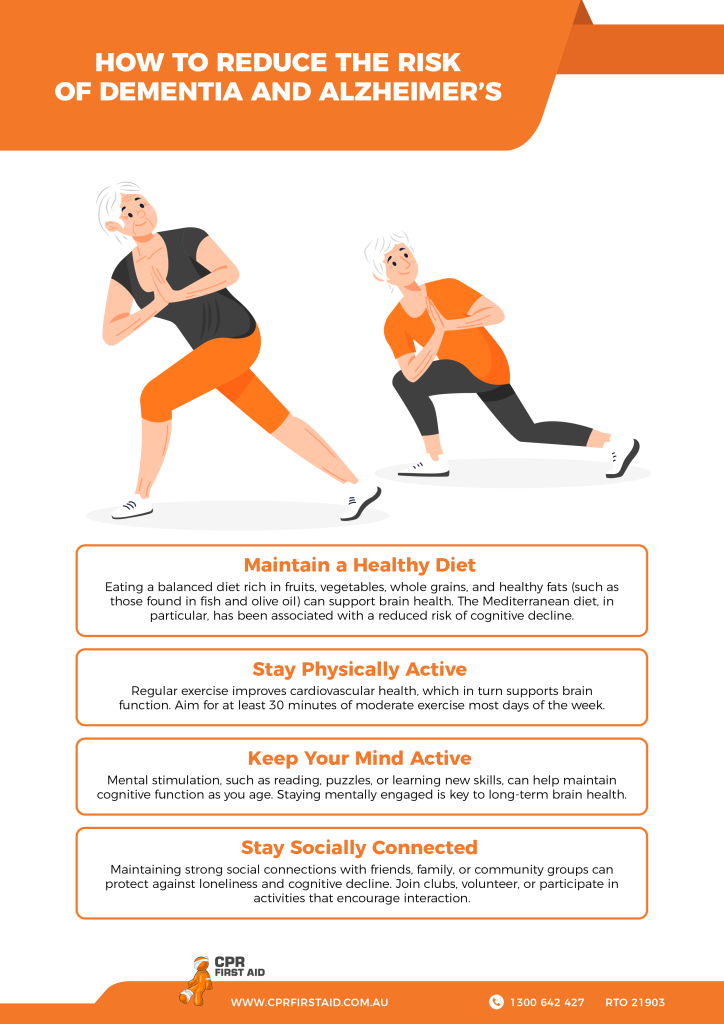
How to Reduce the Risk of Dementia and Alzheimer’s
While there is no guaranteed way to prevent dementia or Alzheimer’s, adopting a healthy lifestyle can lower the risk. Here are some steps you can take:
Maintain a Healthy Diet
Eating a balanced diet rich in fruits, vegetables, whole grains, and healthy fats (such as those found in fish and olive oil) can support brain health. The Mediterranean diet, in particular, has been associated with a reduced risk of cognitive decline.
Stay Physically Active
Regular exercise improves cardiovascular health, which in turn supports brain function. Aim for at least 30 minutes of moderate exercise most days of the week.
Keep Your Mind Active
Mental stimulation, such as reading, puzzles, or learning new skills, can help maintain cognitive function as you age. Staying mentally engaged is critical to long-term brain health.
Stay Socially Connected
Maintaining strong social connections with friends, family, or community groups can protect against loneliness and cognitive decline. Join clubs, volunteer, or participate in activities that encourage interaction.
Conclusion
While both conditions affect cognitive abilities, Alzheimer’s is a specific form of dementia with distinct characteristics. By recognising the signs, seeking timely medical advice, and adopting a healthy lifestyle, Australians can reduce the risk of cognitive decline and ensure that they and their loved ones receive the care they need. In addition, It is essential to acknowledge the differences between dementia and Alzheimer’s disease are crucial for early recognition, diagnosis, and care. While undergoing first aid training will have no direct effect with managing Alzheimer’s or Dementia, the skills learned there will no doubt be beneficial in other instances. Furthermore, the training will instill within you a sense of helping and providing care to anyone in need. Enrol in a course today.