

If you’ve searched “bit snake” or “bit by a snake”, chances are you need an answer fast. In Australia, every suspected snake bite should be treated as a medical emergency, even if the wound looks small, the pain seems mild, or the person says they feel okay. Some bites leave obvious fang marks, while others look more like tiny scratches. Symptoms can also take time to appear, which is why the safest response is to act immediately and get medical help without waiting for the situation to worsen.
Australia has some of the world’s most venomous snakes, and Healthdirect advises that all snake bites, including sea snake bites, must be treated as potentially life-threatening. That matters because the first few minutes after a bite are not the time to guess the species, test home remedies, or assume it was a “dry bite”. The priority is to keep the person still, call for an ambulance, apply a pressure bandage, and be ready to start CPR if they become unresponsive or stop breathing normally.
At CPR First Aid, this is exactly the kind of emergency response we teach across Australia through our HLTAID011 Provide First Aid course, HLTAID009 CPR course, HLTAID012 Childcare First Aid course, and HLTAID014 Advanced First Aid training. CPR First Aid offers these nationally accredited courses Australia-wide, with CPR First Aid stating that HLTAID011, HLTAID012, and HLTAID014 are renewed every 3 years, while HLTAID009 is recommended annually by the Australian Resuscitation Council.
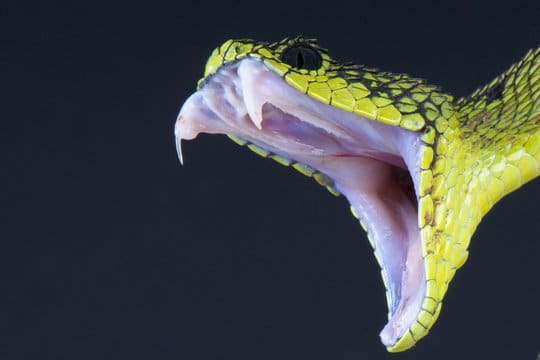
Quick Answer: Bit Snake? Do This Immediately
If someone has been bitten by a snake, move them away from the snake, call 000 for an ambulance, keep them as still and calm as possible, apply a pressure immobilisation bandage, splint the limb, and start CPR if they are unresponsive or not breathing normally. If calling 000 does not work on a mobile, healthdirect says to try 112. Do not wait for symptoms to “prove” it is serious.
A simple way to remember the priority is this: stillness, pressure, ambulance, monitor. Stillness slows venom spread. Pressure immobilisation helps delay venom movement through the lymphatic system. An ambulance gets the person to hospital for assessment and possible antivenom. Monitoring lets you recognise early deterioration, including collapse, breathing difficulty, or the need for CPR.
For a deeper walk-through, CPR First Aid also has guides on how to perform CPR and first aid for snakebite and the Pressure Immobilisation Technique (PIT). Both support the same core message: stay calm, minimise movement, apply pressure correctly, and escalate to emergency care fast.
Snake Bite Symptoms: What to Look For
One reason snake bites are dangerous is that the wound itself can be misleading. Healthdirect notes that a venomous bite may show obvious puncture marks, but it can also look like small scratches that are easy to miss. Local symptoms can include swelling, bruising, bleeding, and severe pain around the bite, although pain may take time to develop. That means a person can look relatively stable early on and still require urgent hospital assessment.
As venom spreads, symptoms can escalate beyond the bite site. Healthdirect lists breathing difficulties, irregular heartbeat, nausea, vomiting, abdominal pain, headache, confusion, dizziness, blurry vision, muscle weakness, and paralysis as possible signs of a venomous snake bite. These are not minor warning signs to “watch and see”. They are reasons to treat the situation as urgent and avoid any unnecessary walking, driving, or physical effort.
There is also a less common but important complication: anaphylaxis. A severe allergic reaction to a snake bite can cause noisy or difficult breathing, tongue swelling, throat tightness, wheeze, persistent cough, difficulty talking, hoarseness, dizziness, collapse, or in young children, paleness and floppiness. If that happens, call 000 immediately and use an adrenaline autoinjector if one is available and indicated under the person’s allergy action plan.
If you’re trying to identify the wound itself, CPR First Aid’s article on what does a snake bite look like explains that bites may show single or double puncture marks depending on the angle and depth of the strike. That can be useful background knowledge, but appearance should never decide whether you seek help. In Australia, the rule is simpler: if there is any real possibility of a snake bite, respond as though it is serious.
Why a Brown Snake Bite Should Never Be Underestimated
Brown snakes matter because they are common in emergency statistics. Healthdirect says that in Australia, about 1 in 3 hospital visits for snake bites are from brown snake bites. That does not mean every other species is less important. It means brown snake encounters are common enough that people should never shrug off a suspected bite just because they are unsure what struck them.
A recent ABC report from December 2025 showed how serious and time-critical these incidents can be. A bushwalker near Ulladulla survived after being bitten twice by an eastern brown snake, with emergency crews administering antivenom within about 50 minutes. The story is a practical reminder that calm bystanders, early first aid, and rapid emergency care can make a major difference in outcome.
CPR First Aid also has a dedicated guide on first aid for eastern brown snake bites, which reinforces two core priorities: slow venom spread and get medical help immediately, then begin CPR if the person stops breathing or their heart stops. That advice is consistent with healthdirect and ANZCOR guidance.
How to Apply a Pressure Immobilisation Bandage Properly
The Pressure Immobilisation Technique (PIT) is a key part of Australian snake bite first aid. ANZCOR states that PIT was introduced for Australian snake bites and is recommended for all Australian venomous snakes, including sea snakes. NSW Poisons Information Centre likewise recommends pressure immobilisation for bites from all Australian snakes.
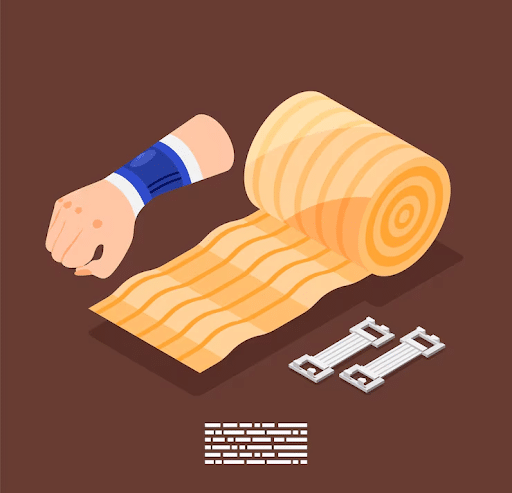
Healthdirect’s process is practical. First, place a roller bandage around the bite site. Then use a second roller bandage on the entire affected arm or leg, starting just above the fingers or toes and working up the limb. The bandage should be firm enough that you cannot easily slide a finger underneath it. After that, immobilise the limb with splints and note the time of the bite and when the bandage was applied. If possible, mark the bite site on the bandage or take a photo before it is fully covered.
NSW Poisons Information Centre adds another helpful detail: the bandage should feel about as tight as you would apply for a sprained ankle, and the entire limb should be bandaged from fingers to shoulder or toes to hip, then splinted to keep it still. The point is not to cut off circulation. The point is to slow venom movement while the person waits for professional care.
One crucial nuance from ANZCOR is that resuscitation takes priority. If the person needs CPR, do that first. Pressure immobilisation should then be applied as soon as possible. This is why proper first aid training matters: in a real emergency, people often panic, rush steps, or bandage incorrectly. A structured course helps you act in the right order under pressure.
For extra support, CPR First Aid’s Pressure Immobilisation Technique (PIT) guide explains why the method is used in Australia and how firm bandaging plus immobilisation can buy valuable time before hospital treatment. It is also worth reviewing the CPR First Aid article on how to perform CPR and first aid for snakebite if you want a step-by-step refresher written specifically for Australian conditions.
What Not to Do After a Snake Bite
Bad first aid can make a dangerous situation worse. Healthdirect specifically says do not wash the bite area, because venom left on the skin or clothing can help identify the snake. Do not apply a tourniquet. Do not cut the wound. Do not try to suck out the venom. And do not try to catch or kill the snake.
That last point matters for two reasons. First, trying to catch or kill the snake risks a second bite. Second, healthdirect notes that many Australian snakes are protected species. Your job is not to become a snake catcher. Your job is to protect the casualty, preserve evidence on the skin or clothing, and get expert involved fast.
A common myth is that you should remove the bandage to “check the wound” or let the person walk out of the bush slowly. Both are bad ideas. The whole logic of PIT is to reduce movement and slow venom spread. Once the bandage is on and the limb is immobilised, keep the person down, calm, and monitored until the ambulance arrives.
When CPR Is Needed After a Snake Bite
Not every snake bite casualty will need CPR, but everyone around them should be prepared for the possibility. Healthdirect says to start CPR if the person is unresponsive or not breathing normally. ANZCOR adds that when resuscitation is needed, it takes precedence over PIT.
That is why snake bite emergencies are not only about bandaging. They are also about recognising deterioration quickly. If the person collapses, stops responding, or develops abnormal breathing, the response has shifted from “monitor and immobilise” to full emergency life support. This is one reason CPR First Aid strongly links snake bite education with practical CPR training. The HLTAID009 CPR course is designed to teach CPR in line with Australian guidance, while the HLTAID011 Provide First Aid course includes CPR as part of broader first aid response training.
If you work with children, schools, camps, sporting groups, or outdoor programs, the HLTAID012 Childcare First Aid course is especially relevant. CPR First Aid states that this nationally accredited course includes HLTAID011 and HLTAID009, covers first aid in education and care settings, and is available for workplaces and the public across Australia.
For higher-risk teams, field supervisors, and workplace responders who may manage more complex incidents before expert arrive, HLTAID014 Advanced First Aid training is another strong option. CPR First Aid describes it as a nationally accredited course for more advanced emergency response needs.
What Happens at Hospital After a Snake Bite
Even if the casualty looks well, hospital assessment still matters. Healthdirect says snake bites should always be looked at by a doctor. Diagnosis may involve questions about what the snake looked like, examination of the bite area, and blood tests to determine whether a venomous snake was involved.
Not every person bitten by a snake receives antivenom. Healthdirect says about 5 in 100 people bitten by a snake are given it. The decision depends on the type of snake, the person’s symptoms, and the species known to live in the area where the bite happened. Healthdirect also notes that antivenom is available for all snakes native to Australia.
In more serious cases, complications can include major bleeding, surgery, or rhabdomyolysis, which is the breakdown of muscle tissue and may require ICU care and IV fluids. Those possibilities are exactly why it is unsafe to dismiss a snake bite as “probably fine” just because the casualty is talking and alert in the early stage.
Can Snake Bite Symptoms Be Delayed?
Yes, and this is one of the biggest reasons people get caught out. Healthdirect notes that severe pain may take time to develop, and some wounds are barely visible at first. That means you should not use “I don’t feel too bad” as a reason to skip hospital. The emergency response is based on the possibility of envenomation, not on whether symptoms are dramatic right away.
This is also why keeping the casualty still matters so much. Movement can increase venom spread through the lymphatic system, which is the pathway PIT is designed to slow. Waiting, walking, driving yourself, or removing the bandage unnecessarily all work against the purpose of first aid.
How to Reduce the Risk of Snake Bites in Australia
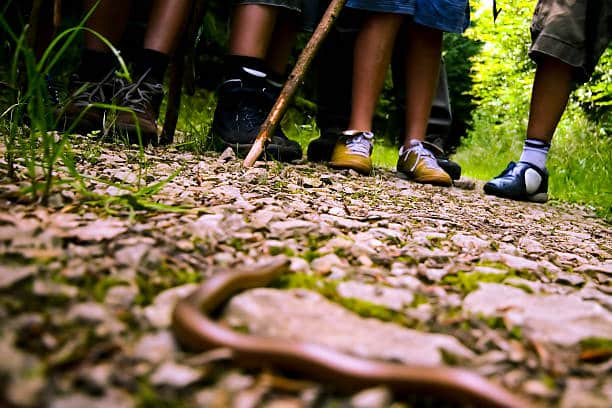
Prevention is never perfect, but it matters. Healthdirect recommends backing away calmly if you see a snake and letting it move away on its own. It also points out that snakes may be active during the day and at night, and common hiding places include long grass, bushland, sheds, backyards, leaf litter, and areas near water or prey such as mice, rats, frogs, and reptiles.
If you are walking outdoors, especially in rural or bush settings, use a torch at night, make noise or stomp so snakes know you are there, watch where you place your hands and feet, and wear thicker protective clothing such as jeans and boots. These are simple measures, but they reduce the chance of a surprise encounter turning into a medical emergency.
Preparedness also helps. A recent ABC report about the bushwalker bitten by an eastern brown snake highlighted the value of having a first-aid kit on hand. If you spend time hiking, camping, working outdoors, or travelling regionally, it is worth keeping first aid gear accessible and reviewing your snake bite response plan before you need it.
CPR First Aid has a first aid charts and resources page with downloadable first aid materials, including snake bite signs and symptom resources, and its store also lists a snake and spider bite first aid kit option. Those resources can support households, schools, worksites, clubs, and outdoor teams that want a clearer response plan.
Learn Snake Bite First Aid with CPR First Aid
Reading about snake bites is useful. Practising the response is better. CPR First Aid provides nationally accredited training across Australia in CPR, first aid, childcare first aid, and advanced first aid, with public and workplace booking options available through its course pages.
If you want broad emergency response capability, start with the HLTAID011 Provide First Aid course. If your focus is resuscitation confidence, the HLTAID009 CPR course is the logical foundation. If you work with children, educators, OSHC teams, or school programs should look at the HLTAID012 Childcare First Aid course. And if you need higher-level incident response skills, HLTAID014 Advanced First Aid training is worth serious consideration.
You can also build your knowledge further with CPR First Aid’s related articles on what does a snake bite look like, first aid for eastern brown snake bites, and how to perform CPR and first aid for snakebite. These are useful companion reads if you want a more complete understanding of Australian envenomation first aid.
Frequently Asked Questions
What if I Was Bit Snake But Can’t See Fang Marks?
You should still treat it as a medical emergency. Healthdirect says snake bites can look like puncture wounds or almost invisible scratches, and all suspected snake bites should be treated urgently.
Should I Wash the Bite to Clean It?
No. Healthdirect says not to wash the bite area because venom on the skin or clothing can help identify the snake.
Can I Drive Myself to the Hospital?
The safest option is to call 000 for an ambulance and keep the person still. A suspected snake bite casualty should not be walking around or managing their own transport if it can be avoided, because symptoms may worsen as venom spreads.
Does Every Snake Bite Need Antivenom?
No, but every bite still needs medical assessment. Healthdirect says only about 5 in 100 people bitten by a snake are given antivenom, based on symptoms, likely species, and the snakes found in that area.
What Course is Best if I Want to Feel Confident Handling a Snake Bite Emergency?
For most people, the HLTAID011 Provide First Aid course is the best all-round choice because it includes CPR and broader first aid skills. If you mainly want life-support confidence, choose the HLTAID009 CPR course. For schools and childcare, the HLTAID012 Childcare First Aid course is the more suitable pathway.
Is Pressure Immobilisation Used for Every Bite or Sting?
No. ANZCOR and NSW Poisons Information Centre recommend PIT for all Australian venomous snakes, funnel-web spiders, blue-ringed octopus, and cone shell stings, but not for redback spider bites, jellyfish stings, stonefish and other fish stings, or most insect stings.
Conclusion
If you or someone near you has been bit snake, don’t wait for certainty. Treat it as a medical emergency. Keep the person still, call 000, apply a pressure immobilisation bandage, splint the limb, and be ready to start CPR if they become unresponsive or stop breathing normally. Do not wash the wound, do not cut it, do not use a tourniquet, and do not try to catch the snake.
Snake bite first aid in Australia is not complicated, but it does need to be done correctly. The right first aid in the first few minutes can buy time, reduce risk, and support better hospital outcomes. To build practical confidence, book a course with CPR First Aid and strengthen your response skills through the HLTAID011 Provide First Aid course, HLTAID009 CPR course, HLTAID012 Childcare First Aid course, or HLTAID014 Advanced First Aid training.