
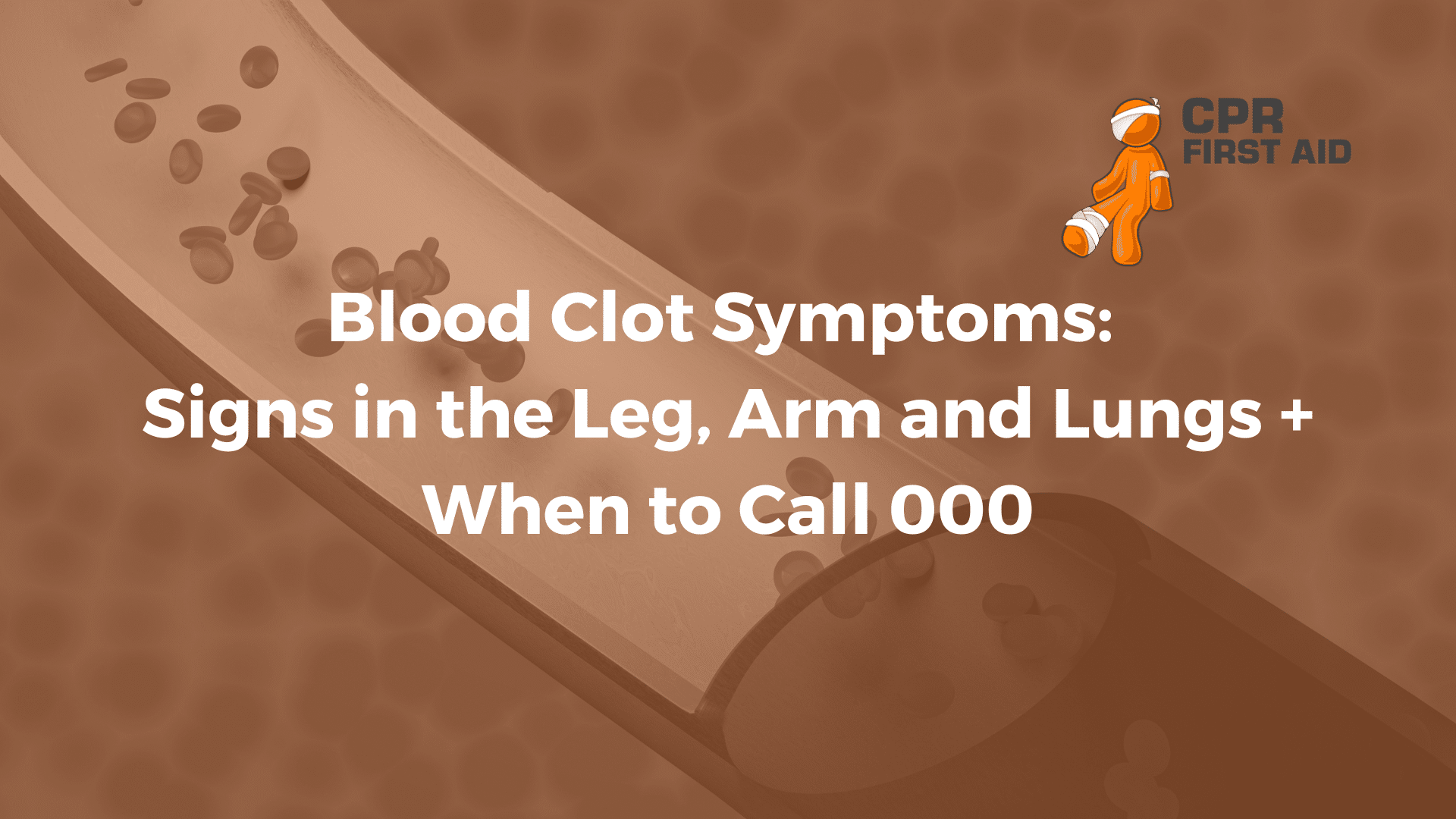
Blood clot symptoms can range from a sore, swollen calf to sudden chest pain and shortness of breath. That is why clots are easy to miss at first. Some feel like a muscle strain, a cramp or general swelling. Others cause no symptoms until the situation becomes urgent. A dangerous clot can form in a deep vein, usually in the leg or sometimes the arm, and may become life-threatening if it travels to the lungs.
A blood clot is not always a bad thing. Your body needs clotting to stop bleeding after a cut or injury. The problem starts when a clot forms inside a vein or artery when it is not supposed to, blocks blood flow, or breaks loose and moves to another part of the body. That is when you can see symptoms linked to deep vein thrombosis, pulmonary embolism, stroke or heart attack.
For readers in Australia, the most important takeaway is simple: unexplained one-sided limb swelling, pain, redness or warmth needs prompt medical review, and symptoms like chest pain, coughing up blood, fainting or sudden shortness of breath are emergency warning signs. Healthdirect advises calling triple zero (000) for an ambulance if you think a blood clot has reached the lungs or if there are signs of stroke.
Quick Answer: The Most Common Blood Clot Warning Signs
The classic symptoms for blood clots in a deep vein are pain, swelling, warmth and skin colour change in one leg or one arm. Healthdirect lists pain and swelling in the affected area, usually the calf or thigh, plus redness or discolouration and sometimes more noticeable veins under the skin. Stop the Clot adds that the pain may feel like a cramp or charley horse, which is one reason people confuse a clot with a pulled muscle.
The symptoms become far more urgent if the clot moves to the lungs. A pulmonary embolism can cause shortness of breath, chest pain that gets worse with deep breaths, coughing up blood, rapid heartbeat, light-headedness or fainting. Healthdirect explicitly states that a pulmonary embolism can be life-threatening and advises going to the nearest emergency department or calling 000 for an ambulance.
What Is a Blood Clot?
A blood clot is a collection of platelets and fibrin that forms to seal damaged blood vessels and limit bleeding. Cleveland Clinic explains that this is part of normal healing, which is why clotting after a cut is protective. Problems arise when clotting happens without an appropriate injury, when the clot blocks normal circulation, or when a clot travels to a vital organ.
Clots can occur in veins and arteries. A clot in a deep vein is often called deep vein thrombosis, or DVT. If part of that clot breaks off and lodges in the lungs, it becomes a pulmonary embolism, or PE. Clots can also block blood vessels in the brain and heart, contributing to stroke and heart attack symptoms.
Not every clot causes obvious symptoms. Healthdirect notes that sometimes there are no symptoms with DVT, which is one reason delayed diagnosis can happen. That makes it even more important to take new one-sided swelling, unexplained pain and sudden breathing symptoms seriously.
What Do Blood Clot Symptoms Feel Like?
Many people expect a blood clot to feel dramatic straight away, but the early symptoms can be subtle. Stop the Clot notes that DVT pain may feel like a cramp or pulled muscle, while Healthdirect lists pain and swelling as the most common symptoms. In practical terms, that can mean a calf that feels tight, heavy, sore to walk on, warmer than the other side, or visibly more swollen than usual.
A blood clot is more suspicious when symptoms are one-sided and do not fit a clear injury pattern. If one leg or arm becomes swollen, warm and discoloured without a convincing reason, that is different from the general end-of-day heaviness or mild swelling many people sometimes notice. Cleveland Clinic’s recent guidance also highlights unexplained swelling, persistent breathlessness and chest pain as warning signs worth urgent attention.
Blood Clot Symptoms in the Leg
The leg is the most common place for a DVT. Healthdirect says DVTs mostly occur in the legs, and the typical symptoms are pain and swelling in the affected area, usually the calf or thigh, redness or discolouration, and sometimes more visible veins. CPR First Aid’s existing blood clot content describes similar warning signs, including leg pain, swelling, warmth, redness and a feeling of heaviness.
Pain from a clot in the leg is often described as throbbing, cramping or tenderness that gets worse when standing or walking. Stop the Clot says people often compare it to a charley horse. That similarity matters because it is one of the biggest reasons symptoms are brushed off as a strain, dehydration or overuse.
Swelling is another major clue. A DVT often affects one leg rather than both. If one calf, ankle or thigh becomes noticeably more swollen than the other, especially with warmth or colour change, that should not be ignored. Healthdirect and NHS guidance both point to one-sided swelling as a common warning pattern.
Symptoms of a Clot in the Arm
Searchers often ask about the symptoms of a clot in the arm, and the warning signs are broadly similar to those in the leg. Stop the Clot notes that DVT can happen in an arm as well as a leg, and the symptoms may include swelling, pain or tenderness, reddish or bluish discolouration and warmth to touch. Cleveland Clinic also lists one-sided arm swelling, pain, warmth and discoloured skin as possible DVT symptoms.
Healthline’s arm-clot overview adds that arm DVT can present with swelling, cramping, tenderness, red or blue skin colour and warmth, although some people may have no noticeable symptoms. It also notes that upper-extremity clots can sometimes be linked to devices such as central venous catheters or pacemakers, and in some cases to repeated strenuous arm activity. RadiologyInfo likewise notes that upper-extremity DVT can be associated with devices and may cause swelling, heaviness, pain or tingling.
The key point is that persistent one-sided arm swelling is not something to self-diagnose as “just overuse” if it is paired with pain, colour change or warmth. A clot in the arm can still lead to a pulmonary embolism if it is not recognised and treated.
Signs the Clot may Have Moved to the Lungs
The most dangerous escalation is when a DVT becomes a pulmonary embolism. Healthdirect lists the major symptoms as shortness of breath, chest pain that may be worse with deep breaths, coughing up blood, palpitations, light-headedness and fainting. It states clearly that pulmonary embolism can be life-threatening.
These symptoms are not “wait and see” symptoms. In Australia, call 000 if chest pain, sudden breathlessness, coughing up blood, collapse or fainting happens alongside suspected clot symptoms. Healthdirect gives that exact emergency direction for PE and also for stroke symptoms.
Can Blood Clots Cause Stroke or Heart Attack Symptoms?
Yes. Healthdirect explains that a blood clot in blood vessels in the brain can cause a stroke, and a clot in the coronary arteries can lead to a heart attack. Stroke symptoms can include weakness or drooping in the face, arm or leg, trouble speaking or understanding, dizziness, loss of balance, blurred vision and difficulty swallowing. Heart attack symptoms can include chest pain or pressure, shortness of breath, weakness, nausea, a cold sweat and dizziness.
That is why blood clot symptoms are broader than just calf pain. A clot can show up as a limb problem, a breathing emergency, or a major cardiovascular event. CPR First Aid’s own educational content on stroke and heart attack recognition reinforces the need for fast action when symptoms suggest either condition.
What Does a Blood Clot Look Like?
People often ask what does a blood clot look like, but the answer depends on whether you are talking about the clot itself or the body changes you can see from the outside. Cleveland Clinic says that a clot itself may look like a clump of reddish jelly held together by a fibrin “net”. That description is medically accurate, but it is not what you usually see when a dangerous clot is sitting deep inside a vein.
From the outside, a suspicious clot usually looks more like swelling, a red, blue or darkened patch of skin, warmth, or more prominent veins on one limb. In the leg or arm, the area may look fuller, tighter or more discoloured than the opposite side. Healthdirect and Stop the Clot both describe these visible changes as common DVT signs.
That is also why blood clot symptoms are often confused with bruising, cellulitis, muscle strain or general swelling. A visible colour change on its own is not enough to diagnose a clot, but colour change plus one-sided swelling, pain and warmth is a pattern that deserves medical assessment.
Blood Clot or Muscle Strain?
One of the hardest parts of recognising a clot is that it can mimic a strain. Stop the Clot explicitly says DVT symptoms may feel similar to a pulled muscle or charley horse. The difference is that a clot is more likely to come with swelling, warmth, mild discolouration and symptoms that do not settle the way ordinary muscle soreness usually does.
A strain is also more likely to follow a clear movement injury, while a clot can appear after surgery, illness, travel, immobility or for no obvious reason at all. If the symptoms do not make sense, are one-sided, or are paired with breathlessness or chest pain, it is safer to treat the situation as medically urgent until a clinician rules out DVT or PE.
Who Is More Likely to Get a Blood Clot?
Healthdirect lists several common risk factors for DVT: recent surgery or injury, having had a clot before, blood disorders or conditions that make clotting more likely, family history, smoking and staying still for long periods, including hospital stays or long-haul travel. It also lists cancer, pregnancy or recent birth, and oestrogen-containing hormonal contraception or hormone replacement therapy as additional risk factors.
Healthdirect’s clot-prevention guidance adds that older age, obesity, dehydration, heart or lung problems, serious infection, inflammatory conditions and planned surgery can raise risk further. CDC guidance on travel also notes that journeys longer than four hours can increase risk, especially when combined with other factors.
That does not mean everyone on a flight or after minor soreness has a clot. It means context matters. New swelling after a long period of immobility, recent hospitalisation, an operation, a cancer diagnosis, pregnancy or an arm catheter deserves a lower threshold for medical review.
What to Do if You Think You Have a Blood Clot
If you think you may have a DVT, Healthdirect says you should see your doctor straight away. If you are short of breath, have chest pain, feel faint, have palpitations or cough up blood, call 000 for an ambulance. Those symptoms may mean a pulmonary embolism, which is a medical emergency.
Do not rely on home remedies to “break up” a clot. Treatment decisions depend on where the clot is, how serious it is and your personal risk factors. Authoritative patient resources consistently direct people with suspected clot symptoms toward urgent medical assessment rather than self-treatment.
If the person collapses, becomes unresponsive or is not breathing normally, emergency response skills matter immediately. That is where a hands-on first aid course or CPR course becomes important, because bystanders may need to recognise deterioration quickly, call 000 and begin CPR until expert arrive. CPR First Aid’s public and workplace training pages centre on exactly those practical emergency-response skills.
How Blood Clots Are Diagnosed and Treated
Healthdirect says blood clots may be investigated with blood tests such as a D-dimer, ultrasound, CT scan or ECG, depending on symptoms and the part of the body involved. A D-dimer can help detect clotting activity, but Healthdirect also notes that it is usually used alongside other tests and imaging because it cannot identify the exact location or cause on its own.
Treatment depends on location and severity. Healthdirect says anticoagulant medicines, commonly called blood thinners, are used to stop clots from getting larger and to prevent new clots from forming. In some situations, medicine or procedures may be used to dissolve or remove a clot.
The important point for readers is not to self-prescribe treatment based on an internet article. Blood clots can look simple at first and become serious quickly, and bleeding risk matters when anticoagulants are used. Proper assessment is what determines whether the issue is DVT, PE, another vascular problem, or a completely different condition that only looks similar.
How to Lower Your Risk of Blood Clots
Prevention starts with movement. Healthdirect recommends moving your feet and legs when possible, even if you cannot walk around much, and CDC travel advice recommends standing up or walking occasionally and stretching calf muscles during long trips. That advice matters most when travel, surgery, illness or hospital stays reduce your normal mobility.
Hydration also matters. Healthdirect advises staying hydrated as part of DVT prevention, especially in situations where your risk is already raised. Its surgery-related prevention guidance also explains that healthcare teams may recommend anti-embolism or compression stockings to help blood move through the legs more quickly.
Longer-term prevention includes quitting smoking, staying physically active and maintaining a healthy weight. If you have previously had a clot, are pregnant, use oestrogen-containing medicines, have cancer, are about to have surgery or expect prolonged immobility, talk to your clinician about personalised prevention rather than guessing.
Frequently Asked Questions
Can blood clot symptoms come and go?
They can be subtle at first, and not everyone has symptoms, but new swelling, pain, warmth or colour change in one arm or leg should still be checked. DVT symptoms are not always dramatic, and PE symptoms can appear suddenly if the clot moves.
Do blood clots always hurt?
No. Healthdirect notes that some DVTs have no symptoms. When symptoms do happen, pain is common, but it may feel more like tightness, cramping or tenderness than severe pain.
Are blood clots in the arm serious?
Yes. Arm clots are less common than leg DVTs, but they still need prompt medical attention because they can lead to pulmonary embolism. Common signs include one-sided swelling, pain, warmth and skin colour change.
What does a blood clot look like under the skin?
You usually do not see the clot itself. What you may notice is a swollen limb, skin that looks red, blue or darker than usual, warmth, or veins that look more noticeable. The clot itself is inside the vessel.
When should I call 000?
Call 000 if suspected clot symptoms are paired with shortness of breath, chest pain, coughing up blood, fainting, palpitations, collapse or stroke signs such as face drooping, arm weakness or speech difficulty. Healthdirect treats these as emergency symptoms.
Final Word
Recognising blood clot symptoms early can change the outcome. The most important signs are unexplained one-sided swelling, pain, warmth and skin colour change in a leg or arm, especially after travel, surgery, illness, pregnancy, cancer treatment or long periods of inactivity. The most dangerous red flags are sudden chest pain, shortness of breath, coughing up blood, fainting, stroke symptoms or heart attack symptoms, because these can mean the clot has moved or is affecting a vital organ.
Knowing the warning signs is valuable, but knowing how to respond in a real emergency matters too. CPR First Aid offers a nationally accredited first aid course, practical CPR courses, flexible workplace first aid training, and Australia-wide first aid training locations for learners who want hands-on confidence in emergency situations.