

A blue bottle jellyfish sting can ruin a beach day in seconds. The pain is immediate, the mark on the skin is usually obvious, and confusion about treatment is common because Australians often hear mixed advice about vinegar, ice, hot water, and even home remedies that should never be used. In Australia, bluebottle stings are among the most common jellyfish stings, and the safest response is simple: get out of the water, remove tentacles carefully, rinse with seawater rather than fresh water, and use hot water for pain relief.
At CPR First Aid, clear first-aid action matters. This guide explains what a blue bottle jellyfish is, what a blue bottle sting feels like, whether bluebottle jellyfish can kill you, how blue bottle sting treatment works, and when symptoms need urgent medical help. It also clarifies the difference between a bluebottle jellyfish and a blue blubber jellyfish, because they are not the same creature. CPR First Aid also has practical reads on first aid treatment for blue bottle jellyfish sting and first aid for jellyfish and wasp stings if you want extra guidance after this article.
Quick Answers
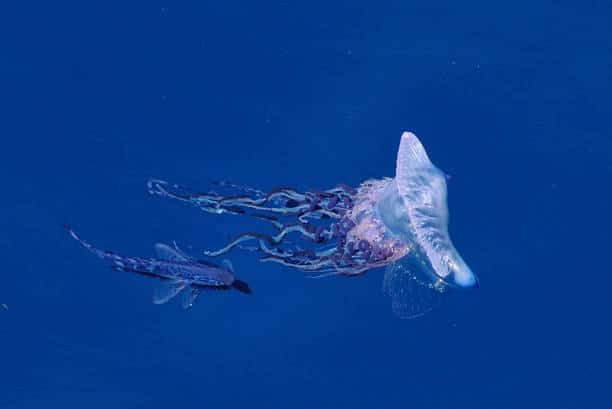
A blue bottle jellyfish, often called a bluebottle, is not a true jellyfish. The Australian Museum describes it as a floating colonial cnidarian made up of specialised zooids that work together, with a gas-filled float and stinging tentacles. Bluebottles are common along Australia’s east coast in summer and are also seen in southern Western Australia during autumn and winter.
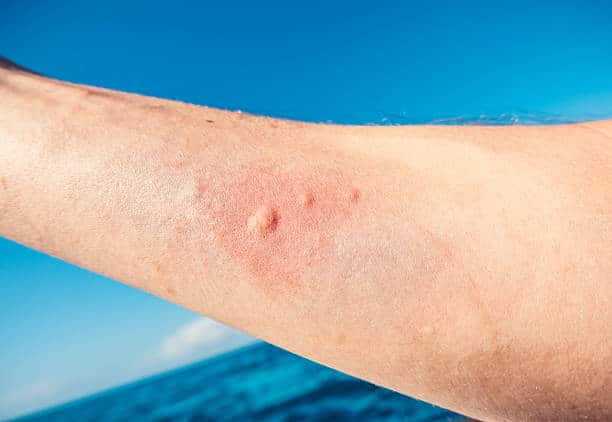
A blue bottle sting usually causes immediate, severe pain with a red line where the tentacle touched the skin. The line can look beaded, swollen, or itchy, and pain often eases within about an hour, although the skin mark may last longer.
For blue bottle sting treatment, Australian health guidance recommends washing off tentacles with seawater, not fresh water, then placing the affected area in hot water that is hot but tolerable for about 20 minutes. Vinegar is not recommended for bluebottle stings.
What Is a Blue Bottle Jellyfish?
The blue bottle jellyfish most Australians talk about at the beach is commonly called a bluebottle or Pacific man-of-war. Although many people describe it as a jellyfish, it is actually a colony of specialised organisms rather than a single animal. Its visible float sits on the water surface and its tentacles trail below, where they catch prey and can also sting swimmers. That distinction matters because bluebottle first aid is different from first aid for some other marine stingers.
Bluebottles are especially common on exposed beaches after onshore winds push them toward shore. The Australian Museum notes that on the eastern coast of Australia, north-easterly winds and warmer currents often bring bluebottles into shallow waters and onto beaches. That is why they can appear suddenly in large numbers even when the water looked clear earlier in the day.
They are also easy to recognise once you know what to look for. A bluebottle typically has a blue, bottle-shaped or pear-shaped float, sometimes with green or pink tones, and long trailing tentacles. Even when one appears stranded on sand, it can still sting, so it should never be handled with bare hands.
Blue Bottle Jellyfish vs Blue Blubber Jellyfish
People often confuse the blue bottle jellyfish with the blue blubber jellyfish because both can look blue in the water. They are different species and behave differently. The Australian Museum describes the jelly blubber, Catostylus mosaicus, as a true jellyfish with a rounded, mushroom-shaped bell that can reach about 30 cm across and textured oral arms beneath the bell. It is commonly found in harbours, estuaries, and shallow waters in Queensland, New South Wales, and Victoria.
By contrast, the blue bottle jellyfish is a floating colonial organism with a gas-filled float and tentacles that hang below the surface. In plain terms, a blue blubber jellyfish looks more like the classic bell-shaped jelly people expect, while a bluebottle looks like a floating blue sac with fine tentacles attached. If someone asks whether a “blue bottle blue” sighting at the beach was actually a blue blubber jellyfish, shape and habitat usually help answer the question. Blue blubbers are more often seen in bays and estuaries, while bluebottles are strongly associated with exposed beaches and wind-driven wash-ups.
This distinction matters for search intent too. Many people searching “blue blubber jellyfish” are really trying to identify what they saw, while people searching “blue bottle sting” usually want treatment advice fast. When in doubt, treat the sting based on symptoms and local first-aid guidance rather than on beachside guesswork.
What Does a Blue Bottle Sting Feel Like?
A jellyfish blue bottle sting is usually painful straight away. myDr describes the pain as immediate and severe, often fading over about an hour. The skin commonly shows a red line where the tentacle touched, and that line may look wavy or beaded. Swelling and itch are also common, and blisters can occasionally occur.
Healthdirect says bluebottle stings typically cause intense pain and redness at the site. In most cases, symptoms stay local to the skin. That is why many people recover with simple first aid and observation, rather than hospital treatment.
Still, the pain can be dramatic enough to cause panic in the water, especially in children, inexperienced swimmers, or anyone far from shore. The main immediate danger is not usually the venom itself but what the pain can cause next: panic, poor judgement, swallowing water, or trouble getting back to shore. That is one reason the first step is always to get out of the water safely.
Can Blue Bottle Jellyfish Kill You?
This is one of the most searched questions, and the clearest answer is this: a blue bottle jellyfish sting is usually very painful, but it is not usually deadly. Healthdirect says bluebottle stings are very common and generally do not usually need medical treatment, while myDr notes that it is very unlikely for a bluebottle sting to cause broader symptoms such as abdominal pain, nausea, or vomiting.
That does not mean the sting should be dismissed. Some people can develop a severe allergic reaction, and any marine sting can become serious if the person has breathing difficulty, collapses, becomes confused, or is stung in circumstances where the species is uncertain. Healthdirect advises calling 000 for severe allergic symptoms such as shortness of breath, swelling of the lips or tongue, or collapse.
It is also important not to confuse bluebottles with dangerous tropical jellyfish. Healthdirect makes a clear distinction between bluebottles and major box jellyfish, which can cause cardiac arrest and death. If the sting happened in northern tropical waters and the species is unknown, it should be treated as potentially serious until proven otherwise.
If a person becomes unresponsive and is not breathing normally after any sting, begin first aid using the DRSABCD approach and start CPR. CPR First Aid explains the sequence in What Does DRSABCD Stand For? and teaches practical response skills in its HLTAID009 Provide CPR course and HLTAID011 Provide First Aid course.
Blue Bottle Sting Treatment: What to Do Step by Step
The most reliable blue bottle sting treatment used in Australian guidance follows a straightforward sequence.
1. Get Out of the Water
Leave the water calmly and quickly. Bluebottle pain can be intense, and staying in the water increases the risk of another sting or a panic-related drowning incident. If a lifeguard or lifesaver is nearby, get help immediately.
2. Remove Tentacles Carefully
Any tentacles left on the skin can keep stinging. CPR First Aid advises gently scraping or lifting them away with tweezers, gloves, sticks, or another barrier rather than bare hands. Do not rub the area, and do not use fresh water while tentacles are still active.
3. Rinse With Seawater, Not Fresh Water
This is a major point of confusion online. For a blue bottle sting, seawater is preferred. Fresh water can trigger more stinging-cell discharge and worsen pain. Healthdirect and myDr both recommend seawater rather than fresh water for bluebottle stings.
4. Use Hot Water for Pain Relief
Hot water is now the key first-aid measure for bluebottle stings. myDr recommends immersing the area in hot water around 45°C, or as hot as can be comfortably tolerated, for at least 20 minutes. Healthdirect also advises hot water for 20 minutes and notes that hot water is better than ice packs at reducing bluebottle sting pain. CPR First Aid’s bluebottle guidance likewise centres on a hot water soak rather than ice.
5. Keep Watching the Person
Even when the sting looks simple, continue monitoring. Get medical help if the pain is severe or worsening, if the sting covers a large area, if the person is very young or frail, or if there are symptoms beyond the sting site such as breathing trouble, chest pain, vomiting, collapse, or swelling of the face, lips, or tongue.
What Not to Do for a Blue Bottle Sting
Wrong first aid can make a blue bottle sting worse. Vinegar is not recommended for bluebottle stings. That advice is consistent across CPR First Aid’s bluebottle treatment page, myDr, Healthdirect, and the NSW Poisons Information Centre. Vinegar is used for some tropical jellyfish stings, but not for bluebottles.
Fresh water should also be avoided because it can trigger additional discharge from the stinging cells. Rubbing the area is another mistake because friction can worsen the sting. CPR First Aid also advises against using urine, alcohol, or other improvised remedies.
Pressure immobilisation bandaging is not standard first aid for bluebottle stings. That technique belongs to other marine envenomations and to some tropical stinger scenarios, not everyday bluebottle treatment on Australian beaches. For bluebottle cases, seawater plus hot water is the key approach.
When a Blue Bottle Sting Becomes a Medical Emergency
Most blue bottle jellyfish stings settle with basic first aid, but some red flags mean the person needs urgent help. Call 000 if there is difficulty breathing, wheeze, throat tightness, swelling of the face or tongue, collapse, unconsciousness, or signs of cardiac arrest. These are emergency signs, not wait-and-see symptoms.
A severe allergic reaction can happen after bites and stings, including marine stings. CPR First Aid’s What Is Anaphylaxis? explains how rapidly anaphylaxis can escalate. If a person has an adrenaline injector prescribed for anaphylaxis, follow their action plan and call emergency services.
There is also a location factor. In tropical northern Australia, an unidentified jellyfish sting must be taken more seriously because box jellyfish and Irukandji syndrome require different emergency first aid. Healthdirect advises that unknown stings north of Bundaberg in Queensland and north of Geraldton in Western Australia should be treated with extra caution.
How to Reduce the Risk of Getting Stung
You cannot remove all risk from ocean swimming, but you can reduce it. Check local beach warnings, watch for bluebottle reports, and pay attention to wind and surf conditions. Bluebottles are commonly washed ashore after onshore winds, especially on exposed beaches. If many bluebottles are visible on the sand or in the wash zone, staying out of the water is the simplest prevention strategy.
Children should be supervised closely because pain and panic can escalate quickly. It is also sensible to wear footwear on the beach and avoid touching stranded bluebottles, even if they look dried out. Their tentacles can still sting after washing ashore.
Beach readiness also matters. Packing a simple first aid kit and knowing the DRSABCD sequence can make your response faster and calmer. CPR First Aid’s guides on Essential First Aid Kit Items and First Aid Resources are useful for building that preparedness before summer beach trips.
Why First Aid Training Matters at the Beach
A blue bottle sting is a good example of why practical first aid knowledge matters. The incident may start as a local sting, but the scene can become more complex if the casualty panics, inhales water, faints, or develops an allergic reaction. Knowing what to do in the first few minutes helps you stay useful instead of guessing.
For many Australians, learning how to respond to stings, allergic reactions, collapse, and cardiac arrest is part of being genuinely prepared for the coast, the pool, sport, and family outings. CPR First Aid’s HLTAID011 Provide First Aid course covers a broad range of emergency response skills, while the HLTAID009 Provide CPR course focuses on the core response when a person stops breathing normally.
Frequently Asked Questions
Is a Blue Bottle Jellyfish a Real Jellyfish?
Not exactly. The Australian Museum says the bluebottle is not a single jellyfish but a colony of specialised zooids that function together as one floating organism.
What Is the Best Blue Bottle Sting Treatment?
The standard Australian first-aid approach is to remove tentacles carefully, rinse with seawater rather than fresh water, and use hot water for about 20 minutes for pain relief.
Can Blue Bottle Jellyfish Kill You?
Usually no. Bluebottle stings are generally painful rather than life-threatening, but severe allergic reactions or uncertainty about the species can turn a sting into an emergency.
Should You Use Vinegar on a Blue Bottle Sting?
No. Vinegar is not recommended for bluebottle stings and may worsen pain.
Is a Blue Blubber Jellyfish the Same as a Blue Bottle?
No. A blue blubber jellyfish is a different species with a rounded bell and oral arms, while a bluebottle has a floating sac and trailing tentacles.
Conclusion
The blue bottle jellyfish is one of Australia’s most familiar marine stingers, and the sting is memorable for all the wrong reasons. The good news is that most blue bottle sting cases respond well to calm, correct first aid: leave the water, remove tentacles carefully, use seawater rather than fresh water, and apply hot water for pain relief. The bigger risk often comes from confusion, delay, or using the wrong remedy.
Knowing the difference between a bluebottle jellyfish and a blue blubber jellyfish also helps beachgoers identify what they are seeing and respond appropriately. Just as importantly, knowing when a simple sting becomes an emergency can protect a casualty from a far more serious outcome.