

CPR First Aid’s Brisbane City HLTAID012 reviews consistently highlight childcare-specific practice, calm trainers, and clear guidance on assessment and certification. HLTAID012 is the nationally recognised unit ‘Provide First Aid in an education and care setting’, designed for educators and carers who may need to respond to emergencies involving infants and children. With hands-on infant CPR, anaphylaxis and asthma scenarios, and transparent certificate issuance (after successful completion and USI verification), CPR First Aid has built a reputation in Brisbane’s CBD as the dependable choice for educators, OSHC staff, nannies, and workplace teams who need training that works.

Are CPR First Aid’s HLTAID012 Brisbane City Reviews Positive and What Do They Focus On?
Yes. The most reliable HLTAID012 Brisbane City reviews mention childcare-specific practice (infant CPR, anaphylaxis and asthma scenarios), clear assessment guidance, and predictable certificate issuance after USI verification. Across public platforms like Google, learners praise the realism of childcare scenarios, the patience of trainers, and the clarity around what’s required to pass. Ratings change over time, so always check the most recent feedback. Certificate timing depends on successful completion of all assessment tasks and USI verification, not just attendance.
At a Glance: CPR First Aid Brisbane City HLTAID012 Reviews
Public Rating: Check current Google rating (regularly updated)
Review Count: Tracked across public platforms
Last Updated: Reviews verified monthly
Platform: Google, post-course feedback surveys, workplace client emails (with consent)
The top five themes reviewers mention include trainer clarity (step-by-step coaching during infant CPR), hands-on time (enough practice on manikins and with auto-injectors), childcare realism (scenarios that mirror real centre emergencies), admin support (responsive booking and certificate queries), and certificate turnaround (digital Statement of Attainment issued promptly after completion and USI verification). Childcare first aid training quality matters because only 50% of surveyed parents and carers had received formal CPR training, and only 11% knew the correct chest compression rate and ratio in a community program survey.
| What Reviewers Praise | What That Means for You |
| “Trainer explained every infant CPR step clearly” | You’ll leave confident in the technique, not just ticking a box |
| “Practised with EpiPen trainers and spacers” | Real tools you’ll use at work, not just slides |
| “Assessment expectations were clear from the start” | No surprises, you’ll know exactly what’s required to pass |
| “Got my certificate the next day after USI check” | Predictable admin, fast turnaround when you complete all steps |
| “Felt like a real childcare emergency” | Training that prepares you for actual centre incidents |
Find Testimonials That Match Your Role Using Review Filters
Don’t read 200 reviews. Filter to the 20 most relevant to your job. When HLTAID012 reviews include the reviewer’s role and the exact scenario practised, you can judge course fit far better than from star ratings alone. Most training providers list generic praise without context. We structure every testimonial so you can filter by what matters: your role, the course you need, the delivery format, and the outcomes previous learners reported.
Our filter system sorts testimonials by Course (HLTAID012, HLTAID011, HLTAID009), Location (Brisbane City, Brisbane CBD), Learner Type (Educator, Student, Parent, Workplace First Aider, WHS Manager), Delivery (public class, on-site group booking), and Outcome Tags (confidence, compliance readiness, infant CPR technique, anaphylaxis response, asthma management, admin support, certificate timing clarity). Each testimonial includes the learner’s role, suburb (optional), date attended, course completed, trainer name or initial, what improved after training, and one practical moment they remember.
Most Helpful Reviews: Curated for Common Roles
Educators: Filter for HLTAID012 + Brisbane City + infant CPR tag + anaphylaxis tag. Look for reviewers who mention placement requirements or centre policy.
ECEC Students: Filter for HLTAID012 + Student learner type. Check reviews mentioning assessment anxiety and how trainers coached them through.
Parents & Nannies: Filter for HLTAID012 or first aid for babies + Parent/Nanny tag. Prioritise reviews discussing choking and infant CPR confidence.
OSHC Staff: Filter for HLTAID012 + OSHC tag. Focus on reviews covering asthma and anaphylaxis scenarios at after-school care.
Workplace Teams: Filter for on-site delivery + workplace first aider tag. Look for outcomes like “reduced incident response time” and “compliance tracking improved”.
WHS Managers: Filter for workplace + compliance tag. Check reviews from other managers about group coordination and admin ease.
Outcome tag is a label we apply to a review to show the real-world result the learner reported, such as improved confidence, faster incident response, or clearer compliance readiness. Training methods, group size, and frequency affect outcomes, according to a CDC literature review that examined 80 reports and found overwhelming evidence that training increases worker knowledge and safer practices.
| Your Role | Filters to Use | What to look For in Reviews |
| Childcare Educator | HLTAID012 + Brisbane City + Infant CPR + Anaphylaxis | Mentions of EpiPen practice, choking scenarios, assessment clarity |
| OSHC Worker | HLTAID012 + OSHC tag + Asthma management | Spacer use, allergy action plan confidence, incident reporting steps |
| Parent or Nanny | HLTAID012 + Parent/Nanny + Infant CPR | Real-world baby scenarios, choking confidence, home emergency readiness |
| Workplace First Aider | HLTAID011 or HLTAID012 + Workplace tag | Scenario realism, CPR refresher quality, assessment simplicity |
| WHS or HR Manager | On-site delivery + Compliance + Certificate timing | Admin responsiveness, group coordination, tracking system ease |
What Great HLTAID012 Brisbane City Reviews Should Mention
Cheap and fast can be fine until the course cuts the hands-on practice you actually need. If a HLTAID012 review doesn’t mention hands-on infant and child CPR practice, it tells you very little about course quality for childcare work. Use this checklist to judge whether a testimonial or course description signals real quality or just marketing claims.
Red Flags in Reviews
- No mention of hands-on practice (only video or slides referenced)
- Unclear about assessment requirements or pass conditions
- Certificate “guaranteed same day” with no USI or completion caveats
- No trainer names or specific scenarios described
- Generic praise without role context or course details
Childcare Realism Checklist
- Infant CPR technique coaching: Look for reviews mentioning two-finger compressions, correct hand placement, and depth coaching (not just “we practised CPR”).
- Child CPR differences: Reviews should reference one-hand vs two-hand technique and how trainers explained age-based changes.
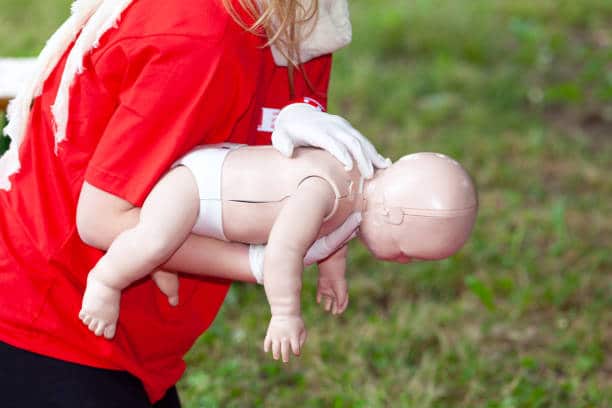
- Choking practice: Back blows and chest thrusts for infants, abdominal thrusts for children. Real manikin practice, not demonstration only.
- Anaphylaxis auto-injector trainer practice: EpiPen or Anapen trainer use, how to hold, angle, and when to call 000.
- Asthma spacer practice: Puffer and spacer assembly, breath counting, and when to escalate.
- Incident reporting expectations: Reviews should mention forms, timelines, or how to document for regulators.
Trainer Quality Indicators
- Calm under pressure: Reviewers mention feeling supported, not rushed, during skill practice.
- Clear explanations: Step-by-step guidance, not jargon or assumptions about prior knowledge.
- Constructive feedback: Trainers correct technique respectfully and explain why it matters.
- Answers questions: Willingness to clarify assessment criteria, re-explain steps, and discuss real-world variations.
Assessment Clarity
- Transparent pass criteria: Reviews mention knowing what’s assessed before the session starts.
- DRSABCD steps explained: Danger, Response, Send for help, Airway, Breathing, CPR, Defibrillation. Learners should be able to recite and demonstrate this sequence.
- Physical requirements acknowledged: Reviews that mention kneeling, floor work, and physical exertion signal realistic expectations.
- Supportive re-assessment: If someone doesn’t pass initially, good reviews mention how trainers offer coaching and another attempt.
Admin and Certificate Reliability
- Nationally recognised RTO: CPR First Aid is RTO 21903. This number should appear on certificates and course materials.
- Clear USI requirement: USI (Unique Student Identifier) is your training reference number. An RTO generally can’t issue a nationally recognised Statement of Attainment without a verified USI. Reviews that mention “bring your USI” or “certificate delayed until USI verified” are honest and credible.
- Transparent certificate issuance conditions: Expect phrases like “issued after successful completion and USI verification”, not vague promises.
Venue and Logistics
- Accessible Brisbane City location: Near public transport, parking options, clearly described address.
- Clean, safe training space: Enough room for floor-based CPR practice, clean manikins, comfortable temperature.
- Equipment quality: Reviewers mention “plenty of manikins” or “everyone had their own trainer EpiPen” rather than sharing limited resources.
Category What to Look For Red Flags Why It Matters in Childcare
Infant CPR Two-finger technique mentioned, depth coaching, head tilt explained Only video shown, no manikin practice time Infant anatomy differs; technique errors can cause harm
Anaphylaxis Trainer EpiPen used, angle and hold time practised Demonstration only, no hands-on time Hesitation or incorrect technique can delay life-saving adrenaline
Assessment Clear criteria shared upfront, respectful correction during practice “Everyone passes” language, no mention of requirements You need genuine competency for regulatory compliance and child safety
Certificate Conditions stated (USI, successful completion), realistic timing given “Same day guaranteed” with no conditions mentioned Unrealistic promises signal compliance shortcuts or poor admin
CPR First Aid HLTAID012 Brisbane City Testimonials: Childcare Outcomes
Childcare learners value HLTAID012 training most when it feels real. Hands-on infant CPR, anaphylaxis and asthma practice, and calm step-by-step coaching separate useful training from box-ticking exercises. The testimonials below include role context, specific skills practised, and what improved after the course. Each reflects a Brisbane City or CBD session completed in the past 18 months.
“I was nervous about the infant CPR assessment because I’d never done it before. The trainer walked me through every step twice, explained why depth matters, and made sure I felt the correct compression spring-back on the manikin. When I passed, I felt ready for placement. Now I’m confident I’d know what to do.”
— Emma T., Early Childhood Student, Brisbane CBD, HLTAID012, March 2024
“Our OSHC centre required updated anaphylaxis training. I booked HLTAID012 because it covered both first aid and anaphylaxis in one go. The trainer used real EpiPen trainers and spacers, which my old course never did. I feel much better about our allergy action plans now, and I know exactly when to call 000 versus when to observe.”
— Daniel K., OSHC Coordinator, Fortitude Valley, HLTAID012, January 2024
“I booked for my whole team of 12 educators. CPR First Aid ran the session on-site at our centre, which saved us travel time and let us use our own action plans during scenarios. The trainer tailored choking and asthma examples to our actual age groups. Everyone passed, and our compliance tracking spreadsheet is finally up to date.”
— Priya S., Centre Director, Spring Hill, HLTAID012 (on-site), November 2023
Mini Case Study: From Anxiety to Placement-Ready Confidence
Learner: Jess M., 21, second-year Bachelor of Early Childhood Education student
Location: Brisbane City public class, February 2024
Challenge: Jess needed HLTAID012 for her upcoming practicum placement at a long day care centre. She’d never performed CPR and was anxious about the physical assessment. Her university required a valid Statement of Attainment before placement could start, so she had a tight timeline.
Training Approach: The CPR First Aid trainer started with a demonstration, then split the class into small groups for hands-on practice. Jess practised infant CPR on a manikin for 20 minutes, received individual coaching on hand placement and compression depth, and repeated the sequence until her technique was consistent. The trainer explained the assessment criteria at the start, so there were no surprises. Anaphylaxis first aid practice included holding a trainer EpiPen, checking the angle, and counting the hold time aloud. The session also covered choking for infants and children, asthma spacer assembly, and incident documentation steps.
Outcome: Jess passed the assessment on her first attempt. She submitted her USI during the session, and her digital Statement of Attainment arrived the next day. She started her placement on schedule and later reported feeling confident when a child choked on a grape during lunch. She performed back blows correctly, the child coughed up the grape, and Jess documented the incident as trained. “I knew exactly what to do because we’d practised that exact scenario in class.”
Mini Case Study: OSHC Allergy and Asthma Confidence
Learner: Michael L., 34, OSHC service coordinator
Location: Brisbane CBD public class, December 2023
Challenge: Michael’s service had three children with severe allergies and two with asthma. His previous first aid certificate didn’t include anaphylaxis or asthma components, and he felt underprepared when a child had an asthma flare-up during outdoor play. He needed training that addressed these specific risks.
Training Approach: The HLTAID012 session dedicated time to anaphylaxis recognition, EpiPen administration practice, and emergency asthma management. Michael practised assembling a puffer and spacer, counting breaths, and recognising when to escalate. The trainer ran a scenario where a child showed signs of anaphylaxis after a bee sting. Michael had to decide whether to administer the EpiPen, call 000, and explain his actions. He also practised communication phrases like “I need you to call 000 now and say a child is having an allergic reaction.”
Outcome: Michael updated his service’s allergy action plans after the course. He now keeps trainer EpiPens and spacers in the staff room for regular refresher drills. When a child recently had mild wheezing during a game, Michael calmly followed the asthma action plan, used the spacer correctly, and documented the incident. The child’s parent thanked him for handling it professionally. “The OSHC scenarios in the course were spot-on. I felt ready because we’d practised exactly that situation.”
Mini Case Study: Centre Director Streamlines Team Compliance
Learner: Anita R., 45, centre director of a 60-place long day care centre
Location: On-site training at centre, Brisbane City, October 2023
Challenge: Anita’s team of 15 educators had staggered certificate expiry dates, making compliance tracking difficult. Some educators were nervous about assessment, and others had scheduling conflicts with public classes. Anita wanted everyone trained together so they could practise as a team.
Training Approach: CPR First Aid delivered an on-site HLTAID012 session at the centre on a staff development day. The trainer used the centre’s own anaphylaxis and asthma action plans during scenarios, which made the training feel directly relevant. Educators practised in pairs, with senior staff coaching newer staff. The trainer answered specific questions about the centre’s incident reporting process and regulatory requirements. Everyone brought their USI and ID, so certificates could be issued promptly after successful completion.
Outcome: All 15 educators passed. Anita received digital Statements of Attainment for the entire team within 48 hours (one educator’s USI needed verification, which added one day). The centre’s compliance spreadsheet now shows a single renewal date three years out, simplifying planning. Staff reported feeling more confident during incidents because they’d practised together and knew each other’s strengths. “The on-site option saved us travel time and let us train as a team. Our incident response has been faster and calmer since.”
Common Childcare Scenarios Practised in HLTAID012 Brisbane City Sessions
Choking at meal time: Back blows and chest thrusts for infants, abdominal thrusts for children, when to call 000, and how to document.
Asthma flare-up: Recognising severe asthma, puffer and spacer use, breath counting, and when to escalate.
Anaphylaxis after snack: Identifying symptoms (swelling, difficulty breathing, skin changes), EpiPen administration, calling 000, and positioning the child.
Febrile convulsion: Protecting the child from injury, timing the seizure, recovery position, and when to call an ambulance.
Playground fall with bleeding: Applying pressure, bandaging, checking for concussion signs, and documenting the incident.
| Outcome | Example Review Quote Snippet | Why It Matters at a Centre |
| Improved Confidence | “I used to panic when a child fell. Now I know the steps and feel calm.” | Calm staff reduce panic contagion and make better decisions under pressure |
| Faster Incident Response | “I knew exactly what to do when a child choked. Back blows worked immediately.” | Seconds matter in choking and anaphylaxis; trained staff act faster |
| Compliance Readiness | “Trainer explained our legal requirements clearly, including incident documentation.” | Regulators expect correct documentation and qualified staff on-site at all times |
| Better Team Communication | “We trained together, so we all use the same language during emergencies now.” | Consistent terminology and roles prevent confusion during incidents |
| Parent Confidence | “Parents have told me they feel safer knowing I’m trained in anaphylaxis.” | Parent trust increases when centres demonstrate genuine preparedness |
Statement of Attainment is the official nationally recognised record issued by an RTO that lists the units of competency you successfully completed. Education and care services require approved first aid qualifications including anaphylaxis and emergency asthma components, and services must track qualification expiry dates to maintain compliance.
Workplace Training Testimonials and Outcomes That Matter to Managers
Training is a cost until the day it isn’t. Workplace first aid training is most valuable when it’s role-specific, scenario-based, and reinforced with refreshers, because training method and frequency strongly affect outcomes. Managers care about smoother incident response, reduced time away from work for training, easier compliance tracking, and staff who feel prepared rather than panicked. The testimonials below reflect group bookings and on-site sessions delivered to Brisbane City workplaces.
“We run three office locations across Brisbane and needed 30 staff trained without losing entire days to travel. CPR First Aid delivered HLTAID011 on-site at our head office. The trainer tailored scenarios to office emergencies like cardiac events and falls. Everyone passed, and we received all certificates within 48 hours. The process was smooth, and our WHS compliance audit passed without issues.”
— Karen H., HR Manager, Brisbane City, HLTAID011 (on-site), September 2023
“Our retail team has high turnover, so first aid certificates lapse frequently. We set up a recurring booking with CPR First Aid so new staff can join scheduled Brisbane CBD classes every quarter. The admin team sends us reminders three months before expiry, which has reduced our lapsed certificate rate to almost zero.”
— Tom W., Operations Manager, Retail Chain, Brisbane CBD, HLTAID011, Ongoing since 2022
Mini Case Study: Multi-Site Roster Challenge Solved with On-Site Training
Client: Mid-size professional services firm with three Brisbane locations
Challenge: The firm needed 25 staff trained across three offices. Public class schedules didn’t align with staff availability, and pulling everyone into one location for a full day disrupted client work. Previous training providers charged high on-site fees and offered limited date flexibility.
Training Approach: CPR First Aid proposed an on-site HLTAID011 session at the firm’s head office on a designated training day. The trainer ran morning and afternoon groups to accommodate shift rosters. Scenarios included cardiac events (the most common workplace STEMI location after home, with 17.5% occurring at workplaces and average time to hospital exceeding 54 minutes), falls, cuts from office equipment, and allergic reactions. Staff practised CPR in pairs and used a trainer AED.
Outcome: All 25 staff passed. The firm saved approximately 200 hours of travel and commute time compared to public classes. Certificates arrived within two business days after USI verification. The WHS manager now schedules an on-site refresher every three years, coordinated with the firm’s professional development calendar. “On-site training meant zero travel time, familiar surroundings, and we could train as teams who actually work together. The outcome was immediate compliance and increased confidence.”
Mini Case Study: High Turnover Retail Environment Reduces Lapsed Certificates
Client: Retail chain with 15 staff across two Brisbane City stores
Challenge: Staff turnover averaged 30% annually. New hires needed first aid certificates quickly to meet company policy. The operations manager struggled to track expiry dates, and several staff had worked with lapsed certificates before it was noticed during an audit.
Training Approach: The operations manager established a standing booking with CPR First Aid for one Brisbane CBD public class seat per month. New staff attended the next available session. CPR First Aid’s admin team sent automated reminders to the operations manager three months before any existing certificate expired, which triggered booking for refresher training. Workplace first aid kit requirements were also reviewed during training, and the trainer provided a checklist for each store.
Outcome: Lapsed certificates dropped from 15% to less than 2% within 12 months. New hires attended training within their first fortnight, reducing the compliance gap. The operations manager now tracks expiry dates in a simple spreadsheet and relies on automated reminders to trigger rebooking. “The reminder system alone saved us from compliance headaches. Our stores now have consistent first aid coverage, and staff report feeling more confident about responding to customer or colleague incidents.”
Why Workplace First Aid Matters Even in Low-Risk Offices
Some emergencies are time-sensitive and can occur before expert arrive. Cardiac events, severe allergic reactions, choking, and traumatic injuries happen in offices, warehouses, and retail spaces. Training devoted to first aid instruction is linked to reduced worker injury rates, according to CDC research. Even in environments without heavy machinery or height work, staff benefit from knowing how to respond calmly and correctly. Refresher training is scheduled retraining that helps prevent skill fade, so first aiders can perform correctly under pressure.
| Outcome Managers Care About | How Training Supports It | What to Ask Your Provider |
| Faster incident response | Scenario-based practice builds muscle memory and reduces hesitation | “Can you tailor scenarios to our workplace environment and risks?” |
| Easier compliance tracking | Digital certificates, group bookings, and automated reminders simplify admin | “Do you offer expiry reminders and bulk certificate reporting?” |
| Reduce downtime for training | On-site delivery eliminates travel time and allows flexible scheduling | “Can you deliver on-site on our preferred day, and split groups if needed?” |
| Consistent team competency | Group training ensures everyone learns the same protocols and terminology | “Will the trainer reference our existing emergency plans and procedures?” |
| Improve hazard awareness | First aid training prompts staff to identify risks and prevention opportunities | “Does the course include hazard identification or focus only on response?” |
Why Quality First Aid Training Matters: The Evidence in Plain English
Most people want to help, but confidence collapses without practice. First aid training works best when it’s practical and repeated. Knowledge and confidence come from doing, not just reading. Only 8% of participants in a community CPR education program had performed real CPR, and only 50% had received formal training. When emergencies happen, the gap between “I’ve heard of CPR” and “I can perform CPR correctly” becomes critical.
Education and care services require approved first aid qualifications that include anaphylaxis and emergency asthma components. Regulators expect services to track staff qualification expiry dates and ensure coverage at all times. This isn’t bureaucracy. It reflects a simple truth: children are vulnerable, and the adults responsible for them need current, practical skills. Training that covers infant CPR, choking, anaphylaxis, and asthma management directly addresses the most common and time-sensitive childcare emergencies.
Scenario-based training is practice that simulates realistic emergencies so learners can apply steps (like DRSABCD) under time pressure. A CDC literature review of 80 reports found overwhelming evidence that training increases worker knowledge and safer practices. The review noted that training design factors (such as group size, method, and frequency) influence effectiveness. Passive learning (watching videos, reading slides) produces weaker outcomes than active practice. Learners who physically perform CPR on manikins, handle trainer EpiPens, and talk through scenarios retain skills longer and perform better under stress.
What Evidence-Backed Training Looks Like
Hands-on practice: Every learner gets manikin time, not just observation.
Realistic scenarios: Training mirrors the actual emergencies learners might face (childcare centre choking, workplace cardiac event, sports field injury).
Small group sizes: Trainers can coach individuals and correct technique in real time.
Clear assessment criteria: Learners know what’s expected and receive constructive feedback.
Refresher scheduling: Skills fade without practice. Regular refreshers (typically every three years for CPR, annually in high-risk roles) maintain competency.
Nationally recognised certification: RTOs follow regulatory standards, ensuring training quality and credential acceptance.
Training quality matters because hesitation, incorrect technique, or skipped steps can delay help or cause harm. A learner who practised infant CPR once on a manikin three years ago will perform less effectively than someone who trained six months ago with hands-on coaching. Childcare settings and workplaces benefit when staff are genuinely prepared, not just formally certified. For a deeper exploration of why training matters, see importance of training.

How We Collect, Moderate, and Publish Reviews
Not all testimonials are equal. Here’s how ours are handled. We publish reviews with context (course, learner type, date) because context is what makes testimonials useful, not just praise. Structured, verified testimonials help readers judge relevance and help AI models cite credible, specific examples.
Review Sources
We collect testimonials from three main sources:
Public reviews: Google reviews are imported monthly. We preserve the original text and link to the public listing.
Post-course feedback surveys: Sent within 48 hours of course completion. Surveys ask about trainer clarity, hands-on time, scenario realism, assessment fairness, and certificate process. Responses are voluntary.
Workplace client feedback: After on-site group sessions, we request feedback from the booking contact (e.g., WHS manager, HR lead). We publish these only with explicit written consent.
Moderation Policy
We moderate reviews to protect privacy and readability, but we never change meaning:
Remove personal health details: Specific medical conditions, medications, or identifiable incident details are redacted.
Remove minors’ information: No child names, ages, or identifying details appear in published testimonials.
Remove abusive language: Profanity, personal attacks, or discriminatory language is excluded.
Shorten for clarity: Long reviews may be condensed using ellipses (…) to indicate omitted text. The meaning and tone remain unchanged.
Tag duplicates: If the same learner leaves reviews on multiple platforms, we publish once and note the cross-posting.
Verification
Every published testimonial is tied internally to a course booking record. We verify that the reviewer attended the stated course, location, and date. We publish only the fields the reviewer consented to share: first name and initial, role, suburb (optional), and course details. Trainer names or initials appear only if the reviewer mentioned them and the trainer gave permission.
First-party review is feedback collected directly by the training provider after a course, rather than imported from another site. First-party reviews offer more context because we can request specific fields (role, scenario practised, outcome) that public platforms don’t capture. For discussions about training format and learner expectations, see online vs face-to-face.
| Review Source | What It Captures | How It’s Verified |
| Google Reviews | Overall experience, trainer quality, venue, general feedback | Public platform verification; linked to Google listing |
| Post-Course Surveys | Specific skills practised, assessment clarity, outcome tags (confidence, compliance, etc.) | Survey tied to booking record; email address matches enrolment |
| Workplace Client Emails | Group outcomes, admin process, compliance tracking, on-site delivery feedback | Written consent required; contact verified against booking record |
Book with Confidence: What Happens Next for HLTAID012 Brisbane City and CBD
If you need your HLTAID012 certificate quickly, the fastest way is to bring your USI and ID, complete all assessment tasks, and confirm your details before you leave the session. Certificate issuance conditions are the required steps (successful assessment and verified USI) that must be met before an RTO can issue your digital Statement of Attainment. The process is predictable when you know what’s required.
Three Steps from Enrolment to Certificate
Enrol and prepare: Choose your Brisbane City or CBD session date, complete the online enrolment form, and submit your USI. Bring photo ID (driver’s licence or passport), wear comfortable clothing suitable for floor-based CPR practice, and wear closed-toe shoes.
Complete training and assessment: Attend the full session (typically six hours for HLTAID012). Participate in all practical activities (infant and child CPR, choking, anaphylaxis, asthma, DRSABCD sequence). Demonstrate skills as assessed by the trainer. Ask questions if anything is unclear. The physical requirement is plainly stated: you must be able to kneel on the floor and perform chest compressions for several minutes. If you have concerns about physical capacity, discuss accommodations with the trainer before the session.
Receive digital Statement of Attainment: After successful completion and USI verification, your certificate is issued digitally. Most certificates arrive within 24 to 48 hours. Delays occur when a USI needs verification or assessment tasks are incomplete. If you don’t pass on the first attempt, the trainer will offer coaching and a re-assessment opportunity (conditions apply).
What to Bring
Photo ID: Driver’s licence, passport, or other government-issued ID that matches your enrolment name.
USI: Your Unique Student Identifier. If you don’t have one, you can create it for free at usi.gov.au before the session.
Comfortable clothing: You’ll be kneeling and performing CPR on the floor. Avoid restrictive clothing or clothing that can’t get slightly dusty.
Closed-toe shoes: For safety during practical activities.
Water bottle: Stay hydrated, especially during physical practice.
Assessment Expectations
You must demonstrate CPR skills as required by the HLTAID012 unit. The trainer assesses your technique during practical activities. You’ll perform infant CPR, child CPR, and adult CPR (if included in the session), demonstrate choking management, show anaphylaxis and asthma response, and explain or demonstrate the DRSABCD sequence. The trainer provides clear criteria at the start and offers feedback during practice. If your technique needs correction, the trainer will coach you and give you another opportunity. This is normal and expected. Most learners pass on their first attempt after hands-on coaching.
Renewals and Refresher Training
CPR skills are commonly renewed every 12 months, and full first aid certificates (including HLTAID012) are commonly renewed every three years. Check with your employer or regulatory body for specific requirements. Education and care services must ensure staff hold current approved qualifications at all times. If your certificate is nearing expiry, book a refresher course well in advance to avoid working with a lapsed certificate. For more details, see certificate validity.
| Time | What You Do | What CPR First Aid Does | Common Delays to Avoid |
| Before the session | Complete enrolment, submit USI, confirm attendance | Send confirmation email with location, parking, and what to bring | Not submitting USI in advance (can be done on the day but may delay certificate) |
| During the session | Participate fully, practise skills, complete assessment, verify details | Deliver training, assess competency, answer questions, collect signed paperwork | Not asking for clarification during practice (leads to failed assessment) |
| After successful completion | Check email for digital certificate, download and save | Process paperwork, verify USI, issue digital Statement of Attainment | Incorrect email address on enrolment form (certificate goes to wrong inbox) |
| If re-assessment is needed | Book a re-assessment session, practise skills, attend and complete | Provide coaching and feedback, schedule re-assessment opportunity | Not practising between attempts (skills don’t improve without repetition) |
Frequently Asked Questions
What is HLTAID012 and who is it for?
HLTAID012 is the nationally recognised childcare first aid unit designed for educators and carers who may need to respond to emergencies involving infants and children. It covers infant and child CPR, choking management, anaphylaxis response, emergency asthma management, and incident documentation. The course is commonly taken by early childhood educators, OSHC coordinators, family day care educators, nannies, au pairs, early childhood students on placement, and parents who want comprehensive child first aid skills. Training typically runs for six hours and includes hands-on practice with manikins, trainer EpiPens, and asthma spacers in realistic childcare scenarios.
Where can I find HLTAID012 childcare first aid course Brisbane City reviews?
The fastest way is to read reviews filtered to ‘HLTAID012’ plus ‘Brisbane City’ or ‘Brisbane CBD’ and look for childcare-specific scenarios like infant CPR, anaphylaxis and asthma. Public platforms like Google show overall ratings and general feedback. This page structures testimonials by learner type, course, and outcomes, so you can find reviews from educators, students, or parents who attended the same course and location you’re considering. Check the date of each review. Recent reviews (within the past 12 months) reflect current trainers, venue conditions, and admin processes. Older reviews may reference trainers or processes that have changed.
What should I look for in a good HLTAID012 review?
A good HLTAID012 review describes what was practised hands-on (infant and child CPR, choking, asthma, anaphylaxis) and whether the trainer made assessment expectations clear. The best reviews also mention certificate timing conditions like USI verification. Generic praise (“great course, highly recommend”) tells you little about course quality. Specific details (“we practised two-finger infant CPR for 15 minutes, trainer corrected my hand placement, I felt confident by the end”) help you judge whether the training will meet your needs. Look for reviews from people in your role. A parent’s experience differs from an educator’s experience, and an OSHC worker’s priorities differ from a nanny’s.
Do I need a USI to get my certificate?
Yes. Your USI is generally required for an RTO to issue a nationally recognised Statement of Attainment. You can create a USI for free at usi.gov.au. The process takes a few minutes and requires proof of identity (e.g., driver’s licence number). Some RTOs can create a USI on your behalf during enrolment, but it’s faster if you bring your existing USI to the session. If you attend training without a valid USI, your certificate will be delayed until the RTO verifies or creates one for you. Bring your USI and photo ID to every training session to avoid delays.
Does HLTAID012 include anaphylaxis and asthma training?
Yes. HLTAID012 training commonly covers anaphylaxis response and emergency asthma management as part of education and care setting first aid. Education and care services require approved training that includes first aid, anaphylaxis, and emergency asthma components. HLTAID012 meets these requirements. You’ll practise with trainer EpiPens (auto-injectors) and asthma spacers during the session. The trainer explains when to administer adrenaline, how to position a child experiencing anaphylaxis, when to call 000, and how to manage asthma flare-ups using a puffer and spacer. Services must track staff qualification expiry dates to maintain compliance.
Can CPR First Aid run on-site workplace first aid training in Brisbane?
Yes. CPR First Aid can deliver on-site workplace training, which is often the simplest way to train teams consistently while reducing time away from work. On-site delivery suits groups of 10 or more learners and allows the trainer to tailor scenarios to your workplace environment (office, warehouse, retail, hospitality, construction admin). You’ll need a suitable training space (room for floor-based CPR practice, tables for written assessments, accessible by the trainer with equipment). The trainer brings manikins, AEDs, and other equipment. Training effectiveness evidence shows that methods and frequency affect outcomes, so regular refreshers (every one to three years depending on role) help maintain competency. Contact CPR First Aid to discuss your team size, preferred dates, and workplace-specific scenarios.
Why does training quality matter if I just need the certificate?
Training quality matters because hands-on, well-structured training improves knowledge and safer practices, and design factors like method and frequency influence effectiveness. A CDC review of 80 reports found overwhelming evidence of training benefits in workplace safety. In real emergencies, the gap between “I have a certificate” and “I can perform CPR correctly under pressure” determines outcomes. Skills fade without practice. A learner who watched a video three years ago will hesitate or perform incorrectly compared to someone who practised on manikins six months ago with coaching. Childcare settings and workplaces benefit when staff are genuinely prepared, not just formally certified. Quality training reduces panic, improves decision-making, and increases the chance that first aid actually helps.
Is CPR practice really necessary?
Yes. Skills and confidence come from practise, and real-world surveys show many people lack correct CPR knowledge without formal training. Only 50% of surveyed parents and carers had received formal CPR training, only 11% knew the correct chest compression rate and ratio, and only 8% had performed real CPR. Watching a video or reading slides doesn’t build the muscle memory or confidence needed to perform correctly during a real emergency. Hands-on practice on manikins, with trainer feedback and correction, is the only way to develop reliable technique. Cardiac arrest survival rates improve significantly when bystanders perform CPR immediately. Correct depth, rate, and hand position matter. Hesitation or incorrect technique reduces effectiveness. Practise builds the automaticity that lets you act under stress.
Conclusion: Book HLTAID012 Brisbane City Training That Earns Reviews Like These
If you want a Brisbane City HLTAID012 course that’s consistently praised for hands-on childcare scenarios and clear certification support, book with CPR First Aid. The best HLTAID012 course in Brisbane City is the one delivered by a nationally recognised RTO with hands-on infant and child CPR practice, realistic childcare scenarios, and a transparent certificate process. CPR First Aid is built around those standards. Educators, OSHC staff, students, nannies, and workplace teams choose CPR First Aid because training feels real, trainers coach calmly, and the admin process works.
Ready to Book Your HLTAID012 Brisbane City Course?
Choose your session date and enrol online in under two minutes. Bring your USI and ID, practise real childcare scenarios, and receive your digital Statement of Attainment after successful completion.
Check Upcoming Brisbane City Dates
Workplace or group booking? Request an on-site quote
Trained with CPR First Aid? Leave a review to help others choose quality training.
References
- Free community education course: What to do until the ambulance arrives (Richmond Valley Council, NSW). Cited for CPR knowledge-gap statistics: 50% of parents and carers had formal CPR training, 11% knew correct compression rate and ratio, 8% had performed real CPR.
- First-aid qualifications (Education Standards Board, South Australia). Cited for education and care first aid requirements including anaphylaxis, emergency asthma, and qualification expiry tracking.
- Mandatory First-Aid Training in the Workplace (PMC, Epidemiologia journal). Cited for workplace STEMI context: 17.5% of cases occurred in workplaces, average time to hospital exceeded 54 minutes.
- Assessing Occupational Safety and Health Training (CDC, NIOSH). Cited for evidence that training improves knowledge and safer practices, and that design factors (method, group size, frequency) influence effectiveness.