

“Freeze burning” is one of those search terms people use for a few different problems. Sometimes they mean a skin injury caused by direct contact with ice, a cold pack, snow, or dry ice. Other times they mean freezer burn on food, which is completely different. A skin freeze burn is a cold injury that can behave a lot like frostbite, while freezer burn is a food-quality issue caused by moisture loss and air exposure during storage.
For first aid, that distinction matters. If the injury is a heat burn, the recommended first step is to cool the area under cool running water for at least 20 minutes and not apply ice. If the injury is a cold burn or ice burn, the goal is different: you need to stop the cold exposure and rewarm the area safely.
If you want a stronger grounding in Australian burn care, CPR First Aid already has practical guides on first aid for burns, what not to put on burns, and whether ice can be used as first aid for burns.
Quick Answers
What Is Freeze Burning on Skin?
Usually, it means skin damage caused by extreme cold, such as direct contact with ice, an ice pack, or dry ice.
Is Freeze Burning the Same as Freezer Burn?
No. Freezer burn affects frozen food quality, not your skin.
Should You Put Ice on a Heat Burn?
No. Cool the burn with cool running water for at least 20 minutes instead.
Can an Ice Pack Burn Skin?
Yes. Ice packs placed directly on bare skin can cause an ice burn or frostbite-like injury.
What Is Dry Ice?
Dry ice is solid carbon dioxide. It is much colder than regular ice and can injure skin on contact.
What Freeze Burning Usually Means
In everyday use, “freeze burning”, “freezing burns”, “ice burn”, and “cold burn” are often used to describe the same basic problem: skin and tissue damage from extreme cold. This can happen outdoors in freezing weather, but it can also happen at home or work when a cold source stays against the skin too long. Common examples include ice cubes, gel packs, frozen vegetables used as makeshift ice packs, metal exposed to freezing temperatures, and dry ice.
That is very different from freezer burn on food. Freezer burn is the drying out of frozen food after air reaches the surface. It may change taste, texture, and appearance, but USDA and FDA guidance say it is mainly a quality issue, not a food safety issue.
So if you searched “freeze burning” because your skin feels painful, numb, blistered, or waxy after contact with ice or a freezing object, you are dealing with a cold injury, not a food-storage issue.

What an Ice Burn or Cold Burn Looks Like
A mild ice burn may start with pain, tingling, redness, or pallor. As the injury becomes more serious, the skin can look pale, yellow, purple, grey, or waxy, and numbness may develop. Blisters can form in more significant cold injuries, and deep frostbite can even lead to blackened skin as tissue damage worsens.
Healthdirect notes that the first sign of frostbite is often pain, followed by numbness. Moderate frostbite can produce large clear blisters, while deep frostbite can cause blood blisters and black skin. That is why a so-called “freeze burn” should never be brushed off just because it started with a cold pack or a few seconds of dry ice handling.
You should be especially cautious if the area feels hard, frozen, or unusually firm, or if swelling and numbness happen together. Those are signs that the injury may be beyond a simple surface irritation.
Common Causes of Freeze Burning
One of the most common causes is placing an ice pack directly on bare skin. This often happens after sports injuries, swelling, headaches, or post-workout soreness. Johns Hopkins notes that ice or an ice pack should never be put directly on the skin, and cold sources pressed against the skin too long can lead to frostbite.
Another cause is accidental contact with dry ice, which is the solid form of carbon dioxide. Dry ice sits at around -78.5°C and changes directly from a solid to a gas. Because it is so cold, even brief unprotected contact can damage skin.
Outdoor exposure matters too. Healthdirect explains that frostbite can happen when skin freezes after exposure to very low temperatures, usually affecting exposed areas and extremities such as the fingers, toes, ears, and nose.
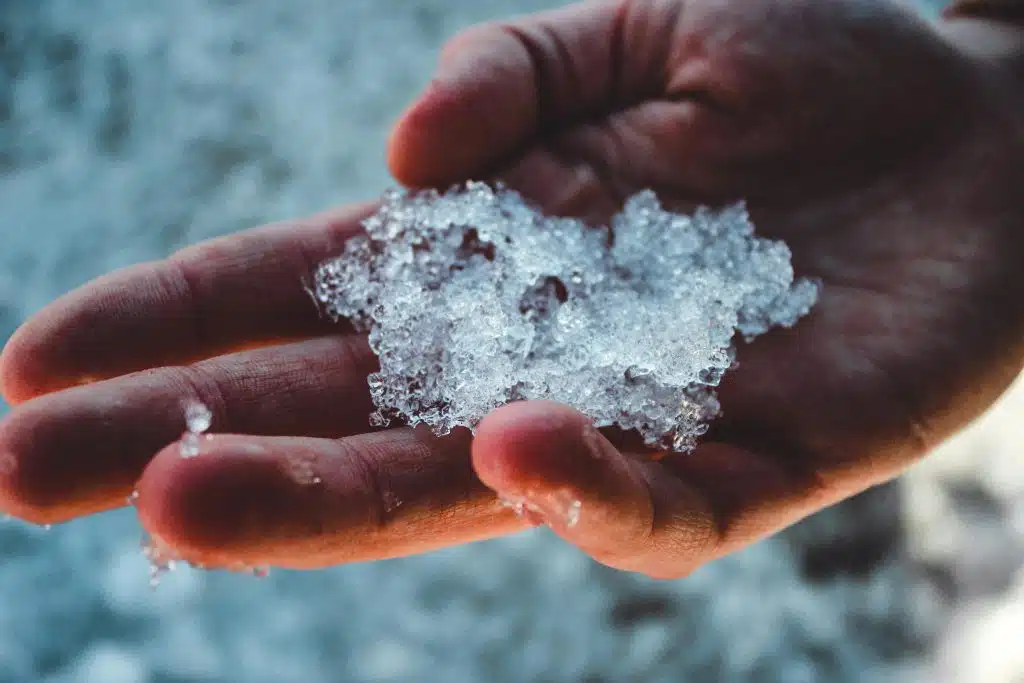
What to Do if You Get a Freeze Burn, Ice Burn, or Cold Burn
If the injury is caused by cold, the first step is to move away from the source and get into a warm, dry place. Remove wet clothing and jewellery from the area. For mild frostbite, Healthdirect recommends putting the affected area in warm water around 40 to 42°C until the skin turns pink, softens, or stops improving, which can take up to 40 minutes.
After rewarming, cover the area with a clean, light dressing. Healthdirect says plastic cling film can be used in some cases. It also advises not using direct heat or hot water, not massaging the area, and not breaking any blisters that form.
This is the key difference between a cold burn and a heat burn. A heat burn is cooled with running water. A cold burn is gently rewarmed once you are in a safe warm environment. Using the wrong approach can make the injury worse.
If the skin becomes more painful after rewarming, if numbness does not settle, or if blisters appear, get medical advice promptly. For anything more than a mild surface cold injury, professional assessment is the safer call.
Should You Use Ice for a Burn?
No. If the injury is a heat burn from something hot, the advice is clear: do not use ice. Healthdirect says to put the burned area under cool running water for at least 20 minutes as soon as possible, and specifically says not to apply ice, creams, or lotions. The American Burn Association also lists ice among the things not to do because it can worsen damage.
This is where many people get confused. They search for “ice for a burn”, “burn with ice”, or “burns and ice” because it feels intuitive that colder must be better. But ice can reduce blood flow too aggressively and increase tissue injury. CPR First Aid’s own burn guidance also reinforces that cool running water is the preferred first aid step, while ice can worsen the damage.
If you are helping someone with a heat burn, the practical steps are to remove the source of the burn, cool the area under cool running water for 20 minutes, remove jewellery or tight items if they are not stuck, and cover the burn with a light, loose, non-stick dressing. Healthdirect also notes that cling film may be used on some burns, but not on the face.
What Is Dry Ice?
Dry ice is solid carbon dioxide. Unlike regular ice, it does not melt into liquid water at normal atmospheric pressure. Instead, it sublimates, changing straight from solid to gas. That is why it is widely used for cooling and transport, but also why it needs careful handling.
Because dry ice is so cold, it can cause a freeze burn or frostbite-like injury on contact. The American Burn Association advises treating a dry ice burn similarly to frostbite or a heat burn depending on severity, and to seek medical care within 24 hours for severe frostbite or blistering.
In practical terms, if dry ice touches skin, do not keep testing the area or rubbing it. Stop contact, move to a warm place, and follow cold-injury first aid. If there is blistering, persistent numbness, or hard or waxy skin, get medical care.
When a Freeze Burn Needs Urgent Medical Help
For a suspected cold burn or frostbite, Healthdirect says to seek urgent care if you have been exposed to very cold temperatures and develop hard, frozen skin, swelling with numbness, blisters, constant shivering, slurred speech, slow breathing, or confusion. In Australia, call triple zero (000) for an ambulance in those situations.
For a heat burn, Healthdirect advises urgent medical attention if the burn is deep, involves the face, hands, or genitals, shows brown, black, or white patches, is caused by chemicals or electricity, or affects the throat or airway.
Even without those red flags, it is sensible to seek medical assessment if pain is worsening, the area is not improving after basic first aid, blisters are large, or sensation remains altered. Severe cold injuries can take months to recover and, in some cases, may require treatment in a burns unit.
How to Prevent Freeze Burning
The simplest prevention rule is this: never place ice or an ice pack directly on skin. Wrap it in a clean towel or cloth first. Johns Hopkins explicitly advises using a barrier and not applying ice directly to the skin.
If you are using cold therapy for soreness or swelling, be cautious about how long it stays on. Do not let yourself fall asleep with a cold pack in place, and stop immediately if the area becomes numb, overly pale, or painfully cold. People with poor circulation, reduced sensation, diabetes, or very young and older age groups need extra care with cold exposure.
For dry ice, use insulated gloves or protective handling equipment and avoid direct skin contact. Since dry ice releases carbon dioxide gas, it should also be handled in a well-ventilated area.
Burn First Aid That Stays Practical
A good first aid response is not about memorising one trick for every burn. It is about recognising what caused the injury and choosing the right first step. A heat burn needs cooling with running water. A freeze burn needs safe rewarming. Both may need medical review depending on depth, size, symptoms, and location.
That is also why practical training matters. If you want to build confidence for burns, scalds, and other emergencies, CPR First Aid offers the nationally accredited HLTAID011 Provide First Aid course, the HLTAID009 CPR course, and the HLTAID012 Childcare First Aid course for educators and carers.
For more reading on the topic, see CPR First Aid’s articles on how to treat different types of burns, first aid for burns, and what not to put on burns. Those resources work well alongside formal training when you want burn first aid that is easy to apply in real life.
Frequently Asked Questions
Is freeze burning the same as freezer burn?
No. On skin, freeze burning usually refers to a cold injury such as an ice burn or frostbite-like damage. Freezer burn refers to dehydration and surface damage on frozen food, which affects quality more than safety.
Can ice really burn skin?
Yes. Ice, ice packs, and other freezing objects can damage skin if they stay in direct contact long enough. The injury is often described as an ice burn or cold burn and may resemble frostbite.
Should I put ice on a burn from heat?
No. For a heat burn, use cool running water for at least 20 minutes and avoid ice, creams, and greasy home remedies.
What should I do if I get a dry ice burn?
Stop the contact, move to a warm dry place, remove wet clothing or jewellery, and rewarm the area safely in warm water if it seems mild. Seek medical care if blistering, persistent numbness, hard skin, or worsening symptoms develop.
When should I call 000?
Call 000 for urgent help if a heat burn is deep, involves the face, hands, genitals, chemicals, electricity, or the airway, or if a cold injury comes with hard frozen skin, swelling and numbness, blisters, shivering, slurred speech, breathing changes, or confusion.
Conclusion
Freeze burning is not just a catchy search phrase. In real-world first aid, it usually points to a cold injury caused by ice, freezing objects, cold packs, or dry ice. The most important takeaway is simple: do not use ice on a heat burn, and do not treat a cold burn like a heat burn. Knowing the difference can prevent deeper tissue damage and help you respond properly from the start.