
Weekend  HLTAID012 Provide First Aid in an Education and Care Setting course in Brisbane City/CBD removes the guesswork. You get clear pricing, exact time commitments, and a simple checklist of what to bring. CPR First Aid runs HLTAID012 Childcare First Aid weekend classes in Brisbane City/CBD, with nationally recognised training and a fast digital certificate once your USI is verified and you’ve successfully completed assessment. If you’re an educator, OSHC coordinator, or nanny who needs ACECQA-compliant first aid without taking weekday leave, this page answers every practical question so you can book with confidence and arrive prepared.
Quick Facts for Brisbane City Weekend Learners
Weekend HLTAID012 in Brisbane City/CBD offers a booking-ready option with transparent requirements. Here’s what you need to know before you click ‘book’.
Weekend availability: CPR First Aid schedules Saturday and Sunday classes in Brisbane City/CBD. Live session dates are visible in the booking widget below. Classes fill quickly, especially during placement season and audit periods, so check availability early. Weekend sessions are designed for educators who can’t attend weekday training without disrupting centre ratios or taking personal leave.
Course price: Pricing varies by session date and delivery option. Current Brisbane City/CBD weekend rates are shown at checkout. Always confirm what’s included: online pre-course theory, face-to-face practical assessment, training equipment (manikins, AED trainers, barrier devices), and digital certificate issuance. Group bookings for childcare centres and OSHC services are available on request. Contact CPR First Aid directly for workplace quotes.
Practical duration: HLTAID012 is completed via online pre-course theory plus a face-to-face practical session. Your total time depends on the delivery option you choose, but most students complete the practical component in a few hours. Plan to finish online theory a few days before your weekend class. Arrive 10 to 15 minutes early for check-in and room set-up. The face-to-face session focuses on hands-on CPR, choking, anaphylaxis, asthma, and childcare scenario practice.
Certificate timing: Fast digital certificate after successful completion and USI verification. Weekend or late sessions may be processed on the next business day, depending on administrative cut-offs. Ensure your USI details are correct before class to avoid delays. Incomplete assessment or missing USI information will delay certificate issuance.
What to bring (short checklist):
- Photo ID (driver’s licence, passport, or government-issued card)
- Your USI (Unique Student Identifier) number
- Comfortable clothing suitable for floor-based CPR practice
- Closed-toe shoes (avoid thongs or slides)
- Water bottle and booking confirmation email
View the full checklist and arrival guidance in the What to Bring section below.
Trust and recognition: CPR First Aid is a nationally recognised Registered Training Organisation (RTO 21903). Your HLTAID012 qualification is issued under Australia’s VET system and recognised across all states and territories. ACECQA accepts HLTAID012 as the approved first aid qualification for education and care services. Staff working with children must hold current first aid, anaphylaxis management, and emergency asthma training.
If you’re searching for a Brisbane City/CBD weekend HLTAID012 course, CPR First Aid provides a booking-ready option with clear timeframes, transparent requirements, and nationally recognised certification. Learn more about childcare first aid requirements in our childcare first aid guide.
Weekend HLTAID012 in Brisbane City/CBD: Who It’s For and Why It’s Required
This course is for you if you work or study in education and care settings. HLTAID012 is designed for people who may need to respond to first aid emergencies involving infants and children. Weekend classes suit educators, OSHC coordinators, family day care providers, nannies, students on placement, and centre directors booking staff.
This course is the right choice if you:
- Work in a childcare centre, kindergarten, or preschool and need ACECQA-compliant first aid
- Coordinate or supervise OSHC (Outside School Hours Care) programs
- Provide family day care in your home or community setting
- Work as a nanny, au pair, or private educator caring for children
- Study early childhood education and need first aid for placement or graduation
- Manage a childcare service and need to ensure staff meet regulatory requirements
- Can’t attend weekday training without taking leave or disrupting rosters
Under ACECQA guidance, first aid qualifications are generally renewed every three years, while CPR must be updated annually to be considered current. From 1 October 2023, qualifications are current if attained within the previous three years, except CPR, which must be within one year (ACECQA). For childcare and education services, CPR must be updated annually while first aid qualifications are generally renewed every three years under ACECQA guidance. Centres must ensure at least one staff member with current first aid, anaphylaxis management, and emergency asthma training is present at all times children are being cared for.
HLTAID012 vs HLTAID011: What’s the difference? HLTAID011 (Provide First Aid) covers general first aid for adults. HLTAID012 (Provide First Aid in an education and care setting) is tailored for childcare and education environments. It includes infant and child CPR, anaphylaxis management, asthma emergencies, and scenarios specific to caring for young children. If you work in education and care, HLTAID012 is the appropriate course. Learn more about the difference in our HLTAID011 explained guide.
Common Brisbane City/CBD weekend booking scenarios:
- You start a new placement or employment on Monday and need certification before your first day
- Your centre has an upcoming regulatory audit and staff need current qualifications
- You’re switching from nanny work to a centre-based role and need ACECQA-compliant training
- Your CPR expired and you need to renew urgently without missing weekday shifts
- You’re a student finishing your ECE diploma and need first aid to graduate or secure employment
| Role | Why HLTAID012 Helps |
| Childcare educator | Meets ACECQA compliance; prepares you for infant/child emergencies in centres |
| OSHC coordinator | Equips you to manage playground injuries, allergic reactions, and asthma attacks during extended care |
| Family day care provider | Ensures you can respond to emergencies when caring for multiple children in home-based settings |
| Nanny or au pair | Builds confidence in managing choking, febrile convulsions, and other child-specific emergencies |
| ECE student | Satisfies course and placement requirements; improves employability after graduation |
| Centre director | Maintains regulatory compliance for your service; reduces liability and improves staff preparedness |
Prices for HLTAID012 Brisbane City Weekend Classes
The right course is the one that meets ACECQA needs, fits your schedule, and is delivered by a trusted RTO. Price matters, but clarity matters more. When comparing HLTAID012 prices in Brisbane City/CBD, always confirm what’s included (online theory, practical assessment, and certificate issuance conditions) rather than comparing the headline price alone.
CPR First Aid’s current Brisbane City/CBD weekend pricing is shown in the booking widget. Check live availability for exact rates. Weekend sessions may vary in price depending on session timing and demand. The price includes online pre-course learning materials, face-to-face practical assessment, training equipment (infant/child/adult CPR manikins, AED trainers, barrier devices), and digital Statement of Attainment issued after successful completion.
What’s included in your course fee:
- Access to online pre-course theory modules (self-paced, complete before class)
- Face-to-face practical training and assessment with qualified trainers
- All equipment: CPR manikins (infant, child, adult), AED trainers, anaphylaxis training devices, asthma management equipment
- Digital Statement of Attainment issued via email once USI is verified and assessment is complete
- Support from CPR First Aid admin team for questions or certificate reissues
Discounts and group bookings: CPR First Aid occasionally offers promotional codes for public bookings. Check the HLTAID012 course details page for current offers. Workplace and centre group bookings (5+ participants) may qualify for custom pricing. Contact CPR First Aid directly to request a group booking quote. Onsite training at your childcare centre is also available for larger teams.
Same-day certificate explained: Same-day certificate means your digital Statement of Attainment is issued after you successfully complete assessment and your USI is verified. Timing can vary for weekend or late sessions depending on administration cut-offs. Most students who complete practical assessments on Saturday or Sunday morning receive certificates the same day or early the following week. Delays occur when USI details are incorrect, incomplete, or the learner does not complete all required assessments. Always double-check your USI before class.
| Provider | Advertised Price (from) | Weekend Availability | Delivery Format | Certificate Timing | Citation |
| CPR First Aid (Recommended) | Check booking widget | Yes (Sat/Sun) | Blended (online + practical) | Same day (conditions apply) | RTO 21903 |
| Brisbane First Aid Courses | From $119 (may vary) | Varies | Blended | Same day | Brisbane First Aid |
| Skills Training College | $99 | Check calendar | Blended | Not specified | Skills Training |
| IRFA | From $95 | Varies | Blended | Conditional | IRFA |
| Australia Wide First Aid | $129 | Check calendar | Blended | Same day | Australia Wide |
Prices shown are as published on the provider’s website at time of writing and may change. Always confirm current pricing, inclusions, and weekend availability before booking.
CPR First Aid’s Brisbane City/CBD weekend training offers value through clear communication, transparent certificate processes, and responsive support. You won’t encounter hidden fees for equipment, theory materials, or certificate issuance. Weekend logistics are clearly outlined in your booking confirmation, including exact venue address, arrival time, and parking guidance.
Duration: How Long HLTAID012 Takes (Weekend-Friendly Breakdown)
Plan HLTAID012 around two parts: self-paced online theory completed before class, plus a face-to-face practical session where you’re assessed on CPR and childcare scenarios. Your total time depends on how quickly you complete theory and the practical session format you choose.
Total time formula:
Total time = Online theory (self-paced, 5 to 10 hours) + Face-to-face practical session (typically 1.25 to 3 hours)
Part 1: Online pre-course theory (self-paced): You’ll complete the online theory before your weekend class. Topics include DRSABCD, CPR principles, legal considerations, incident reporting, infection control, anaphylaxis, asthma, choking, bleeding, burns, fractures, and child-specific emergencies. Most students finish in 5 to 10 hours. Work at your own pace. Some learners complete it in one sitting; others spread it over a few evenings. Aim to finish theory at least 24 hours before your practical class to allow time for review.
Part 2: Face-to-face practical training and assessment: The practical session is where you demonstrate CPR on infant, child, and adult manikins, use an AED, manage anaphylaxis with an auto-injector trainer, assist someone having an asthma attack, respond to choking, and practise childcare scenarios (febrile convulsions, playground injuries, allergic reactions). Expect around 3 hours for the face-to-face component, depending on class size and individual assessment time.
Why durations vary: Some providers offer assessment-only sessions (2 hours) for learners who hold a current first aid certificate and just need to update to HLTAID012. Other providers include full training and assessment (4 to 6 hours face-to-face). CPR First Aid’s Brisbane City blended model balances thorough theory with focused practical time. The face-to-face session is not rushed. You’ll have time to ask questions, repeat skills, and demonstrate competency comfortably.
Active methodologies improved knowledge by 10.2% to 30.5% and practical skills by 18.6% to 42.3% in first aid education settings (NCBI). Hands-on practice matters. The practical session ensures you can perform CPR correctly, recognise anaphylaxis symptoms, and respond confidently to real childcare emergencies.
Weekend planning example: If your class starts at 9:00am Saturday, aim to finish online theory by Thursday night. Arrive at the Brisbane City venue by 8:45am for check-in. Allow 15 minutes for parking, building entry, and settling into the training room. Class runs from 9:00am to approximately 12:00pm or 1:00pm, depending on group size. You’ll receive your certificate the same day (once USI is verified and you’ve completed all assessments) or early the following week for weekend sessions processed on Monday.
| Task | When to Do It | Estimated Time |
| Check your USI (create or retrieve) | 3 to 5 days before class | 10 to 15 minutes |
| Complete online pre-course theory | At least 24 hours before class | 2 to 4 hours (self-paced) |
| Travel to Brisbane City venue | Day of class (arrive 10 to 15 min early) | Varies (plan CBD parking) |
| Face-to-face practical session | Class day (Saturday or Sunday) | 2 to 4 hours |
| Certificate check (digital delivery) | Same day or next business day | Check email/spam folder |
For more about how long your certificate lasts and when to renew, see our guide on certificate validity.
What HLTAID012 Covers: Childcare Scenarios Brisbane Educators Actually Face
You’ll learn to assess an emergency, call for help, and provide first aid until professionals arrive. The course uses Australian Resuscitation Council (ARC) guidelines and focuses on infants and children in education and care settings.
Core skills you’ll practise:
- DRSABCD emergency action plan: The step-by-step process for assessing danger, checking response, sending for help, managing airways, breathing, CPR, and defibrillation. Learn the DRSABCD steps to understand this critical framework.
- CPR and AED use (infant, child, adult): You’ll perform CPR on infant, child, and adult manikins. Infant CPR uses two fingers or thumbs; child CPR uses one or two hands; adult CPR uses two hands. AED use is covered for children over 1 year (with paediatric pads if available). Every minute without CPR during a cardiac arrest reduces survival chances by 10% (Achieve Training). Speed and confidence matter.
- Choking management: Back blows and chest thrusts for infants; back blows and abdominal thrusts (Heimlich) for children and adults. Choking is a common childcare emergency, especially in toddlers.
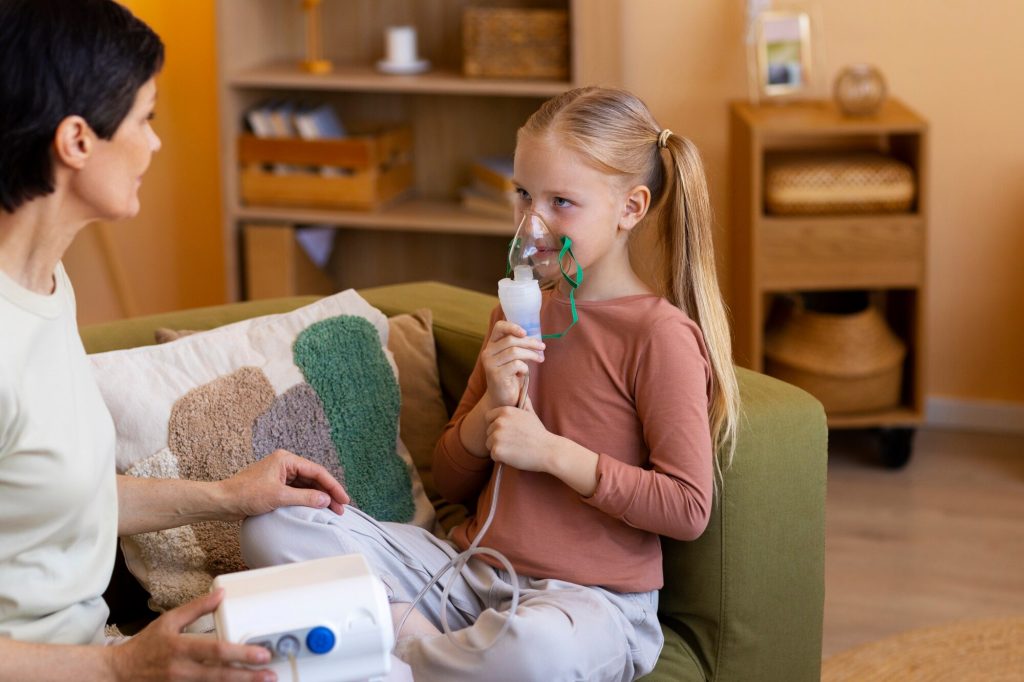
- Asthma emergencies: Recognising asthma symptoms (wheezing, shortness of breath, chest tightness), using a spacer and reliever inhaler, and knowing when to call 000. Asthma is prevalent in Australian children. Explore our guide on asthma management for more tips.
- Anaphylaxis management: Identifying severe allergic reaction symptoms (swelling, difficulty breathing, hives, collapse), using an adrenaline auto-injector (EpiPen), and positioning the casualty. Anaphylaxis can be life-threatening. Quick action saves lives. Read more about anaphylaxis first aid.
- Bleeding control and wound care: Applying direct pressure, using bandages, managing severe bleeding, and preventing infection.
- Burns and scalds: Cooling burns under running water for 20 minutes, covering with non-stick dressings, and knowing when to call for help.
- Fractures, sprains, and soft tissue injuries: Immobilising injured limbs, applying ice, and recognising when medical assessment is needed.
- Seizures and febrile convulsions: Managing seizures safely (protecting the child’s head, timing the seizure, recovery position), and understanding febrile convulsions in young children (caused by fever).
- Incident reporting and documentation: Recording what happened, what first aid was provided, and communicating with parents/guardians and emergency services.
Childcare-specific emphasis: HLTAID012 includes communication with parents and caregivers. You’ll learn how to explain the incident calmly, document details accurately, and escalate concerns appropriately. Centres must report serious incidents to regulatory authorities. Accurate documentation protects the child, your centre, and you.
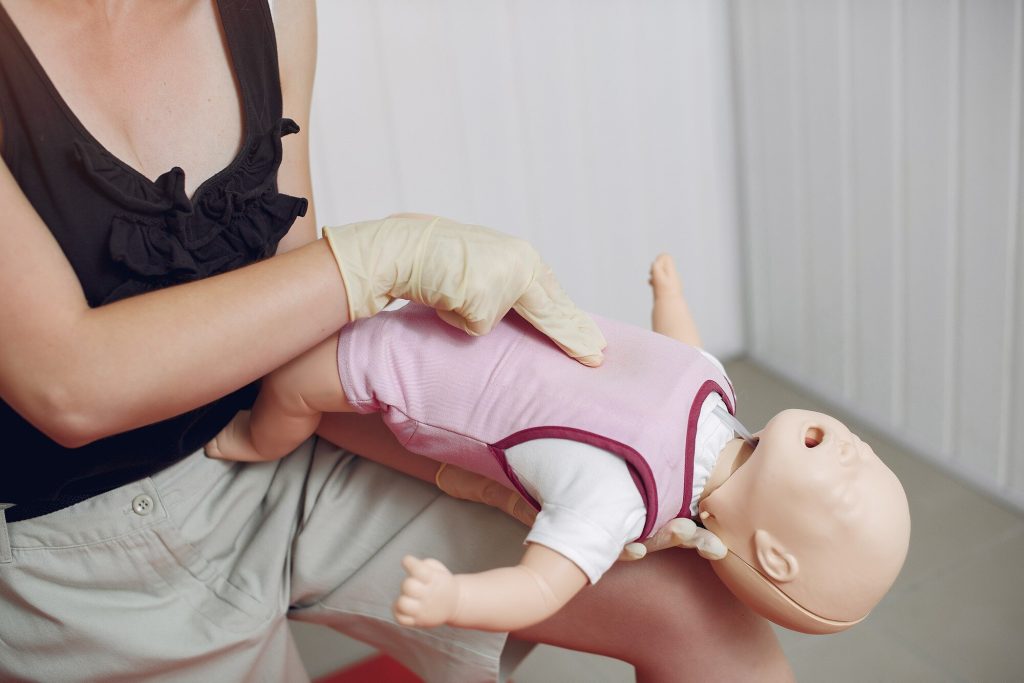
What’s different about infant CPR? Infant CPR (for babies under 1 year) uses two fingers or two thumbs on the lower half of the breastbone. Compressions are about one-third the depth of the chest. Breaths are gentler than for adults. The infant’s head is kept in a neutral position (not tilted back like an adult). You’ll practise this on infant manikins during the course.
| Emergency | What You Practise in Class | Why It Matters in Childcare |
| Choking | Back blows, chest thrusts (infants), abdominal thrusts (children) | Toddlers explore with their mouths; choking is common during meal times and play |
| Anaphylaxis | Recognising symptoms, using EpiPen trainer, calling 000 | Food allergies are prevalent; centres manage nut-free policies and emergency plans |
| Asthma attack | Using spacer and reliever, recognising worsening symptoms | Asthma affects many Australian children; educators must respond quickly |
| Cardiac arrest | CPR on infant, child, adult manikins; AED use | Rare but critical; immediate CPR improves survival in cardiac emergencies |
| Febrile convulsion | Protecting the child, timing seizure, recovery position | Common in children under 5 with high fever; looks frightening but usually not dangerous |
| Bleeding injury | Applying pressure, using gloves, preventing infection | Playground falls, cuts from equipment, nosebleeds happen regularly |
| Burns/scalds | Cooling under running water, covering wound, knowing when to call 000 | Hot drinks, cooking activities, and sun exposure create burn risks |
| Fractures/sprains | Immobilising limb, applying ice, reassuring child | Active play leads to falls, twisted ankles, and suspected fractures |
HLTAID012 focuses on first aid for infants and children in education and care settings, including CPR/AED use plus emergency asthma and anaphylaxis response. The skills you learn are practical, scenario-based, and directly applicable to childcare environments.
Certification, Validity and Renewals Under ACECQA
Successful students receive a nationally recognised Statement of Attainment (digital). Your certificate lists the units of competency you’ve completed: typically HLTAID012 (Provide First Aid in an education and care setting), HLTAID011 (Provide First Aid), HLTAID010 (Provide basic emergency life support), and HLTAID009 (Provide cardiopulmonary resuscitation), depending on your training package and RTO delivery.
What is a Statement of Attainment? A Statement of Attainment is the official document issued for nationally recognised training that lists the units of competency you’ve successfully completed. It’s issued by a Registered Training Organisation (RTO) under the Australian Qualifications Framework. Your Statement of Attainment proves you hold a current, nationally recognised qualification. Employers, regulatory bodies, and auditors accept it as evidence of your training.
Validity and currency: Under ACECQA guidance, first aid qualifications are generally renewed every three years, but CPR must be updated every 12 months to be considered current. From 1 October 2023, qualifications are considered current if attained within the previous three years, except CPR, which must be within one year (ACECQA). Centres must ensure at least one staff member with current first aid, anaphylaxis management, and emergency asthma training is present at all times.
What does ‘current’ mean? Current means your qualification was completed within the recommended timeframe (3 years for first aid units; 1 year for CPR). If your CPR is older than 12 months, you need to update it. If your full HLTAID012 is older than 3 years, you need to renew the entire qualification. Some educators complete HLTAID009 (CPR only) annually and then renew HLTAID012 every 3 years.
USI verification requirement: Your Statement of Attainment cannot be issued without a verified USI. A USI (Unique Student Identifier) is required for nationally recognised training in Australia so your qualification can be recorded and issued correctly. You can create or retrieve your USI at usi.gov.au. Bring your USI to class. If you don’t have one, you can create it during the course, but it may delay certificate issuance. Weekend sessions processed on Monday will issue certificates once USI is confirmed.
| Year | Action Required | Why |
| Year 0 | Complete HLTAID012 (includes CPR) | Initial qualification; valid for 3 years |
| Year 1 | Update CPR (HLTAID009 or equivalent) | CPR must be renewed annually |
| Year 2 | Update CPR (HLTAID009 or equivalent) | CPR must be renewed annually |
| Year 3 | Renew full HLTAID012 | Full first aid qualification expires; re-certification required |
Many centres use reminder systems to track staff renewal dates. If you manage a team, set calendar alerts 4 to 6 weeks before expiry to allow time for booking and completion. CPR First Aid offers annual CPR renewal courses in Brisbane City. Book early, especially in peak periods (start of school year, audit season).
Entry Requirements, Assessment and What to Expect on the Day
Most students find HLTAID012 straightforward when they complete the pre-course theory and arrive prepared for hands-on practice. To complete HLTAID012, you’ll need a verified USI and you must be able to perform hands-on CPR practice on a manikin as part of the assessment.
Minimum age and enrolment requirements: Participants are commonly required to be 14 years or older. Some RTOs require parental consent for learners under 18. CPR First Aid will confirm age and consent requirements at booking. Check the terms and conditions during enrolment.
USI requirement: You must provide a valid USI to receive your Statement of Attainment. A USI (Unique Student Identifier) is required for nationally recognised training in Australia so your qualification can be recorded and issued correctly. If you don’t have a USI, create one at usi.gov.au before class. Bring your USI number or confirmation email. Missing or incorrect USI details delay certificate issuance.
English language and comprehension: You must be able to read and understand the course materials (available in English). Theory assessments include written questions. Practical assessments require you to follow verbal instructions. If English is not your first language and you have concerns, contact CPR First Aid before booking to discuss support options.
Physical requirements: You must be able to perform CPR on a manikin on the floor for at least 2 minutes. This involves kneeling or squatting beside the manikin, placing your hands on the chest, and performing continuous compressions at the correct depth and rate. CPR is physically demanding. You’ll also need to move around the room during scenario practice, assist with positioning casualties, and demonstrate choking techniques. If you have a physical condition, injury, or disability that may affect your ability to perform these tasks, contact CPR First Aid before booking to discuss reasonable adjustments.
Assessment types: HLTAID012 includes both theory and practical assessment.
- Theory assessment: Completed online before or during the course. Multiple-choice questions, short answers, or scenario-based questions. Topics include DRSABCD, CPR principles, infection control, anaphylaxis, asthma, legal considerations, and incident reporting. You can review materials and attempt assessments multiple times if needed.
- Practical assessment: Completed during the face-to-face session. You’ll demonstrate CPR on infant, child, and adult manikins, use an AED, manage anaphylaxis with an auto-injector, assist someone with asthma, respond to choking, and work through childcare scenarios (febrile convulsions, bleeding, burns). The trainer will observe your technique and provide feedback. If you don’t meet competency on the first attempt, you can re-attempt the skill.
| Skill | How It’s Assessed | What ‘Competent’ Looks Like |
| CPR (infant/child/adult) | Practical demonstration on manikins | Correct hand position, depth, rate (100–120 compressions/min), effective breaths |
| AED use | Practical demonstration with AED trainer | Turn on AED, attach pads correctly, follow voice prompts, safely deliver shock |
| Anaphylaxis management | Scenario-based assessment with trainer | Recognise symptoms, use auto-injector correctly, call 000, monitor casualty |
| Asthma management | Scenario-based assessment with trainer | Assist with spacer and reliever, recognise worsening symptoms, call 000 if needed |
| Choking response | Practical demonstration on manikin | Correct technique (back blows, chest/abdominal thrusts), safe positioning |
| Bleeding control | Scenario-based assessment with trainer | Apply direct pressure, use gloves, elevate limb if appropriate, call for help |
What happens if you don’t pass? If you don’t demonstrate competency during the practical session, the trainer will provide additional coaching and allow you to re-attempt the skill. Most students pass on the first or second attempt. If you cannot demonstrate competency on the day, you may need to attend another session or book a reassessment (terms vary by RTO).
Accessibility and reasonable adjustments: CPR First Aid is committed to inclusive training. If you have a disability, medical condition, or learning need that may require adjustments (e.g., extra time, modified assessment format, ergonomic equipment), contact CPR First Aid before booking. Adjustments are assessed on a case-by-case basis. Adjustments cannot change the core competency requirements (e.g., you must still be able to demonstrate CPR), but the trainer can adapt the delivery to support your learning style.
For additional preparation, read our guide on how to perform CPR. The course itself teaches CPR, so prior knowledge is optional, but pre-reading can boost confidence.
What to Bring (Full Checklist) and What We Provide
You don’t need to bring any first aid equipment. CPR First Aid supplies the training gear. For HLTAID012 in Brisbane City/CBD, bring photo ID, your USI, comfortable clothing for floor-based CPR practice, and closed-toe shoes. CPR First Aid provides all training equipment.

Essential items (bring these):
- Photo ID: Driver’s licence, passport, or government-issued photo card. Required for identity verification and enrolment compliance.
- Your USI: Unique Student Identifier number or confirmation email. Without a USI, your certificate cannot be issued. Create or retrieve your USI at usi.gov.au before class.
- Booking confirmation: Print or save the confirmation email on your phone. It includes your session details, venue address, and start time.
- Comfortable clothing: Wear clothing that allows you to kneel, squat, and move freely. You’ll be on the floor performing CPR. Avoid restrictive jeans, tight skirts, or formal business wear. Tracksuit pants, leggings, or casual trousers work well.
- Closed-toe shoes: Closed-toe shoes are required for safe movement during practical scenarios (avoid thongs, slides, or open sandals). Sneakers or flat closed shoes are ideal.
- Water bottle: Stay hydrated during the session. The practical component is physically active. Water fountains may not be available in all training rooms.
Optional items:
- Notebook and pen (if you prefer taking handwritten notes during the session)
- Knee support or cushion (if you have knee concerns; CPR mats are provided, but some learners prefer extra padding)
- Any personal medical aids you regularly use (inhalers, glucose tablets, etc.)
Don’t bring (items to avoid):
- Open-toe shoes, thongs, or slides (not safe for practical scenarios)
- Restrictive formal clothing (you’ll be kneeling and moving on the floor)
- Valuables or large bags (training rooms have limited secure storage)
| Bring (Your Responsibility) | We Provide (CPR First Aid Supplies) |
| Photo ID | Infant, child, and adult CPR manikins |
| USI number | AED trainers |
| Booking confirmation | Barrier devices (face shields for CPR) |
| Comfortable clothing | Anaphylaxis training devices (EpiPen trainers) |
| Closed-toe shoes | Asthma management equipment (spacers, reliever trainers) |
| Water bottle | First aid supplies (bandages, dressings, gloves) |
| Optional: notebook/pen | Course manuals and handouts |
Arrival guidance: Arrive 10 to 15 minutes early for weekend sessions. Use this buffer time to find parking (CBD parking can be tight on weekends, but usually easier than weekdays), locate the building entrance, take the lift to the correct floor, and check in at reception. The trainer will start promptly, so late arrivals may miss critical safety briefings.
For parents and nannies seeking broader skills, explore our guide to babies and children first aid courses in Brisbane.
Brisbane City/CBD Venue, Transport, Parking and Accessibility
Your Brisbane City/CBD training venue details will be confirmed in your booking email. Here’s how to plan your arrival. For Brisbane City/CBD weekend HLTAID012 classes, arrive 10 to 15 minutes early to allow for CBD parking and building access.
Venue location: CPR First Aid’s Brisbane City/CBD training room is centrally located within walking distance of major public transport hubs. The exact address is provided in your booking confirmation email. Check the email 2 to 3 days before your class to confirm the venue. Some weekend sessions may use alternative CBD venues depending on demand and availability.
Weekend-specific access: Weekend building access can differ from weekdays. Some office buildings lock main entrances on weekends and use side or rear access points. Your confirmation email will include specific weekend entry instructions (e.g., “Use Edward Street entrance; main lobby is locked on Saturdays”). Security or reception staff may be present to direct you. If you can’t locate the entry point, call the CPR First Aid contact number provided in your confirmation.
Parking options: Brisbane CBD parking is available at commercial car parks within walking distance of the training venue. Weekend rates are typically lower than weekday rates. Popular CBD car parks include Secure Parking locations, Wilson Parking, and council-operated facilities. Check your confirmation email for recommended nearby car parks. Allow extra time on event weekends (Broncos games, festivals, markets), as parking fills quickly. Alternatively, consider public transport for stress-free arrival.
Public transport: Brisbane City is well-served by train, bus, and ferry. Central Station, Roma Street Station, and Queen Street Bus Station are major hubs within walking distance of most CBD venues. The City Hopper ferry (free) runs along the Brisbane River and stops at several CBD wharves. Weekend train and bus timetables differ from weekdays, so check Translink journey planner (translink.com.au) for your specific route and departure times.
Accessibility: CPR First Aid training rooms are located in buildings with lift access. Accessible toilets are typically available on-site. If you require specific accessibility accommodations (wheelchair access, hearing loop, accessible parking information), contact CPR First Aid at least 3 business days before your session. The team will confirm available facilities and provide guidance.
What to expect on arrival: Enter the building using the instructions in your confirmation email. Take the lift to the specified floor. Look for CPR First Aid signage or reception. Check in with the trainer or admin staff. You’ll be asked to show photo ID and confirm your name and USI. The trainer will direct you to the training room. Seating is first-come, first-served, so early arrival gives you more choice. The room will be set up with CPR manikins, AED trainers, and scenario stations.
Looking for other courses or venues? Browse our full list of Brisbane courses.
Why Book with CPR First Aid (RTO 21903) for Brisbane City Weekend HLTAID012
CPR First Aid is a nationally recognised training provider (RTO 21903) built for busy educators who need weekend options and clear compliance outcomes. CPR First Aid (RTO 21903) offers Brisbane City/CBD weekend HLTAID012 training designed to help educators meet compliance requirements without sacrificing their weekday roster.
RTO credibility and national recognition: CPR First Aid is registered with the Australian Skills Quality Authority (ASQA) as RTO 21903. Your qualification is issued under Australia’s VET system and recognised in all states and territories. Employers, regulatory bodies (ACECQA), and auditors accept your Statement of Attainment as proof of current, nationally recognised training. The training aligns with ARC guidelines and meets National Regulations for education and care services.
Weekend scheduling and Brisbane City/CBD convenience: Weekend classes remove the need for weekday leave or roster disruption. Saturday and Sunday sessions are scheduled regularly throughout the year. You can book online and see live availability. The Brisbane City/CBD venue is accessible by train, bus, ferry, and car. Weekend parking is easier than weekdays, and nearby cafes and food outlets are open.
Fast digital certificate process: CPR First Aid issues digital Statements of Attainment via email. Most weekend learners who complete practical assessments and provide a verified USI receive their certificate the same day or early the following week. Weekend sessions may be processed on the next business day (Monday) depending on admin cut-offs. No waiting for printed certificates in the mail. Download, print, or forward your digital certificate to your employer immediately.
Support for learners: CPR First Aid provides clear pre-course instructions, realistic scenario-based training, and responsive support. Before class, you’ll receive an email with venue details, what to bring, and how to complete online theory. During class, trainers explain each skill clearly, demonstrate techniques, and provide individual feedback. You can ask questions, repeat skills, and take breaks as needed. After class, the admin team is available for certificate queries, reissues, or renewal bookings.
Workplace and group training pathways: Need to train multiple staff? CPR First Aid offers group bookings for childcare centres, OSHC programs, and family day care networks. Onsite training at your centre is available for groups of 5 or more. Contact CPR First Aid for a workplace quote. Group training can be scheduled on weekends, after hours, or during pupil-free days to minimise disruption.
The first aid training market is growing, reflecting increasing demand for workplace compliance and safety skills. The global first aid training market is projected to grow from USD 4,812.90 million in 2023 to USD 7,694.95 million by 2032 (Research and Markets). Employers and educators are prioritising first aid preparedness. Choosing a trusted RTO ensures your training is current, compliant, and recognised.
| CPR First Aid | Typical Provider |
| Weekend sessions clearly listed with live availability | Weekend sessions mentioned but availability unclear |
| Brisbane City/CBD venue with detailed access instructions | Generic CBD location without weekend entry guidance |
| Digital certificate issued after completion + USI verification (timing clearly stated) | “Same-day certificate” claimed but conditions not explained |
| Pre-course support email with checklist and arrival tips | Booking confirmation only; limited pre-course communication |
| RTO 21903 clearly displayed; ASQA-registered | RTO number may be hard to find or not prominently shown |
Learn more about why first aid skills matter in the workplace in our guide on the importance of first aid training.
How to Book HLTAID012 Brisbane City Weekend Class (Step-by-Step)
Booking takes 2 to 3 minutes. Here’s the exact process. To book HLTAID012 in Brisbane City/CBD with CPR First Aid, choose your weekend date, complete the online theory before class, then attend the practical session for hands-on assessment.
Step 1: Choose Brisbane City/CBD location and select Saturday or Sunday date
Visit the CPR First Aid website and navigate to the HLTAID012 course page. Use the booking widget to select “Brisbane City” or “Brisbane CBD” as your location. Filter by weekend dates (Saturday or Sunday). Available sessions will display with start times and available spots. Choose a date that suits your schedule. Weekend sessions fill quickly, so book early if you have a specific weekend in mind.
Step 2: Pay and receive confirmation email with online theory access
Complete the enrolment form with your name, email, phone, and USI (or a note that you’ll create one before class). Select any add-ons or additional participants if booking for a group. Pay via credit card or other accepted methods. You’ll receive a confirmation email immediately. The email includes your booking reference, session details, venue address, start time, and a link to access the online pre-course theory modules.
Step 3: Complete online pre-course theory by the stated cut-off
Log in to the online learning portal using the link in your confirmation email. Complete the theory modules at your own pace (5 to 10 hours typically). Topics include DRSABCD, CPR, infection control, anaphylaxis, asthma, bleeding, burns, legal considerations, and incident reporting. Finish the theory at least 24 hours before your class. Some RTOs require theory completion before you can attend the practical session. Check your confirmation email for specific deadlines.
Step 4: Attend practical session and bring checklist items
Arrive 10 to 15 minutes early. Bring photo ID, your USI, booking confirmation, water bottle, and wear comfortable clothing and closed-toe shoes. The trainer will run through a safety briefing, check your ID and USI, and begin practical training. You’ll practise CPR on manikins, use an AED, manage anaphylaxis and asthma scenarios, respond to choking, and demonstrate other skills. The session lasts 3.5 hours. The trainer will assess your competency and provide feedback.
Step 5: Receive digital certificate after completion and USI verification
Once you successfully complete all practical assessments and your USI is verified, CPR First Aid will issue your digital Statement of Attainment. Weekend sessions are typically processed the same day or early the following week (Monday). You’ll receive an email with a PDF certificate attachment. Download and save the certificate. Forward it to your employer or centre director. Print a copy for your records. If you don’t receive your certificate within 2 business days, check your spam folder or contact CPR First Aid admin support.
| Before Booking Checklist |
| ☐ I have checked weekend availability and selected a suitable date |
| ☐ I have my USI or know how to create one before class |
| ☐ I can complete online theory 24+ hours before the practical session |
| ☐ I have photo ID ready for enrolment verification |
| ☐ I have comfortable clothing and closed-toe shoes for practical training |
| ☐ I have planned my travel to Brisbane City/CBD (parking or public transport) |
Weighing up online theory vs face-to-face training? Read our guide on online vs face-to-face first aid delivery to understand the pros and cons of each format.
Testimonials and Mini Case Studies from Weekend Learners
Weekend learners choose CPR First Aid because it fits real rosters. For many educators, weekend HLTAID012 training is the simplest way to stay ACECQA-ready without disrupting weekday rosters.
Testimonial 1: Sarah, OSHC Coordinator, Brisbane City
“I booked Saturday morning HLTAID012 because I couldn’t take time off during the week. The venue was easy to find, the trainer was patient, and I had my certificate by Monday morning. Exactly what I needed before my centre audit.”
Testimonial 2: Michael, Early Childhood Teacher, Brisbane CBD
“CPR First Aid’s weekend class saved me. I completed the online theory Thursday night, attended the practical Saturday, and received my digital certificate the same afternoon. The trainer explained infant CPR clearly, and I felt confident practising on the manikins.”
Testimonial 3: Lisa, Family Day Care Educator, South Brisbane
“The checklist email before class was really helpful. I knew exactly what to bring and what to expect. The practical scenarios felt realistic, especially the anaphylaxis and choking practice. I’m glad I chose CPR First Aid.”
Case Study 1: OSHC Educator Needing Compliance Before Monday Start
Emma was offered an OSHC position starting Monday. She didn’t have current first aid. She booked CPR First Aid’s Saturday Brisbane City HLTAID012 class on Wednesday. She completed online theory Thursday evening. She attended the practical session Saturday 9am to 12pm. Her certificate was issued Saturday afternoon. She emailed it to her new employer Sunday. She started work Monday with full compliance. Weekend training made the urgent timeline possible.
Case Study 2: Centre Director Booking Multiple Staff Without Roster Disruption
Karen manages a Brisbane CBD childcare centre with 12 staff. Three educators needed first aid renewals. Taking them out during weekdays would disrupt ratios. Karen contacted CPR First Aid for a group booking. CPR First Aid scheduled a dedicated Sunday morning session for the three educators. All three completed HLTAID012 Sunday. Certificates were issued Monday. The centre maintained full ratios all week. Karen plans to book annual CPR refreshers the same way.
Refresher support: CPR First Aid offers renewal reminders for annual CPR updates. If you book HLTAID012 today, you’ll receive an email prompt 11 months later reminding you to book HLTAID009 (CPR renewal). Centres can also request group renewal reminders for all staff. This prevents last-minute compliance gaps and audit issues.
For ongoing childcare first aid learning and updates, bookmark CPR First Aid’s blog and resources section.
Frequently Asked Questions
Do you run HLTAID012 weekend classes in Brisbane City/CBD?
Yes. CPR First Aid offers weekend HLTAID012 sessions in Brisbane City/CBD, subject to live availability in the booking calendar. Select Brisbane City and then choose a Saturday or Sunday session to lock in your spot. Weekend classes are scheduled regularly throughout the year. Availability varies by demand, so book early during peak periods (start of school year, placement season, audit periods). If your preferred date is full, check alternative weekends or contact CPR First Aid to request additional sessions.
How much does HLTAID012 cost in Brisbane City?
HLTAID012 pricing varies by provider and date, so the most accurate price is the live price shown at the time you book. CPR First Aid’s Brisbane City/CBD weekend rates are displayed in the booking widget. Check live availability for current pricing. Weekend sessions may differ slightly from weekday rates. Always confirm what’s included in the price: online pre-course theory, face-to-face practical assessment, training equipment, and digital certificate issuance. Competitor pricing in Brisbane City ranges from $95 to $129 based on published rates (see price comparison table earlier in this article). Prices may change, so verify before booking. Group bookings for 5+ participants may qualify for discounted rates.
How long does the HLTAID012 course take?
HLTAID012 is completed via online pre-course theory plus a face-to-face practical session, so the total time depends on the delivery option you choose. For weekend planning, finish your online theory a few days before class and arrive 10 to 15 minutes early for check-in. Online theory takes most students 5 to 10 hours (self-paced). The face-to-face practical session typically runs 3.5 hours, depending on class size and delivery model. Total commitment is approximately 7 to 14 hours (theory + practical). If your Saturday class starts at 9:00am, expect to finish by 12:00pm or 1:00pm. Plan your weekend accordingly, especially if you have other commitments.
What do I need to bring to HLTAID012?
Bring photo ID, your USI, comfortable clothing for floor-based CPR practice, and closed-toe shoes. CPR First Aid supplies all training equipment. A water bottle and your booking confirmation email are also recommended for a smooth check-in. Don’t bring valuables or large bags (training rooms have limited secure storage). Wear clothing that allows you to kneel and move freely (tracksuit pants, leggings, or casual trousers work well). Avoid restrictive jeans, tight skirts, thongs, or open sandals. If you have knee concerns, consider bringing a personal knee support or cushion (CPR mats are provided).
Is HLTAID012 ACECQA compliant?
HLTAID012 (Provide First Aid in an education and care setting) is widely used as an approved first aid qualification for education and care services, and CPR must be updated annually while first aid is generally renewed every three years under ACECQA guidance (ACECQA). Centre-based services must ensure at least one staff member with current approved first aid qualifications is in attendance at all times children are being educated and cared for. The Education Standards Board also clarifies that staff should hold first aid qualifications along with anaphylaxis management and emergency asthma training. Keep your certificate accessible for audits and provide a copy to your centre director.
When will I receive my certificate?
Your digital certificate is issued after you successfully complete assessment and your USI is verified. Timing may vary for weekend or late sessions depending on processing cut-offs. Most weekend learners receive certificates the same day (Saturday or Sunday afternoon) or early the following week (Monday or Tuesday). Weekend sessions completed late in the day may be processed on the next business day. Certificate issuance is delayed if your USI is missing, incorrect, or unverified, or if you do not complete all required practical assessments. Check your spam folder if you don’t see the email within 2 business days. Contact CPR First Aid admin support if the certificate does not arrive.
Do I need to renew HLTAID012 every year?
You generally renew the full HLTAID012 qualification every three years, but you should update CPR every 12 months to remain current under ACECQA guidance (ACECQA). Many educators book a quick CPR refresher (HLTAID009) annually and return to HLTAID012 in year three. CPR-only courses are shorter (typically 2 to 3 hours face-to-face) and less expensive than full first aid renewal. CPR First Aid offers annual CPR refreshers in Brisbane City. Set a calendar reminder 11 months after your HLTAID012 completion to book your CPR update. Keep track of both renewal dates to avoid compliance gaps.
Conclusion
Weekend HLTAID012 in Brisbane City/CBD removes uncertainty. You now know the exact time commitment, what to bring, how much it costs, and how to book. CPR First Aid (RTO 21903) offers weekend training designed for educators who need ACECQA-compliant certification without weekday disruption. The process is simple: choose your Saturday or Sunday date, complete online theory before class, arrive prepared with photo ID and USI, demonstrate practical skills, and receive your digital certificate. Your qualification is nationally recognised, accepted by ACECQA, and valid for three years (with annual CPR updates).
Book your Brisbane City/CBD weekend HLTAID012 session now. Select your date in the booking widget. Complete your theory online. Arrive ready for hands-on practice. Leave with confidence, competence, and compliance.
Ready to book? Choose your Brisbane City/CBD weekend date and book HLTAID012 with CPR First Aid (RTO 21903) now. Then complete your online theory and arrive ready for hands-on assessment.
Need training for your childcare centre team? Request a group booking quote for weekend or onsite delivery. Contact CPR First Aid to discuss your centre’s training needs and schedule a session that suits your roster.
References
- First aid qualifications & training – ACECQA – Cited for ACECQA currency rules (3 years for first aid, 1 year for CPR) and regulatory requirements for education and care services.
- First-aid qualifications – Education Standards Board SA – Cited for education and care expectation that staff hold first aid, anaphylaxis, and emergency asthma management training.
- Why First Aid Training is a Workplace Must-Have – Achieve Training – Cited for Safe Work Australia 2023 workplace injury statistics and CPR survival data (10% reduction per minute without CPR).
- Teaching Methodologies for First Aid in Physical Education – NCBI – Cited for active methodology effectiveness data (knowledge improvement 10.2% to 30.5%, practical skills improvement 18.6% to 42.3%).
- First Aid Training Market Report 2025 – Research and Markets – Cited for global first aid training market growth trends (USD 4,812.90 million in 2023 to USD 7,694.95 million by 2032).