

You should ice an injury for 15 to 20 minutes at a time, every 2 to 3 hours during the first 24–48 hours after the injury. Yes, icing helps reduce swelling by constricting blood vessels and slowing inflammation. Always use a barrier (like a cloth) between the ice and your skin to prevent ice burns.
Quick Answer: Key Takeaways
- 15–20 minutes per session is the safest and most effective icing duration
- Repeat every 2–3 hours in the first 1–2 days after injury
- Ice reduces swelling by limiting blood flow and inflammation
- Never apply ice directly to skin—use a cloth or towel
- Stop if skin becomes numb, pale, or painful
“If you’re managing a fresh injury, icing early and correctly can significantly reduce swelling and speed up recovery.”
What Does Icing an Injury Actually Do?
Icing is a form of cold therapy (cryotherapy) used to manage acute injuries.

Definition
Icing an injury: Applying cold to injured tissue to reduce swelling, pain, and inflammation.
When you apply ice:
- Blood vessels constrict (vasoconstriction)
- Blood flow to the area decreases
- Swelling and inflammation are reduced
- Pain signals slow down
According to guidance from Cleveland Clinic and Johns Hopkins Medicine, cold therapy is most effective immediately after an injury, especially within the first 48 hours.
“Ice works best in the early phase of injury when swelling and inflammation are still developing.”
How Long Should You Ice an Injury?
Standard Guideline
- 15 to 20 minutes per session
- Every 2 to 3 hours
- For the first 24 to 48 hours
This timing strikes the right balance:
- Enough to reduce swelling
- Not long enough to damage skin or tissue
“Longer is not better. Icing for more than 20 minutes can irritate nerves and skin.”
Why Timing Matters
If you ice too long:
- You risk ice burns or frostbite-like damage
- Blood vessels may dilate again (rebound effect), increasing swelling
If you ice too little:
- You won’t effectively reduce inflammation
Does Ice Reduce Swelling?
Short Answer
Yes, ice reduces swelling by slowing blood flow and limiting fluid buildup in injured tissues.
How Ice Reduces Swelling
When tissue is injured:
- Blood vessels expand
- Fluid leaks into surrounding tissue
- Swelling (inflammation) occurs
Ice interrupts this process by:
- Constricting blood vessels
- Reducing fluid leakage
- Slowing cellular activity
“The key function of ice is to control inflammation, not eliminate it completely.”
Important Clarification
Ice does not “heal” the injury directly. It helps manage symptoms so your body can recover more efficiently.
When Should You Ice an Injury?
Best Time to Ice
- Immediately after injury
- Within the first 24–48 hours
- When swelling or pain is present
Common Injuries That Benefit from Ice
- Sprains and strains
- Muscle tears
- Bruises
- Minor fractures (before medical care)
- Overuse injuries
“In most acute injuries, early icing can reduce swelling and prevent further tissue damage.”
When NOT to Use Ice
Ice is not always appropriate.
Avoid icing:
- Chronic stiffness (use heat instead)
- Poor circulation conditions
- Open wounds (without medical advice)
- Nerve sensitivity issues
According to clinical guidance referenced in your sources, heat is better for chronic muscle tightness, while ice is best for acute injuries.

Ice vs Heat: What’s the Difference?
| Situation | Use Ice | Use Heat |
| Swelling present | ✅ Yes | ❌ No |
| New injury (0–48 hrs) | ✅ Yes | ❌ No |
| Muscle stiffness (no swelling) | ❌ No | ✅ Yes |
| Chronic pain | ❌ Usually no | ✅ Often yes |
| Inflammation control | ✅ Yes | ❌ No |
“The key difference between ice and heat is timing. Ice for new injuries, heat for ongoing stiffness.”
Step-by-Step: How to Ice an Injury Properly
1. Prepare the Ice Pack
- Use ice cubes, frozen vegetables, or gel packs
- Wrap in a towel or cloth
2. Apply to Injured Area
- Place gently on the affected area
- Do not apply directly to bare skin
3. Time It Correctly
- Leave on for 15–20 minutes only
4. Remove and Rest
- Allow skin to return to normal temperature
5. Repeat
- Every 2–3 hours during the first 1–2 days
Pro Tip
“If the skin becomes numb, white, or painful, remove the ice immediately.”
The R.I.C.E Method Explained
Icing is part of a broader first aid approach known as R.I.C.E:
- Rest – Avoid further injury
- Ice – Reduce swelling
- Compression – Limit fluid buildup
- Elevation – Improve drainage
This method is commonly taught in first aid training programs, including those covered in a Provide First Aid course designed for real-world emergencies.
Common Mistakes When Icing an Injury
1. Applying Ice Directly to Skin
This can cause ice burns or skin damage.
2. Icing for Too Long
More than 20 minutes can worsen tissue irritation.
3. Not Icing Early Enough
Delays reduce effectiveness in controlling swelling.
4. Using Ice for Chronic Pain
Heat is often more appropriate for long-term stiffness.
5. Ignoring Severe Symptoms
“Call 000 immediately if an injury involves severe pain, deformity, or inability to move.”
When to Seek Medical Help
Icing is only first aid, not a replacement for medical care.
Get help if:
- Pain is severe or worsening
- Swelling does not improve after 48 hours
- You cannot move or bear weight
- There is visible deformity
- Numbness or tingling persists
How First Aid Training Helps You Respond Correctly
Knowing when and how to ice an injury is part of basic first aid knowledge.
A structured first aid training course teaches:
- Injury assessment
- Swelling and inflammation management
- When to escalate to emergency services
- Safe treatment techniques
You can also learn the DRSABCD action plan to prioritise safety and response in more serious situations.
“The fastest way to respond confidently to injuries is to learn practical first aid skills through accredited training.”
Practical Scenario: Sprained Ankle
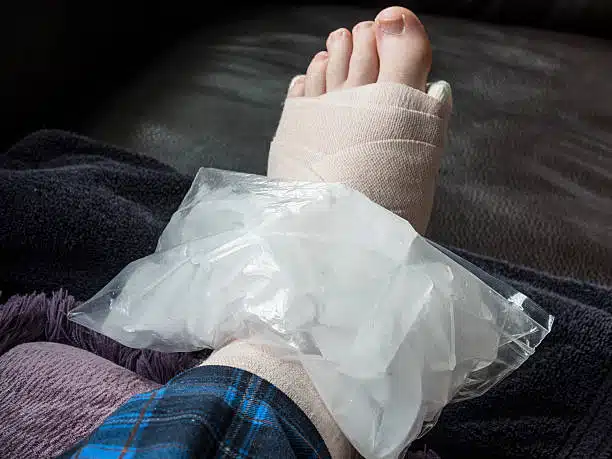
What to Do
- Stop activity immediately
- Apply ice for 15–20 minutes
- Compress with a bandage
- Elevate above heart level
- Repeat icing every few hours
“Early icing in a sprain can significantly reduce swelling and speed up recovery time.”
FAQs
How Long Should You Ice an Injury?
You should ice an injury for 15 to 20 minutes at a time.Repeat every 2 to 3 hours during the first 24–48 hours for best results.
Does Ice Reduce Swelling?
Yes, ice reduces swelling by constricting blood vessels and limiting fluid buildup. It slows the inflammatory response in injured tissue.
Can You Ice an Injury Too Long?
Yes, icing for too long can damage skin and nerves. Always limit sessions to 20 minutes and use a barrier.
How Often Should You Ice an Injury?
Ice every 2 to 3 hours in the early stages of injury. Consistency is more important than long sessions.
Should You Use Ice or Heat?
Use ice for new injuries and swelling, and heat for muscle stiffness. The timing and condition determine the best approach.
What Happens if You Don’t Ice an Injury?
Swelling may increase, leading to more pain and slower recovery. Early icing helps control inflammation.
Is Icing Part of First Aid?
Yes, icing is a key component of the R.I.C.E method in first aid. It helps manage acute injuries effectively before medical care.
Conclusion: Use Ice Correctly for Faster Recovery
Icing is one of the simplest and most effective first aid techniques, but only when done correctly. The right duration, frequency, and method can significantly reduce swelling and pain after an injury.
“The key to effective icing is short, repeated sessions—not prolonged exposure.”
If you want to go beyond basic knowledge and confidently handle injuries in real situations, structured training makes a real difference. CPR First Aid (RTO 21903) offers nationally recognised courses that teach practical, real-world first aid skills, including how to manage injuries safely and effectively.