
A CPR course (HLTAID009) in Australia includes DRSABCD training, hands-on CPR practice for adults and infants, AED operation, and both practical and theory assessment. When delivered by a Registered Training Organisation (RTO), you receive a nationally recognised Statement of Attainment. This guide explains what happens in class, how you’re assessed, and what “nationally recognised” actually means for employers and regulators. We’ll clarify the AED practice you can expect, the evidence you must demonstrate to pass, and how certificate validity differs from workplace currency requirements.
What’s Included in an HLTAID009 CPR Course
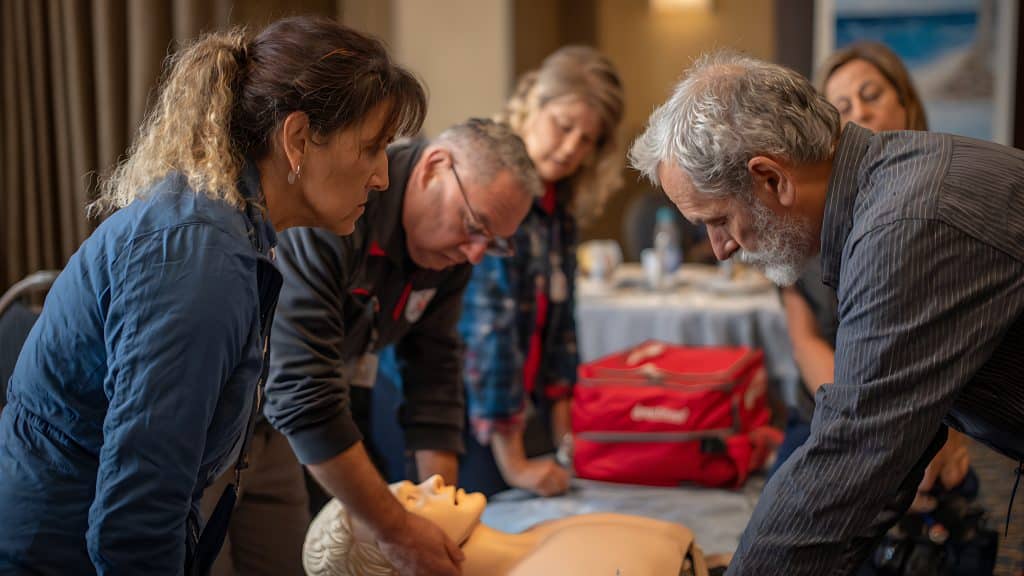
An HLTAID009 CPR course in Australia includes DRSABCD, hands-on CPR for adults and infants/children, AED use, and a practical plus theory assessment. When delivered by an RTO, the outcome is a nationally recognised Statement of Attainment. You’ll practise on manikins, follow the emergency response sequence, and demonstrate you can call 000, perform uninterrupted compressions, and operate an AED safely. The training aligns with Australian Resuscitation Council (ARC) and ANZCOR guidelines, which means the techniques you learn are standardised across the country.
More than 25,000 Australians have a cardiac arrest outside of hospital each year. Most courses last three to four hours and combine face-to-face practical training with a short theory component that may be completed online beforehand. You’ll kneel on the floor to perform CPR, practise on adult and infant manikins, and work through simulated scenarios where you must demonstrate clear communication, infection control awareness, and the correct sequence of actions.
HLTAID009 is the Australian unit of competency for providing cardiopulmonary resuscitation (CPR) and using an AED in line with ARC/ANZCOR guidelines. It sits within the VET (Vocational Education and Training) framework and is recognised nationally when issued by an RTO. The course teaches you what to do when someone collapses, how to start CPR quickly, and how to use an AED without hesitation. You won’t become a expert, but you’ll have the skills to keep someone alive until help arrives.
An HLTAID009 CPR course is primarily hands-on training and assessment in CPR and AED use, supported by a short theory component. Expect to spend most of your time on the floor with a manikin, not watching videos or reading slides. Providers include infection control steps such as gloves, face shields, and manikin cleaning between learners. You’ll also cover legal considerations at a high level, including Good Samaritan protections, consent, and your duty of care in different settings. For a deeper understanding of the techniques you’ll learn, read more about how to perform CPR.
What is HLTAID009 and Who Needs It in Australia
HLTAID009 is a nationally recognised unit of competency that teaches and assesses CPR and AED use, separate from broader first aid training. It’s designed for people who need to refresh CPR skills annually or whose role requires CPR competency without full first aid certification. Workplaces requiring annual CPR currency include education and care support roles, fitness and sports staff, hospitality and event workers, security personnel, and WHS representatives. Parents, carers, and community volunteers also take HLTAID009 to be prepared for emergencies at home or in public spaces.
Approximately 25,000 Australians experience a cardiac arrest each year, but only 12% survive, according to the ARC. Early CPR and defibrillation are the actions most likely to improve that statistic. HLTAID009 focuses on these two interventions. You won’t learn wound care, fracture management, or asthma response in a CPR-only course. If your workplace needs a designated first aider, you’ll likely need HLTAID011 (Provide First Aid) instead, which includes CPR as part of a broader skillset.
Before attending, you’ll need a Unique Student Identifier (USI). A USI is your reference number for all nationally recognised VET training in Australia, used to issue and verify Statements of Attainment. You’ll also need photo ID and should wear comfortable clothing suitable for kneeling and performing compressions on the floor. Most providers require you to be physically capable of kneeling for several minutes and delivering chest compressions. If you have injuries or limitations, disclose them to your provider before booking so they can discuss reasonable adjustments.
Different delivery options exist in the market. Face-to-face courses run entirely in a classroom with an assessor. Blended options include online theory (usually 60 to 90 minutes of pre-reading or video content) followed by a face-to-face practical session. Assessment-only pathways suit people renewing their CPR who feel confident and want to skip the teaching component, though you’ll still need to demonstrate current competency. No option is fully online. If a provider claims you can get HLTAID009 without any in-person practical demonstration, it won’t meet workplace or regulator requirements. To understand the difference between CPR and broader training, see our introduction to first aid.
What You Learn in a CPR Course
HLTAID009 training covers DRSABCD, practical CPR on adult and infant/child manikins, safe AED operation, and the communication and review steps that follow a resuscitation attempt. DRSABCD is a first aid action plan that guides you from scene safety and responsiveness checks through to CPR and defibrillation. You’ll learn it as a sequence, not a list. Each letter triggers a decision or action. Danger means checking the area is safe for you and the casualty. Response means checking if the person is conscious. Send for help means calling 000 (or asking someone else to call and get an AED). Airway and Breathing checks follow. If the person isn’t breathing normally, you start CPR. Defibrillation means using an AED as soon as it arrives.
CPR technique expectations centre on delivering high-quality compressions and minimising interruptions. ANZCOR recommends compressions at approximately 100 to 120 per minute, with a depth of about 5 to 6 centimetres for adults. You’ll practise the 30:2 ratio (30 compressions followed by 2 rescue breaths) and learn how to position your hands, lock your elbows, and use your body weight. Trainers will correct your posture and compression quality during practice. The goal is to push hard and fast, with minimal pauses. Less than 1 in 10 people survive a cardiac arrest outside of hospital without immediate intervention.
Adult versus infant and child considerations are taught through manikin practice. For adults, you use two hands placed in the centre of the chest. For infants, you use two fingers. For children, you may use one or two hands depending on the child’s size. The compression depth and rate differ slightly. Trainers show these variations in class, and you’ll practise on both adult and infant manikins during assessment. The rationale is that CPR must be adapted to the casualty’s size, and muscle memory from practice helps you respond correctly under pressure.
Infection control and hygiene are woven through the course. You’ll learn to wear gloves, use face shields for rescue breaths, and clean manikins between uses. Providers follow training centre hygiene standards, and you’ll be reminded that in a real emergency, protecting yourself from blood or body fluids is part of the response. If you don’t have a face shield, compressions-only CPR is still effective and safer than doing nothing. Trainers clarify this during the course so you don’t hesitate in a real situation.
Communication and handover are often underemphasised by other guides but matter in real emergencies. You’ll practise calling 000, stating the problem clearly, giving the address, and staying on the line. You’ll learn to direct bystanders to fetch an AED, take over compressions, or control the scene. After expert arrive, you’ll hand over information about what happened, how long CPR has been going, and whether the AED delivered a shock. This clear communication helps expert pick up where you left off without wasting time. To understand the structured approach, learn more about what DRSABCD stands for.
Post-incident debrief and psychological impacts are included at a high level. Performing CPR on a real person is stressful. You may feel shaky, upset, or guilty if the person doesn’t survive. Trainers normalise these feelings and explain that workplace or community support processes exist. If you perform CPR as part of your job, your employer should offer a debrief and access to support. The course doesn’t provide counselling, but it does acknowledge the emotional reality of resuscitation attempts.
HLTAID009 Course Inclusions Checklist
- ✓ DRSABCD sequence and emergency response
- ✓ Hands-on CPR practice (adult and infant/child manikins)
- ✓ AED operation and pad placement
- ✓ Communication skills (calling 000, directing bystanders)
- ✓ Infection control and hygiene practices
- ✓ Legal and ethical considerations
- ✓ Post-incident reporting and debrief awareness
- ✓ Practical and theory assessment
- ✓ Statement of Attainment issued (when competent)
AED Practice in HLTAID009
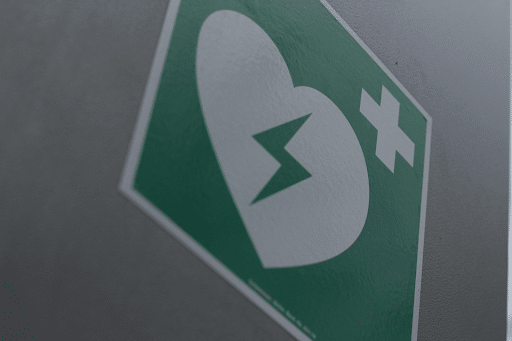
AED training is a core part of HLTAID009 in Australia. Expect to practise with a trainer AED and pads during scenario-based CPR. An automated external defibrillator (AED) is a device that can deliver an electric shock to help restart a heart during cardiac arrest, and it provides verbal or visual prompts to guide rescuers. AEDs are designed to be used by bystanders, not just medical professionals. They won’t shock someone unless the heart rhythm needs it, which makes them safer than many people assume.
In an HLTAID009 CPR course, AED training is hands-on. You practise turning the unit on, following prompts, placing pads, calling “stand clear”, and restarting CPR with minimal delay. Trainers walk you through the typical workflow. After starting CPR, a bystander brings the AED. You stop compressions briefly, turn the AED on, attach the pads to the casualty’s bare chest, and let the AED analyse the heart rhythm. If it advises a shock, you make sure no one is touching the person, press the shock button, and immediately resume compressions. If it says “no shock advised”, you go straight back to CPR. The AED will prompt you every two minutes to pause and let it reanalyse.
Safety language you’ll be assessed on includes calling “stand clear” before each shock and checking the casualty’s chest is dry. AEDs won’t work well on wet skin, so you’ll learn to wipe the chest quickly if needed. Trainers show you how to avoid placing pads over metal jewellery or medical devices like pacemakers, though in a real emergency, speed matters more than perfection. The AED’s prompts guide you, so the training focuses on building confidence to follow those prompts without hesitation.
Pad placement practice covers adult positions (one pad on the upper right chest, one on the lower left side) and variations for different body types. Trainers explain that most AEDs have diagrams on the pads showing where they go. You’ll practise peeling off the backing, pressing the pads firmly, and ensuring good contact. For infants and children, some AEDs have paediatric pads or a child mode button. Trainers show these variations without overcomplicating the lesson. The principle is simple: attach pads, stand clear, follow prompts. For more detailed steps, see our guide on using AEDs.
| What You Should Practise | What to Watch For (Common Errors) |
| Turning the AED on immediately when it arrives | Delaying AED use or forgetting to turn it on |
| Placing pads on bare skin in correct positions | Placing pads over clothing or in wrong locations |
| Calling “stand clear” and checking no one is touching | Forgetting to check or not speaking loudly enough |
| Resuming CPR immediately after shock or “no shock” advice | Pausing too long or waiting for further instructions |
| Following AED voice prompts without second-guessing | Hesitating or stopping CPR when the AED is analysing |
Common learner mistakes during AED practice include pausing compressions too long when the AED arrives, not turning the device on early enough, forgetting to call “stand clear” loudly, misplacing pads, and not resuming CPR immediately after the AED gives advice. Trainers correct these errors during scenario practice. You’ll repeat the sequence until it feels automatic. The goal is to reduce hesitation. Every minute defibrillation is delayed, survival decreases significantly. Training removes the fear of using an AED so you act fast when it matters.
What to ask a provider before booking: Will I practise with an AED trainer? Is AED use assessed as part of my practical demonstration? Do I practise on both adult and infant manikins? Is there enough time for individual feedback? Good providers will answer these questions clearly and confirm the practical component meets ASQA requirements. If a provider is vague or rushes you off the phone, consider it a warning sign.
Assessment and Requirements
HLTAID009 is assessed, not just attended. Your assessor must see you perform CPR and use an AED in a simulated scenario. Two assessment streams exist: practical demonstration and theory knowledge questions (often electronic or in-class written). The practical evidence is the core of HLTAID009. Many courses require at least 2 minutes of uninterrupted CPR on both adult and infant manikins and AED use, according to accredited providers. Two minutes doesn’t sound long, but it’s physically demanding when you’re doing it correctly.
Assessors look for correct sequence, compression quality (depth, rate, hand position), minimal interruptions, safe AED operation, and clear communication. They watch how you check for danger, call for help, position the casualty, deliver compressions, attach AED pads, and respond to prompts. You must demonstrate competence, not perfection. Small adjustments are normal. Stopping mid-scenario, refusing to continue, or repeatedly performing unsafe actions may result in a “not yet competent” outcome. Most people pass on their first attempt if they’ve paid attention during training.
A Statement of Attainment is the official VET document issued by an RTO confirming you achieved specific units of competency (such as HLTAID009). It’s different from a participation certificate or completion letter. Only RTOs registered with ASQA can issue Statements of Attainment. Your Statement will include your name, USI, the RTO’s details, and the unit code HLTAID009. Employers check these details to verify your qualification is legitimate. Keep a digital copy and your USI transcript as backup.
| Assessment Task | What It Proves | Typical Format |
| Practical CPR demonstration (adult) | You can perform effective compressions and ventilations | 2 minutes uninterrupted on manikin |
| Practical CPR demonstration (infant) | You can adapt technique for smaller casualties | 2 minutes uninterrupted on infant manikin |
| AED operation | You can safely apply pads and follow prompts | Integrated into CPR scenario |
| DRSABCD sequence | You follow correct emergency response steps | Scenario walkthrough with assessor |
| Theory assessment | You understand legal, infection control, and safety concepts | Multiple choice or short answer (online or in-class) |
Accessibility and reasonable adjustments exist, but some physical demonstration is usually required for competency. If you have a back injury, knee problem, or other limitation, talk to your provider ahead of time. They may allow you to perform CPR from a different position, take breaks, or use a raised manikin. Assessors must verify you can perform the skill in a way that would be effective in an emergency. If you can’t demonstrate the required actions, you may not be able to achieve competency, and the assessor will discuss options with you.
Common reasons people struggle include fatigue (two minutes of CPR is tiring), kneeling posture (hard on knees if you’re not used to it), and forgetting to call clear commands during AED use. Practical preparation tips: wear comfortable clothing you can move in, stay hydrated, and arrive early so you’re not flustered. If you have questions during training, ask immediately. Trainers would rather clarify a technique during practice than see you fail assessment because you were too shy to speak up. If you’re planning to renew your CPR annually, see our tips on renewing your CPR certification.
Is a CPR Course in Australia Nationally Recognised?
A nationally recognised CPR qualification is one that is issued by an RTO and recognised across Australia, not just by a single employer or private organisation. If your HLTAID009 is issued by an RTO and recorded against your USI, it is recognised Australia-wide as nationally recognised certification. Nationally recognised training is delivered or issued by an RTO under Australia’s VET system and regulated by ASQA. This means the training meets national standards, the assessment is conducted by qualified assessors, and the outcome is recorded on a government system that employers, universities, and regulators can verify.
When you complete HLTAID009 through an RTO, you receive a Statement of Attainment. This document is linked to your USI, which acts as a permanent record of all your nationally recognised training. Employers verify your qualification by checking the RTO number on your certificate, matching your name and date of birth, and (if needed) requesting your USI transcript. Your USI transcript is accessible online through the USI website and lists every unit of competency and qualification you’ve achieved. This system prevents fake certificates and ensures employers know your training is legitimate.
How employers verify: Check the RTO number on the certificate and confirm it’s registered with ASQA. Match the name and date of birth on the certificate to the employee’s ID. Request a USI transcript if the certificate looks questionable or if policy requires it. Look for the unit code HLTAID009 and the issue date. These checks are straightforward and take minutes. Employers who skip verification may accept fake or non-compliant certificates, which creates liability if an incident occurs.
An important distinction exists between nationally recognised training and non-accredited courses. Online-only CPR certificates are often not accepted for workplace compliance because practical demonstration is required. Some websites sell “CPR certificates” after you watch a video or complete a quiz. These are not HLTAID009 and don’t meet Australian standards. If your workplace, university, or volunteer organisation requires HLTAID009, they mean RTO-issued training with in-person assessment. Don’t waste money on a certificate that won’t be accepted. For more on training delivery options, see our article on online training pros and cons.
| Certificate Type | Acceptance | Portability | Verification |
| Nationally recognised (RTO) | Accepted by all Australian employers, regulators, universities | Recognised Australia-wide, recorded on USI | Verifiable through RTO number, ASQA, and USI transcript |
| Non-accredited certificate | May be accepted by some employers, often rejected for compliance roles | Not portable; each employer decides if they’ll accept it | No government record; relies on provider reputation |
| Workplace in-house sign-off | Accepted only by that employer | Not transferable to other workplaces | Internal records only; not recognised externally |
Reference ACECQA’s currency requirement to illustrate why recognition and currency matter in regulated settings. From 1 October 2023, CPR must be completed within the last year to be current in education and care settings, according to ACECQA. This means your Statement of Attainment can be five years old, but if the training date is more than 12 months ago, it’s not considered current for childcare work. Regulators check both the qualification itself and the date. Understanding this distinction prevents confusion when someone says your certificate “expired” when technically it remains a valid record of competency achieved.
Certificate Validity, Renewal and Currency
Your Statement of Attainment doesn’t “expire” in the same way as a driver’s licence, but most workplaces require CPR to be current within the last 12 months. Three layers exist in the system. First, your VET Statement of Attainment is issued permanently as evidence of competency you achieved on a specific date. It stays on your USI record forever. Second, industry guidelines recommend refreshers. The ARC and most training providers suggest renewing CPR every 12 months because skills fade and guidelines occasionally update. Third, regulators and employers define “current” timeframes. ACECQA requires CPR to be renewed annually, and from 1 October 2023, CPR must be completed within the previous year to be current in education and care settings.
In first aid, currency means how recently you completed training, which is often required by employers or regulators even if your Statement of Attainment remains on record. Think of it like a gym membership. You joined once (achieved competency), but you need to keep renewing to stay active (maintain currency). Most Australian workplaces treat CPR as current for 12 months. Some high-risk industries or roles may require six-month refreshers, while others accept 18 months. Always confirm your employer’s or regulator’s policy. Don’t assume the VET framework’s lack of a formal expiry date means your workplace will accept an old certificate.
Related units have different renewal expectations. Provide First Aid (HLTAID011) is commonly renewed every three years, while CPR is refreshed annually. HLTAID011 includes CPR as part of the course, so if you renew HLTAID011 every three years, you’re still renewing CPR every year through a standalone HLTAID009 course in the off-years. This two-track approach is common in workplaces with designated first aiders. They do full first aid every three years and CPR-only in between. For more details on how long certificates last, see how long a first aid certificate lasts in Australia.
| Qualification / Unit | What It Covers | Typical Workplace Currency | Regulated Setting Notes |
| HLTAID009 Provide CPR | CPR and AED only | 12 months | ACECQA requires annual renewal; must be within previous year |
| HLTAID011 Provide First Aid | Broader first aid including CPR | 3 years (but CPR component refreshed annually) | ACECQA requires first aid renewed every 3 years; CPR still annual |
| HLTAID012 Provide First Aid in Education & Care | First aid plus child-specific and asthma/anaphylaxis | 3 years (but CPR component refreshed annually) | Required for childcare; includes all HLTAID011 content |
Practical advice: Set calendar reminders 10 months after your CPR training so you can book a refresher before it expires. Keep a digital copy of your certificate in cloud storage and your USI transcript downloaded as a PDF. If you lose your certificate, contact the RTO that issued it and request a replacement (most charge a small admin fee). Your USI transcript proves you hold the unit even if you’ve lost the paper certificate, so protect your USI login details. Plan renewal before busy periods at work or before annual leave, because if your certificate lapses, you may not be able to work in a compliance role until you renew.
HLTAID009 vs HLTAID010 vs HLTAID011 vs HLTAID012
If your employer says “CPR”, confirm whether they mean HLTAID009 only or first aid that includes CPR (HLTAID011). The unit codes are not interchangeable. HLTAID009 is CPR and AED competency only. It’s the fastest, cheapest option if you only need CPR. HLTAID011 (Provide First Aid) is the nationally recognised unit covering a broader first aid response, and it typically includes CPR as part of the training. HLTAID011 covers CPR plus bleeding control, shock, burns, fractures, sprains, poisoning, asthma, and other common emergencies. If your role is “workplace first aider”, you need HLTAID011, not HLTAID009.
HLTAID010 (Provide Basic Emergency Life Support) sits between HLTAID009 and HLTAID011. It’s less common and covers life support without the full range of first aid injuries. HLTAID012 (Provide First Aid in an Education and Care Setting) is the childcare-specific unit. It includes everything in HLTAID011 plus child-specific scenarios, asthma and anaphylaxis management, and regulations relevant to early childhood services. If you work in childcare, OSHC, or similar, your employer will specify HLTAID012. Don’t book HLTAID011 thinking it’s close enough. It’s not.
Decision rules by audience help you choose correctly. Office, hospitality, or fitness staff who need annual CPR refreshers typically book HLTAID009. Workplace first aiders, construction workers, or retail managers who must respond to a wider range of injuries book HLTAID011. Childcare educators, family day care providers, and OSHC workers book HLTAID012. If you’re unsure, ask your employer or placement provider to confirm the exact unit code they require. Don’t guess. Booking the wrong course wastes time and money. For more on broader first aid training, see our guide on the HLTAID011 first aid course.
| Unit Code | Common Name | Includes AED? | Typical Duration | Who It’s For | Typical Renewal |
| HLTAID009 | Provide CPR | Yes | 3–4 hours | CPR refreshers, support roles | 12 months |
| HLTAID011 | Provide First Aid | Yes (includes CPR) | 6–8 hours | Workplace first aiders, general roles | 3 years (CPR annually) |
| HLTAID012 | Provide First Aid in Education & Care | Yes (includes CPR) | 8 hours | Childcare, OSHC, early childhood | 3 years (CPR annually) |
Choose HLTAID009 if you only need CPR and AED competency. Choose HLTAID011 if you need workplace first aid that includes CPR. Choose HLTAID012 if you work in education and care settings. HLTAID012 includes anaphylaxis and asthma management alongside standard first aid. ACECQA requires at least one staff member with current HLTAID012 in centre-based and family day care services. If you’re entering the childcare sector, book HLTAID012 from the start. Don’t do HLTAID011 and then find out you need to redo the course. For childcare-specific training, see our childcare first aid page.
Sydney CBD Context
Sydney CBD courses are ideal for busy workers who need training before or after work and for those needing fast compliance. A Sydney CBD HLTAID009 class is typically a short, practical session where you demonstrate CPR on the floor and practise AED use under an assessor’s supervision. Providers in the CBD run frequent sessions (morning, afternoon, evening) to suit office workers, hospitality staff, and students. The advantage is convenience. You can book a session near your workplace, complete it in a few hours, and return to work the same day or next morning.
What to bring: photo ID, your USI, comfortable clothing for floor CPR, water, and a device if the theory assessment is electronic (many providers require a smartphone or tablet). If you don’t have your USI, you can create one online before the course. It takes a few minutes and you’ll need ID documents to verify your identity. Don’t show up without it, because the RTO can’t issue your Statement of Attainment without a valid USI. Wear clothing that lets you kneel and move freely. Tight skirts, formal trousers, or restrictive tops make CPR practice uncomfortable. Sneakers or flat shoes are better than heels or dress shoes.
Timing expectations: allow time for admin check-in. Most providers ask you to arrive 10 to 15 minutes early to complete paperwork, confirm your USI, and sign consent forms. Late arrivals may be refused entry. This isn’t providers being difficult. It’s a compliance requirement. If you miss the introduction or part of the training, the assessor can’t verify you received the required content, and you may not be assessed competent. Respect the timing. If you know you’ll be late, call the provider before the session starts and ask if they can accommodate you. Some will, some won’t.
What the room is like: a classroom with manikins and AED trainers. Manikins are set up on the floor or on low tables. You’ll kneel beside them. Hygiene expectations include manikins cleaned between learners, disposable face shields provided, and gloves available. Reputable providers take hygiene seriously. If the room looks dirty or manikins aren’t cleaned, leave and request a refund. You shouldn’t train in unsanitary conditions.
Certificate delivery: many providers issue your digital Statement of Attainment by email on the same day or within 24 hours after you complete assessment and your USI details are confirmed. Same-day certificate usually means your digital Statement of Attainment is issued by email after you successfully complete assessment and your USI details are confirmed. If the provider says “instant certificate”, ask what that means. True instant means you walk out with a PDF. Same-day usually means emailed within hours. Next-day means processed overnight. All are acceptable as long as you know when to expect it.
CPR First Aid runs HLTAID009 in Sydney CBD with frequent sessions and practical, assessor-led training. Sessions are scheduled regularly throughout the week, including evening and weekend options for shift workers. The training is hands-on, assessors provide individual feedback, and certificates are issued the same day when you’re assessed competent. You can book online, choose your preferred date and time, and receive confirmation immediately. For course dates and bookings, visit our Sydney CBD course dates page.
How to Choose a CPR Provider in Australia
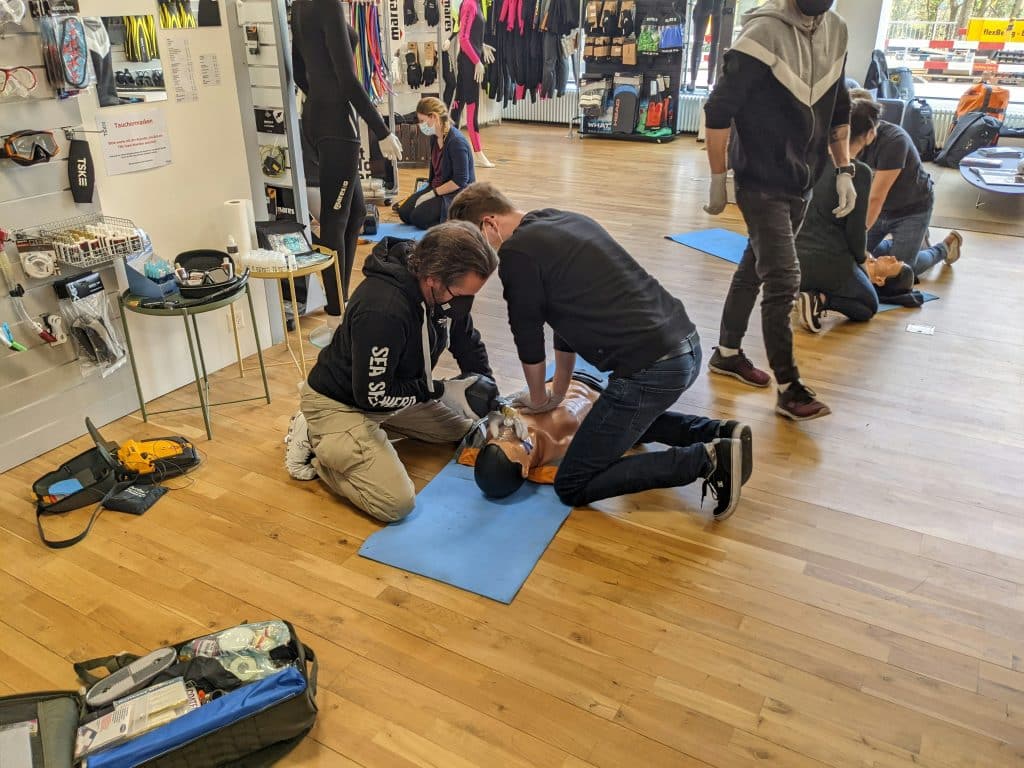
If your CPR is for work, the provider matters as much as the course code. Choose an HLTAID009 provider that is an RTO, includes hands-on AED practice, and clearly states the practical assessment requirements before you book. A Registered Training Organisation (RTO) is an approved training provider that can deliver and issue nationally recognised VET qualifications in Australia. Not all organisations calling themselves “first aid trainers” are RTOs. Check the provider’s website for an RTO number. Then verify that number on the ASQA website (asqa.gov.au) to confirm they’re registered and their registration is current.
Confirm the outcome is a Statement of Attainment (not a participation certificate). Ask directly: “Will I receive a Statement of Attainment for HLTAID009?” If the answer is vague or they offer a “certificate of completion” instead, walk away. Participation certificates are worthless for compliance. Ask whether AED is included and assessed. HLTAID009 must include AED. If a provider says AED is “optional” or “extra”, they’re not delivering the full unit. Don’t book with them.
Check practical time per learner. Large group sizes with one manikin per six people mean you’ll get five minutes of hands-on practice and spend the rest of the session watching. Good providers keep groups small (10 to 15 learners) and provide enough manikins so everyone gets adequate practice. Ask: “How many learners per manikin?” and “How much individual feedback will I get?” Providers who care about quality will answer confidently.
Certificate issuance timeframes and support for replacement certificates matter. Ask when you’ll receive your Statement of Attainment and what happens if you lose it. Same-day or next-day issuance is standard. If a provider says “two to four weeks”, they’re either understaffed or not prioritising admin. Replacement certificate processes should be clear: you contact the RTO, pay a small fee, and receive a reissued Statement. If they say “we don’t keep records”, that’s a red flag.
Accessibility and reasonable adjustments process should be transparent. Ask: “What if I have a physical limitation?” Good providers will discuss options before you book, not on the day when it’s too late. For workplaces needing group training, ask about onsite options. CPR First Aid offers onsite group training for workplaces that need multiple staff trained at once. This is cost-effective and convenient for businesses. You don’t need to send employees offsite for a full day. A trainer comes to you, runs the session, and assesses everyone on location. For more on why this training matters, see our article on the importance of first aid training.
| Question to Ask | Why It Matters | What a Good Answer Sounds Like |
| Are you a registered RTO? | Only RTOs can issue nationally recognised Statements | “Yes, our RTO number is [number], you can verify it on asqa.gov.au” |
| Is AED included and assessed? | HLTAID009 must include practical AED use | “Yes, AED practice is part of the course and you’ll be assessed on it” |
| What are the practical assessment requirements? | You need to know what evidence you must demonstrate | “You’ll do 2 minutes CPR on adult and infant manikins plus AED use in a scenario” |
| How many learners per manikin? | Too many learners = not enough practice | “We keep groups small, usually 2-3 people per manikin so everyone gets practice” |
| When will I receive my Statement of Attainment? | You need it quickly for work | “You’ll receive it by email the same day or within 24 hours after assessment” |
| Do you offer reasonable adjustments? | You need to know if your limitation can be accommodated | “Yes, let us know before you book and we’ll discuss options to support you” |
Bystander CPR improves survival to discharge (10.2% versus 5.5% in an older-adult cardiac arrest cohort), according to research. Quality training matters. Choose a provider that takes the practical component seriously, provides enough practice time, and doesn’t rush you through assessment. Your CPR skills could save a life. Don’t let poor training undermine that potential.
Frequently Asked Questions
What does a CPR course (HLTAID009) include in Australia
HLTAID009 includes DRSABCD, hands-on CPR practice for adults and infants/children, AED use, and practical plus theory assessment. You’ll practise CPR on manikins for at least two minutes, learn to operate an AED safely, and demonstrate the emergency response sequence in a simulated scenario. Training also covers communication skills (calling 000, directing bystanders), infection control (gloves, face shields), and legal considerations at a high level. The course aligns with ANZCOR and ARC guidelines, so techniques are standardised Australia-wide.
Is HLTAID009 nationally recognised in Australia
Yes. HLTAID009 is nationally recognised when it’s issued by an RTO as a Statement of Attainment and recorded against your USI. RTOs are regulated by ASQA and must meet national training standards. Your Statement of Attainment is stored on the USI system, which employers, universities, and regulators can verify. Always check the provider’s RTO number and confirm the certificate states HLTAID009. Online-only certificates that skip practical assessment are not nationally recognised and won’t meet workplace requirements.
Do you practise using an AED in a CPR course
In an HLTAID009 course, you should expect hands-on AED practice using a trainer device, including pad placement and safe “stand clear” procedures. Trainers demonstrate how to turn the AED on, attach pads to a bare chest, follow voice prompts, and resume CPR immediately after the device gives a shock or no-shock message. You’ll practise this during scenario-based CPR so it feels automatic. AED practice is assessed, which means you must demonstrate safe operation to achieve competency.
How is HLTAID009 assessed
HLTAID009 is assessed through a practical demonstration of CPR and AED use plus a short theory assessment. Most courses require at least 2 minutes of uninterrupted CPR on both adult and infant manikins, integrated with AED operation in a simulated scenario. Assessors watch your technique, check you follow the DRSABCD sequence, and verify you can communicate clearly (calling 000, directing others, handing over to expert). Theory assessments cover legal, infection control, and safety knowledge, usually through multiple choice or short-answer questions.
Can you do HLTAID009 entirely online
No. Nationally recognised HLTAID009 requires a practical, in-person skills demonstration, even if some theory is completed online. Blended learning options let you do pre-course reading or video content at home (usually 60 to 90 minutes), then attend a face-to-face session for practical training and assessment. Online-only certificates that claim you can get HLTAID009 without any in-person component are not compliant with Australian training standards and won’t be accepted by employers or regulators.
How long is a CPR certificate valid for in Australia
Most workplaces require CPR training to be refreshed every 12 months for workplace currency, and ACECQA requires CPR to be completed within the previous year to be current in childcare settings. Your Statement of Attainment remains a permanent record of competency achieved, but currency refers to how recently you trained. The ARC and training providers recommend annual CPR renewal because skills fade and guidelines occasionally update. Always confirm your employer’s or regulator’s specific policy, as some industries require more frequent refreshers.
What’s the difference between HLTAID009 and HLTAID011
HLTAID009 is CPR and AED only, while HLTAID011 covers broader first aid and typically includes CPR as part of the course. HLTAID009 is faster (three to four hours) and focuses on cardiopulmonary resuscitation and defibrillation. HLTAID011 (Provide First Aid) takes six to eight hours and covers CPR plus bleeding control, shock, burns, fractures, asthma, and other injuries. If your role is “workplace first aider”, you need HLTAID011. If you only need CPR currency, HLTAID009 is sufficient. Check your employer’s requirements before booking to avoid completing the wrong course.
What do I need to bring to a CPR course in Sydney CBD
Bring photo ID, your USI, and wear comfortable clothing suitable for kneeling and performing CPR on the floor. If your provider uses electronic theory assessments, also bring a charged smartphone or tablet. Arrive 10 to 15 minutes early for admin check-in. Don’t wear restrictive clothing or high heels. Flat shoes and activewear or casual clothes work best. Bring water, as CPR practice is physically demanding. If you don’t have your USI, create one online before the session (it takes a few minutes and requires ID documents).
Conclusion
HLTAID009 is hands-on, nationally recognised CPR training that teaches you to respond when someone collapses. You’ll learn DRSABCD, perform CPR on manikins, operate an AED, and demonstrate these skills in a practical assessment. The course is fast (three to four hours), widely available, and recognised across Australia when delivered by an RTO. Renewal is annual in most workplaces, and ACECQA requires CPR completed within the previous year for childcare roles. Choose a provider that’s an RTO, includes AED practice, and clearly explains assessment requirements before you book.
If you need HLTAID009 CPR training that’s nationally recognised and includes hands-on AED practice, book a Sydney CBD session with CPR First Aid. Choose Express or Regular options depending on whether you’re renewing or learning for the first time. Sessions run regularly throughout the week, certificates are issued the same day when you’re assessed competent, and group bookings are available for workplaces needing multiple staff trained.
References
- HLTAID009 Provide Cardiopulmonary Resuscitation – Assessment requirements (2 minutes uninterrupted CPR, online pre-learning duration)
- Australian Resuscitation Council – Cardiac arrest incidence and survival statistics
- ACECQA First Aid Qualifications & Training – Currency requirements (CPR within previous year from 1 Oct 2023)
- Healthdirect Defibrillators and AEDs – Out-of-hospital cardiac arrest scale and AED definition
- ANZCOR Guideline 8 CPR – Compression rate guidance (100-120 per minute)
- National Training Register HLTAID011 – Authoritative unit context for Provide First Aid
- JACC Bystander CPR Study – Survival benefit statistics (10.2% vs 5.5%)